

IntroductionCortical and subcortical alterations in brain intrinsic function have been widely reported in Parkinson’s disease (PD). However, sex differences in brain intrinsic function in PD are poorly understood. This study aimed to examine sex differences in spontaneous brain intrinsic function in PD and their associations with neuropsychological measurements.MethodsUsing Parkinson’s Progression Markers Initiative (PPMI) resting-state fMRI, we compared amplitude of low-frequency fluctuations (ALFF) between male and female PD patients in substantia nigra (SN), globus pallidus (GP) and whole-brain. Subgroup analysis was performed, matching demographics with equal sample sizes. ALFF correlations with behavior were assessed by sex.ResultsFemale PD patients demonstrated higher ALFF in the right SN compared to males in the primary analysis. This sex difference achieved statistical significance in the demographics-matched subgroup analysis. Bilateral premotor ALFF was significantly elevated in female patients relative to males, independent of brain structure. Furthermore, right premotor ALFF showed a preliminary positive trend associated with visuospatial function exclusively in female PD patients.ConclusionFemale PD patients exhibit distinct functional signatures, primarily involving elevated premotor fluctuations and a preliminary premotor-visuospatial association. Preliminary SN alterations were also noted. These findings highlight the necessity of sex-stratified neuroimaging and provide preliminary support for premotor ALFF as a potential sex-divergent functional signature associated with cognitive profiling in female patients with PD.
Developmental outcomes of young children with an autism diagnosis and its associated clinical correlates
IntroductionAutism spectrum disorder is common in children with increasing prevalence, leading to efforts towards early identification and treatment initiation in young children. We aimed to identify the developmental trajectory of young children with an autism diagnosis and clinical factors associated with better developmental outcomes in a real-world setting.MethodsIn this study, 38 children (mean age 21.9 ± 4.7 months) who were diagnosed at < 2 years of age with autism had developmental evaluations using the Mullen Scales of Early Learning done at baseline and after 1–2 years post diagnosis and intervention initiation.ResultsIn the sample, improvements in T-scores were observed for Receptive Language (mean 26.5 to 32.0, p=0.003) and Expressive Language (mean 26.0 to 30.7, p=0.010) at the group level, while Visual Reception, Fine Motor and overall Early Learning Composite did not change significantly at follow-up. Higher baseline T-scores were consistently associated with better follow-up scores across Fine Motor, Receptive Language, Expressive Language and Early Learning Composite domains. Age at initial presentation was significantly associated with Fine Motor outcomes (β = 1.26, p=0.031) while intervention hours were not independently associated with any developmental domain outcomes in the full sample. Among children with baseline developmental delay, higher intervention hours were associated with better follow-up scores in Receptive as well as Expressive Languages and Visual Reception; this was not seen for the entire sample.ConclusionsOur results support the role of early identification and intervention for autism; however, child-level characteristics influence developmental trajectories beyond intervention hours alone.
Sense of Coherence in patients with stable schizophrenia: multidimensional determinants from a cross-sectional study of 438 inpatients in Guangzhou, China
IntroductionSchizophrenia, a chronic psychiatric disorder, profoundly affects social functioning and quality of life. The Sense of Coherence (SOC), a core construct in salutogenic theory, plays a pivotal role in stress coping and recovery outcomes. While SOC has been studied in general populations, its determinants in stabilized schizophrenia inpatients remain underexplored. This study comprehensively investigated the Sense of Coherence (SOC) profile among stabilized schizophrenia inpatients by assessing its current status, exploring the interrelationships between SOC and demographic factors/Big Five personality traits (CBF-PI)/social support (SSRS), and identifying factors associated with SOC to inform potential personalized resilience-enhancing interventions. Findings may guide clinical strategies to enhance resilience and mental health recovery and potentially facilitate functional recovery in this population.Patients and methodsA cross-sectional study was conducted at a Guangzhou tertiary psychiatric hospital with 438 stabilized schizophrenia inpatients from November 2024 to February 2025. Data collection included demographic/clinical variables, Chinese Big Five Personality Inventory (CBF-PI), 13-item Sense of Coherence Scale (SOC-13), and the Social Support Rating Scale (SSRS). Statistical analyses were performed using SPSS version 27.0. Descriptive statistics were used to summarize the data and independent-samples t-tests and one-way analysis of variance (ANOVA) were employed to compare SOC scores across demographic and clinical groups. Pearson correlation analysis was conducted to examine the relationships between personality traits, social support, and sense of coherence and multiple linear regression analysis was utilized to identify independent factors influencing sense of coherence (P < 0.05).ResultThe mean SOC score among the 438 stabilized schizophrenia inpatients was 53.35 ± 11.81. SOC correlated positively with all five dimensions of CBF-PI-B (P < 0.05), as well as subjective social support (P < 0.01), while showing inverse correlations with objective support (p < 0.01) and support utilization subscales (P < 0.01), Multiple regression identified personal income(yes), frequency of physical activity (≥3 times/week), and primary caregiver (Children) as significant SOC predictors.ConclusionThis study demonstrates that stabilized schizophrenia inpatients in a tertiary psychiatric setting exhibit generally lower Sense of Coherence (SOC) levels compared with healthy normative values and moderately lower than several outpatient schizophrenia samples. Higher SOC was significantly associated with having a personal income, frequent physical activity (≥3 times/week), having children as primary caregivers, and Chinese Big Five Personality traits. Notably, while subjective support was positively correlated with SOC, objective support and support utilization showed negative associations. Given the moderate internal consistency of the SSRS (Cronbach’s α = 0.626), the differential associations with social support dimensions should be interpreted cautiously. Concurrently, personality traits are relatively stable, their associations with SOC may inform indirect supportive strategies leveraging existing strengths rather than direct modification. These findings underscore the potential value of tailored interventions that enhance subjective support, promote structured recreational activities, and foster patients’ perceived coping resources. Further cross-sectional and longitudinal outpatient studies are warranted to validate these results and elucidate the mechanisms underlying the support paradox.
Group painting therapy for children and adolescents with bone tumors: a quasi-experimental trial evaluating anxiety, depression, post-traumatic growth, and health-related quality of life
BackgroundChildren and adolescents undergoing treatment for malignant bone tumors frequently experience heightened psychological distress, including anxiety, depression, and reduced health-related quality of life (HRQoL). Group painting therapy has been proposed as a supportive non-pharmacological strategy, yet empirical evidence in pediatric oncology remains limited. This study aimed to evaluate the impact of an eight-week structured group painting therapy program on anxiety, depression, post-traumatic growth (PTG), and HRQoL in this population.MethodsA quasi-experimental pretest–posttest study was conducted among children and adolescents (aged 8–18 years) with primary malignant bone tumors at Henan Cancer Hospital from December 2023 to December 2024. A total of 76 participants were consecutively enrolled and allocated to an intervention group receiving group painting therapy (n=39) or a control group receiving standard nursing care (n=37) using a nonrandomized ward-based approach. Anxiety, depressive symptoms, PTG, and HRQoL were assessed at baseline and post-intervention using validated instruments, including SCARED, DSRSC, PTGI, and PedsQL™ 3.0 Cancer Module.ResultsCompared with the control group, the intervention group demonstrated greater reductions in anxiety and depressive symptoms, along with significant improvements in PTG and selected HRQoL domains. Notable improvements were observed in emotional functioning, social communication, generalized anxiety, somatic symptoms, personal strength, and appreciation of life. No significant between-group differences were observed in physical symptom domains such as pain and nausea.ConclusionsGroup painting therapy was associated with improvements in emotional well-being, PTG, and selected HRQoL domains in children and adolescents with primary bone tumors. These findings suggest that painting therapy may be a promising adjunct to routine pediatric oncology care for promoting resilience and psychological recovery.
Problematic social media use, everyday memory failures, and prospective and retrospective lapses: evidence from a large sample of young adults
IntroductionProblematic social media use (PSMU) has become a growing research topic due to its potential psychological and cognitive consequences. However, little research has examined its relationship with everyday memory functioning, particularly specific forms of memory.MethodsA sample of 943 Spanish young adults aged 18 -35 completed validated measures of PSMU, everyday memory failures, prospective memory lapses and retrospective memory lapses. Non-parametric analyses, group comparisons and mediation analyses with bootstrap resampling were conducted.ResultsHigher PSMU was associated with more frequent everyday memory failures and with greater prospective and retrospective lapses. Everyday memory failures mediated a substantial proportion of the association between PSMU and both prospective and retrospective lapses. Participants meeting the proposed clinical cutoff for PSMU reported poorer memory functioning than those below this threshold.DiscussionThese findings suggest that PSMU is associated with greater subjective memory difficulties in daily life, highlighting the relevance of everyday memory failures as a potential explanatory mechanism linking problematic social media use with prospective and retrospective memory problems.
Adaptive deep brain stimulation for dynamic gait control in Parkinson’s disease: a randomized feasibility trial
Nature Medicine, Published online: 15 June 2026; doi:10.1038/s41591-026-04434-2
A randomized crossover study shows that gait-phase-synchronized adaptive deep brain stimulation is feasible and safe, and reduces falls compared to continuous stimulation in Parkinson’s disease.
These new solid-state ACs promise a cool future. Scientists aren’t so sure.
After three years of record-breaking heat, this one is set to be yet another scorcher. Air-conditioning? Not going anywhere. The International Energy Agency projects that the number of AC units will triple by 2050.
That’s good for health—one Lancet study estimated that AC prevented nearly 200,000 premature deaths in 2019 alone—but bad for the planet. Artificial chill already accounts for 7% of global electricity use and 3% of greenhouse-gas emissions, and if improperly disposed of, the units can leak refrigerants with more global-warming potential than carbon dioxide.
Feeling the heat, a number of scientists and startups are hoping to amp up solid-state cooling, which is currently used at a small scale for things like mini fridges, EV batteries, and some high-end gaming computers. Traditional ACs transfer heat by using a compressor and a fan to circulate a refrigerant and turn it from liquid to gas.
Solid-state systems, on the other hand, move heat through conductive materials like gadolinium and bismuth telluride—which could theoretically cool spaces and surfaces with fewer messy side effects.
The catch is whether they can match the efficiency of conventional AC. “One of the key questions that remain is why are the solid-state coolers not as efficient as typical thermodynamic cycles?” says Pramod Reddy, a professor of mechanical engineering at the University of Michigan who studies heat transfer.
Research and pilot programs are underway to test a range of approaches. Brooklyn-based Mimic Systems uses thermoelectric cooling, which passes a current through semiconductive materials to shift heat from one side to another. Its room-scale climate control system is being piloted in an apartment in Vancouver.
The German company Magnotherm is set to test its system, which relies on a magnetocaloric setup that transfers heat by magnetizing and demagnetizing materials, in a chain of supermarkets. A team in Hong Kong has announced that its elastocaloric device, whose material heats and cools as it expands and contracts, can dip below 0 °C. And the UK’s Barocal is betting on barocaloric systems, which change temperature in response to shifts in pressure.
But experts, especially in thermoelectrics, have doubts about how well any solid-state scheme can compete. For most modern HVAC systems, the coefficient of performance (COP) is 3, explains Jeff Snyder, a professor at Northwestern University who studies electrical and thermal conductivity. That essentially means the system moves three units of heat for every unit of energy that goes into it.
Thermoelectrics in particular tend to have a much lower performance at high levels of temperature change, Snyder says, which means they’re best suited for niche uses such as cooling the back of a car seat.

COURTESY OF MIMIC SYSTEMS, INC
Efficiency, however, isn’t everything, argues Lindsay Rasmussen, a manager at the Rocky Mountain Institute’s climate tech accelerator Third Derivative, which supports both Magnotherm and Mimic. In the US, most ACs currently in use employ a refrigerant called R410A, which has a global-warming potential more than 2,000 times that of carbon dioxide. Plus, their moving parts can make them less durable, especially compared with a solid-state model that’s less mechanically complex.
Still, a dearth of units makes it hard to answer the efficiency question. To understand how well alternatives work, says Rasmussen, researchers need to compare their long-term energy consumption with that of conventional models instead of simply looking at COP. Mimic claims, for example, that its room-scale model should match the draw of a typical AC unit over the course of a year. Elastocaloric and barocaloric systems also have promise, Rasmussen adds, but room-scale prototypes are probably two to three years away.
In the end, the likelihood that solid-state cooling could replace compressor-based AC is slim. But as the planet warms and places like India install tens of millions of new AC units over the next decade, supplanting even a small number could make a dent. “If [solid-state] could take over even a 5% market share,” Rasmussen says, “that is a really large potential impact.”
Sara Kiley Watson is a science journalist specializing in climate and sustainability. She’s based in The Hague.
Anxiety and Depression in IBS: A Brain-Gut Axis Study
Conditions: Irritable Bowel Syndrome (IBS); Anxiety; Depression
Interventions: Other: Observational Study (No Intervention)
Sponsors: Tang-Du Hospital
Recruiting
Interventions: Other: Observational Study (No Intervention)
Sponsors: Tang-Du Hospital
Recruiting
Welcome to Our New IOCDF Advocates
The IOCDF is thrilled to announce our newest cohort of Advocate volunteers! We’re welcoming 13 incredible new Advocates to our program, bringing our total to 64 dedicated volunteers working together to create meaningful change for the OCD and related disorders community.
These passionate individuals join us from bustling cities and quiet rural towns across the United States and around the world. From California to Massachusetts, and from countries including Canada and Ireland, this mix of local and global perspectives ensures we can reach and represent diverse communities everywhere.
The Power of Diverse Voices
Our newest cohort has a wide range of experiences and interests. They are passionate about addressing critical topics including:
- Access to treatment
- Diversity, multicultural issues, and LGBTQIA+ inclusion
- Family issues and family accommodation
- Young adult mental health and academic challenges
- Public policy
- Research advancement
- Suicide prevention
- Nutrition, fitness, and anxiety in athletes
This diversity of focus areas ensures that we can better represent and serve the full spectrum of our community’s needs.
Meet the Spring 2026 Advocates:
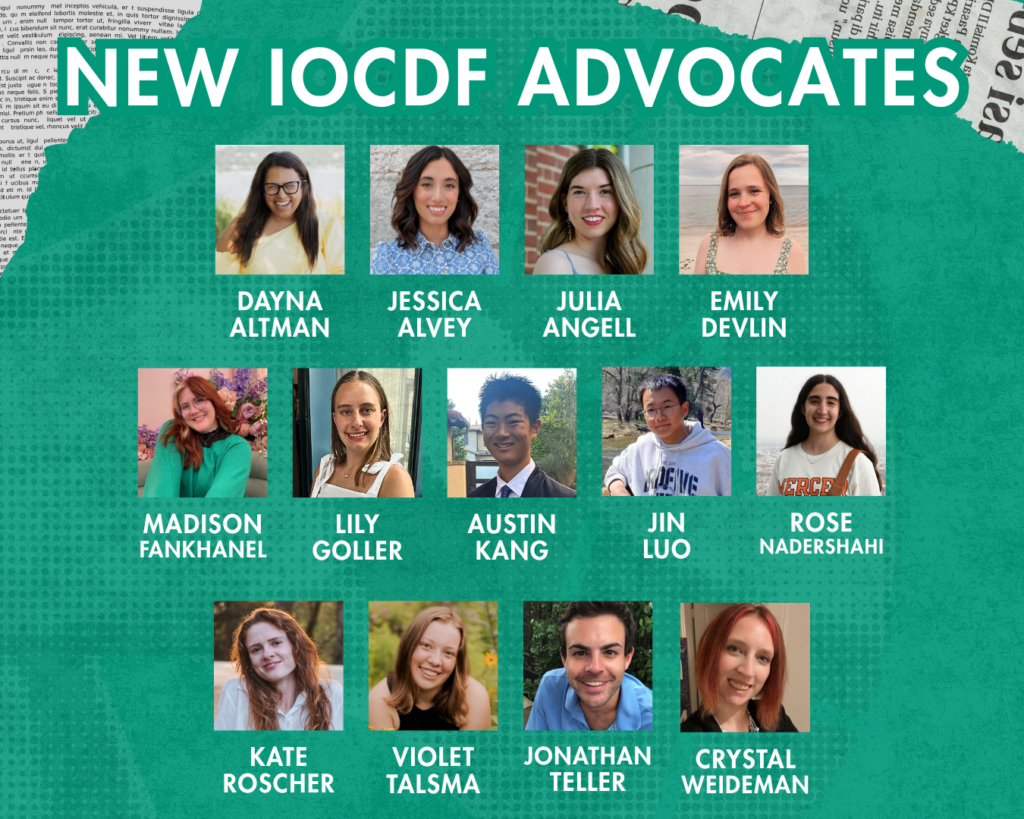
- Dayna Altman
- Jessica Alvey
- Julia Angell
- Emily Devlin
- Madison Fankhanel
- Lily Goller
- Austin Kang
- Jin Luo
- Rose Nadershahi
- Kate Roscher
- Violet Talsma
- Jonathan Teller
- Crystal Weideman
You can see the full list of IOCDF advocates at iocdf.org/advocate-program
Your Voice Matters Too
Inspired by our Advocates? You can make a difference! Here are ways to start advocating today:
Fuel Our Mission Through Fundraising
Turn your passion into action by launching a personal fundraiser. Whether for a birthday, a race, or a creative project, you can rally your friends and family to raise critical funds. Every dollar helps build a world where everyone affected by OCD can thrive. Start your fundraiser here or explore all ways to give back here.
Advocate for policy change
Your voice can shape laws that improve access to care and insurance coverage. The IOCDF Public Policy Action Center makes it simple to find the latest bills and contact your elected officials with just a few clicks. True change starts here.
Join an IOCDF Special Interest Group
Connect with people who share your experiences or professional interests. IOCDF Special Interest Groups (SIGs) provide a platform for deeper discussion.
Whether you advocate on the national stage, share your story to fight stigma, or fundraise your way, every action creates a ripple effect of hope and understanding. Your journey, your voice, and your commitment are powerful tools.
Start today and help us build a world where everyone affected by OCD feels supported, seen, and empowered. Join a dedicated community committed to raising awareness.
Welcome again to our new IOCDF Advocates, we’re grateful to have you joining our mission!
The post Welcome to Our New IOCDF Advocates appeared first on International OCD Foundation.
Collagen Resides Inside Cells in Liquid Condensate-Like Form
A study by scientists at the Centre for Genomic Regulation (CRG) in Barcelona has found that collagen, the protein that builds skin, bones, tendons, and organs, exists inside cells as a liquid-like droplet rather than as the long, rigid rod-like structure we might find in textbooks.
The team used techniques including high-resolution live-cell imaging to generate what they say is the first direct observation of how the most abundant protein in the human body, which accounts for around a third of total protein mass, exists naturally inside living cells.
Collagen is built inside a cellular compartment called the endoplasmic reticulum (ER). The study specifically looked at a precursor form inside cells called procollagen 1 (PC1), which matures into type 1 collagen. Type 1 collagen is the most common type of collagen, consisting of around 90% of the body’s total collagen.
“Inside a cell, collagens are not rigid molecules as one had assumed,” said ICREA research professor Vivek Malhotra, PhD, senior author of the study at the CRG. They are, in fact, very pliable, taking a liquid condensate form much like oil in a drop of water.”
The liquid-like state may serve a protective function. Collagen’s job, once outside the cell, is to assemble into the rigid fibers that hold tissues together. The same process inside the cell would be catastrophic. “This is another way by which cells ensure that collagens probably never become fibrous inside the cell,” said Malhotra. “Because if it were to become fibrous, it would kill the cell.”
The new findings have implications for how the body exports its primary structural building block from production sites inside cells. The researchers suggest cells avoid using conventional receptors or vesicles, which is the route established by work carried out in the 1980s and 1990s and recognized with a Nobel prize in 2013.
Instead, they propose a “liquid extrusion” hypothesis, whereby collagen moves from its site of synthesis to the next compartment of the secretory pathway through capillary action. The new theory has important implications for wound healing, fibrosis, and cancer.
Malhotra and colleagues describe their study and results in a paper in the Journal of Cell Biology titled “Procollagen 1 assembles into phase-separated condensates in the endoplasmic reticulum.”
“Procollagen I (PC1) is assembled into a trimer within the lumen of the endoplasmic reticulum (ER),” the authors explained. Under a microscope, purified collagen looks like long, rigid rods of up to 400 nm in length, and this conformation is presumed to represent their assembled state in vivo, the team continued. “However, there is currently no direct experimental evidence demonstrating that PC1 adopts or is maintained in such a rigid, extended conformation within the ER lumen in vivo,” they wrote. Also, the vesicles that transport proteins out from their site of synthesis to the cell’s exterior are only 60 to 90 nanometers in diameter.
Since collagen’s structure was first described more than half a century ago, the field of cell biology has asked how such large molecules can be transported out of cells. The canonical picture of the protein describes collagen only after it has left cells and assembled into the fibers that hold tissues together. The newly reported findings suggest that inside the cell, collagen is not yet assembled into that rod structure.
Using high-resolution live-cell imaging of human hepatic stellate cells—the liver cells that produce collagen and drive scarring in liver fibrosis—the team showed that collagen inside the cell gathers into small droplets that merge, split, and exchange material with their surroundings. These are all signatures of a condensate, compartments of proteins that become so concentrated they disassociate from their surroundings, like droplets of oil in water.
Most of cell biology has focused on condensates in the nucleus and on stress granules in the cytosol, said first author Soumya Bhattacharyya, PhD, a postdoctoral researcher in Malhotra’s lab. “We’re just beginning to understand condensates inside the endoplasmic reticulum.”
The findings emerged from microscopy images taken by Bhattacharyya in May 2024. Bhattacharyya was using the liver cell system as a tool to study what happens when collagen production is increased in fibrotic cells. “I had no idea what it would lead to. But when we took the samples, what struck me were these bright spherical structures you can’t miss,” recalled Bhattacharyya.
The initial reaction in the laboratory to a finding that challenged cell biology dogma was sceptical. “I thought it must be an artefact,” said Malhotra. In the months that followed, the team had to settle whether the protein clumping they observed inside the endoplasmic reticulum was junk. Cells have an elaborate system for detecting badly folded proteins and either refolding them or marking them for destruction, centered on a chaperone called BiP.
If the collagen droplets were heaps of misfolded protein, the researchers would detect high levels of BiP. The droplets contained, instead, a mixture of helper proteins, including chaperones that specifically recognize properly folded collagen.
![Human liver cells showing collagen droplets inside the cell (green clusters), held in place by TANGO1 (magenta), with extracellular collagen fibres visible as the surrounding network. Cell nuclei are stained blue. [Soumya Bhattacharyya / Centre for Genomic Regulation]](https://www.genengnews.com/wp-content/uploads/2026/06/Low-Res_Picture-1_S_Bhattacharyya-300x300.jpg)
The study also clarifies the function of TANGO1, a protein discovered by the Malhotra lab roughly two decades ago and known to be required for collagen export. When the researchers depleted TANGO1, the collagen droplets still formed but were no longer positioned at the ER exit sites (ERES) where cargo leaves the compartment. Collagen secretion dropped accordingly. “PC1 condensates were still formed after TANGO1 knockdown, indicating that TANGO1 is not required for condensate formation per se,” the investigators stated. “However, TANGO1 depletion caused a marked reduction in the association of PC1 condensates with ERES …”
The discovery suggests TANGO1 acts as a mooring point that holds the droplet at the export site rather than as a conventional cargo receptor. The authors propose that collagen then leaves the cell by a physical process called wetting, in which the liquid droplet attaches to and flows through the exit site.
Malhotra offers two possible physical mechanisms for this transfer. “Imagine you have a rubber ball with a nozzle, filled with liquid. You squeeze it, you force the liquid to come out of this little orifice. Is that the mechanism? Or is the liquid rising by capillary forces, just like nutrients flow up against gravity in plants by capillary action?”
The proposed liquid extrusion mechanism remains a model, but the next experiments to obtain direct visualization of the export mechanism are already underway. The team also plans to develop a mouse model, in collaboration with external partners, to confirm the findings in living tissue. If the model is confirmed, the work has implications for several pathological conditions in which excess collagen secretion plays a central role, including liver, lung, and skin fibrosis, as well as for targeting the dense matrix that tumors use to shield themselves from chemotherapy and the immune system.
“One of the major problems in cancer is that the cells secrete so many collagens and other proteins out into the extracellular matrix that they hide in a shell made of these components and become chemo- and immuno-refractory, meaning they are not seen by the chemical therapeutics or by the immune system,” Malhotra said. “People are trying to find ways to break this tissue cement, and our study could help inform those strategies.”
The proposed collagen secretion model suggests that either degrading TANGO1 to prevent cargo from being captured at the exit site or dissolving the condensate itself to prevent the cargo from being properly organized in the first place could be new strategies worth exploring.
The post Collagen Resides Inside Cells in Liquid Condensate-Like Form appeared first on GEN – Genetic Engineering and Biotechnology News.