Interventions: Dietary Supplement: Ecologic Barrier; Dietary Supplement: Ecologic Barrier
Sponsors: Institute of Gastroenterology and Hepatology, Vietnam
Recruiting
This is today’s edition of The Download, our weekday newsletter that provides a daily dose of what’s going on in the world of technology.
Solar geoengineering, the controversial idea that we could deliberately intervene in the climate system to counteract global warming, is moving beyond computer simulations and into the practical engineering challenges required to make it real.
Researchers are now working on aircraft, materials, and other systems for solar geoengineering. But as they delve into these details, they’re finding that even early deployment would require significant new infrastructure, time, and investment.
—James Temple
Scientists have a word for how we sense ourselves from the inside: interoception. Today, thanks to a 2021 Nobel Prize and new tools that can map internal signaling across the body, research into interoception is taking off.
As researchers decode how signals move between body and brain, a clearer picture is starting to take shape—with implications for how we treat conditions from obesity to anxiety.
—Katherine W. Isaacs
This is our latest story to be turned into an MIT Technology Review Narrated podcast, which we publish each week on Spotify and Apple Podcasts. Just navigate to MIT Technology Review Narrated on either platform, and follow us to get all our new content as it’s released.
The must-reads
I’ve combed the internet to find you today’s most fun/important/scary/fascinating stories about technology.
1 SpaceX is now valued higher than Amazon
Its market value hit $2.659 trillion yesterday. (Axios)
+ A post-IPO stock surge also briefly pushed it above Microsoft’s. (Quartz)
+ It’s now the world’s fifth most valuable company. (Guardian)
+ SpaceX is acquiring AI coding startup Cursor for $60 billion. (CNBC)
2 G7 leaders want access to top US AI models
They’re pushing to escape restrictions on the likes of Fable 5. (Reuters $)
+ The Mythos shutdown has sparked a global scramble for sovereign AI. (Fortune)
+ The world is looking to ditch US AI models. (MIT Technology Review)
3 Trump’s AI export strategy has run into Trump’s export controls
His administration risks undermining its own AI plans. (Axios)
+ It now effectively has a licensing regime for frontier AI. (Fortune)
+ Here’s how a top Chinese AI model overcame US sanctions. (MIT Technology Review)
4 Huawei’s big comeback has exposed the limits of US chip controls
It’s overcome restrictions on advanced chipmaking gear. (Financial Times $)
+ The AI boom has ignited Asia’s chip companies. (NYT $)
5 AI fears are pushing Silicon Valley toward gene-editing startups
They want smarter babies to counter superintelligent AI. (Mother Jones)
+ The pursuit of perfect babies is an ethical mess. (MIT Technology Review)
6 A brain implant has enabled a speechless ALS patient to work full-time
The system translates his brain activity into speech. (The Register)
+ He’s become the first “power user” of a BCI. (MIT Technology Review)
7 A leak has revealed details of Peter Thiel’s secret society
Its program ranges from cult-building to prepping for World War III. (Wired $)
8 ChatGPT’s market share has slipped below 50% for the first time
Thanks to the rise of Gemini and Claude. (TechCrunch)
9 A quantum state that lasts forever may finally be within our grasp
Experiments suggest that quantum “eternity” is possible. (New Scientist $)
10 Commodore has made a digital detox phone that isn’t dumb
The Callback combines gadget nostalgia with modern needs. (The Verge)
Quote of the day
—Philip Luck, who studies global supply chains at the Center for Strategic and International Studies, tells Reuters that a lack of new blacklistings is likely leading American innovations to adversaries who could use them against the US.
One More Thing
Watching DeepMind’s AI master the ancient board game Go, Demis Hassabis realized that his company was ready to take on one of the most important and complicated puzzles in biology: predicting the structure of proteins.
The result was AlphaFold2, an AI that could predict the shape of proteins down to the nearest atom. “It’s the most complex thing we’ve ever done,” Hassabis told MIT Technology Review.
Taking on scientific problems is the culmination of what Hassabis set out to achieve, and it’s what he wants to be known for. “This is the reason I started DeepMind,” he says. “In fact, it’s why I’ve worked my whole career in AI.”
Discover how he plans to transform science with AI.
—Will Douglas Heaven
We can still have nice things
A place for comfort, fun, and distraction to brighten up your day. (Got any ideas? Drop me a line.)
+ This mesmerising footage of wind rolling through grass looks like CGI.
+ The glorious early days of internet discovery have been revived by the return of StumbleUpon.
+ A German subway entrance has been delightfully designed as an old tram car crashing into the pavement.
+ The Last Museum lets you search across 5.8 million museum artworks spanning from 3000 BC to the present day.
The mission of the International OCD Foundation — to ensure that no one affected by OCD or related disorders suffers alone — requires the collaboration and dedication of countless individuals and professionals around the world. Each year, the IOCDF is honored to recognize a few of these contributors who have gone above and beyond to inspire hope, build community, and move us closer to a world where everyone has access to effective support and care.
These awards will be presented at the 31st Annual OCD Conference, sponsored by OCD Institute Texas, on Saturday, July 11, 2026.
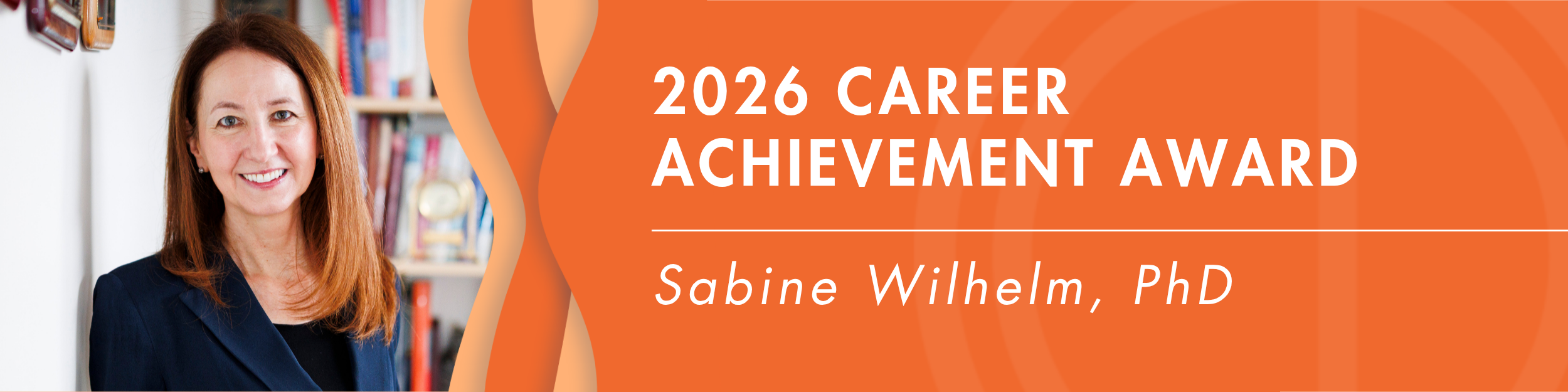
2026 Career Achievement Award Winner: Sabine Wilhelm, PhD
Highlighting the significant and notable contributions of a professional in the field of OCD and related disorders.
Sabine Wilhelm, PhD, is the Donovan-Chien Family Endowed Professor at Harvard Medical School and Chief of Psychology at Mass General Brigham. She directs both the Center for OCD and Related Disorders and the Center for Digital Mental Health at Massachusetts General Hospital. Dr. Wilhelm’s work leverages AI and technology to improve mental health care globally, focusing on developing personalized, scalable digital treatments. She has authored 375 publications and nine books. She has received major awards, including the NAMI Scientific Research Award and the Peter Ranney Innovation Award from the World Medical Innovation Forum. Dr. Wilhelm is the outgoing Chair of the IOCDF Scientific & Clinical Advisory Council after serving since 2023, and she has served on numerous committees to support the Foundation’s work to advance research and resources for OCD and related disorders.

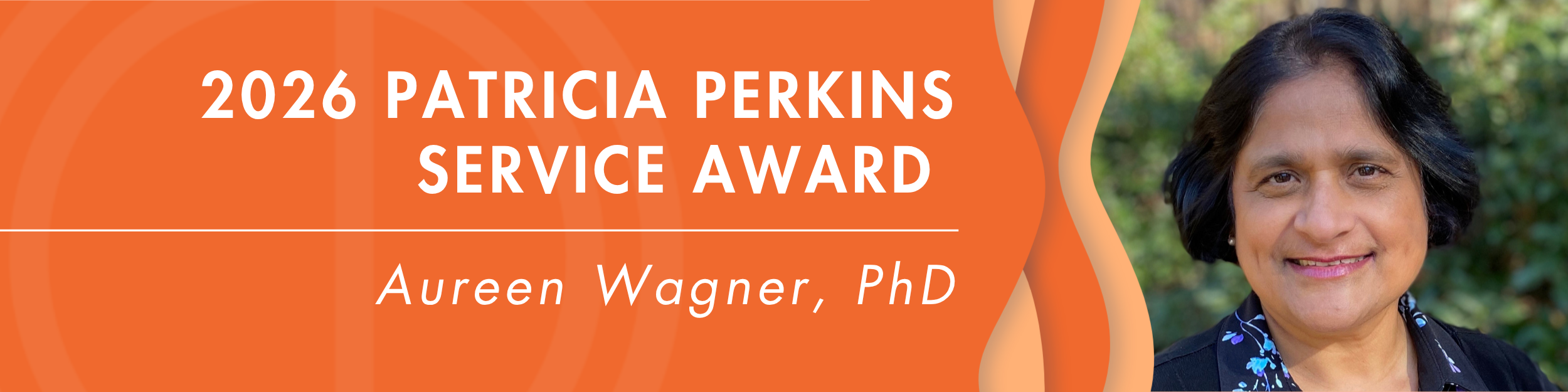
2026 Patricia Perkins Service Award Winner: Aureen Wagner, PhD
Honors any professional or IOCDF member who has stood out as a long-time (10+ years) and active contributor to the IOCDF in multiple ways. This award is named after Patricia Perkins, IOCDF co-founder, past president of the Board of Directors, and previous executive director.
Winner Bio: Aureen Pinto Wagner, PhD, has been involved with the International OCD Foundation since 1992 and a frequent presenter at its conferences and programs for families, clinicians, and youth. She serves on the IOCDF’s Scientific and Clinical Advisory Board and has been faculty with the Behavior Therapy Training Institute since 2001.
Dedicated to expanding access to evidence-based OCD treatment, Dr. Wagner provides clinician training, workshops, and consultation nationwide. She is the author of the professional treatment manual Treatment of OCD in Children and Adolescents: A Professional’s Kit and several award-winning books for families, including “Up and Down the Worry Hill: A Children’s Book about Obsessive-Compulsive Disorder and its Treatment,” “What to do when your Child has Obsessive-Compulsive Disorder: Strategies and Solutions” and “Worried No More: Help and Hope for Anxious Children.”
At The Anxiety Wellness Center in Cary, North Carolina. Dr. Wagner provides in-person and telehealth treatment for children, adolescents, and adults with OCD, anxiety, and related conditions, along with parenting support for families.

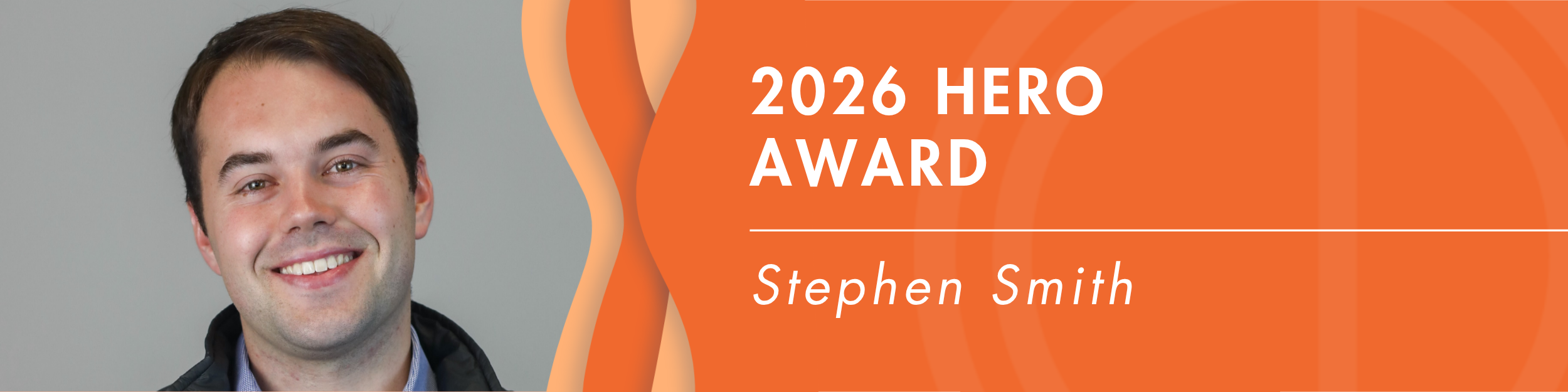
2026 Hero Award Winner: Stephen Smith
Recognizes any individual that has stood out as a particularly effective advocate for OCD and related disorders or who helped raise awareness of these disorders.
Stephen Smith is the Co-founder and Chief Executive Officer of NOCD, the world’s largest OCD-specialty treatment provider for both adults and children. After emerging from a personal struggle with undiagnosed OCD and experiencing the success of Exposure & Response Prevention (ERP) therapy first-hand, Stephen made it his mission to transform the behavioral health treatment system for people with OCD and related conditions. Under his leadership, NOCD has done that. NOCD drives OCD awareness campaigns that reach millions of people each year, cares for hundreds of thousands of people with OCD, and is contracted to serve more than 140 million commercial lives nationally.

2026 Youth Hero Award Winner: Gabriella Lee
Recognizes any youth (under 18) that has stood out as a particularly effective advocate for OCD and related disorders or who helped raise awareness of these disorders. This award is presented by UNSTUCK: an OCD kids movie.
Gabriella Chaeyoon Lee is a junior at Great Oak High School in California who is dedicated to promoting mental health awareness, particularly surrounding OCD. Inspired by her personal connection to OCD through her mother’s diagnosis, she actively works to reduce stigma and support others through her school club and independent initiatives. She is passionate about creating safe and inclusive spaces where individuals feel understood and supported. She hopes to continue her advocacy and contribute to meaningful change in mental health communities.

2026 Illumination Award Winner: Tiffany Jenkins
Honors media personalities who have represented OCD or related disorders in a respectful, accurate, and appropriate way, or who have challenged stereotypes and helped to fight stigma around mental health issues.
Tiffany Jenkins is a comedian, New York Times bestselling author, speaker, and podcast host with a combined social media following of over 9 million and more than one billion video views worldwide.
While widely recognized for her relatable and candid comedy, Tiffany is deeply committed to raising awareness around mental health and addiction. Drawing from her own lived experience in recovery, she travels across the United States speaking at high schools, correctional facilities, treatment centers, and conferences, where she delivers impactful, honest conversations that resonate with diverse audiences.
Above all, Tiffany is a devoted mother, bringing authenticity, resilience, and humor into both her work and her everyday life.

The post Introducing the 2026 IOCDF Award Winners of the 2026 Annual OCD Conference appeared first on International OCD Foundation.
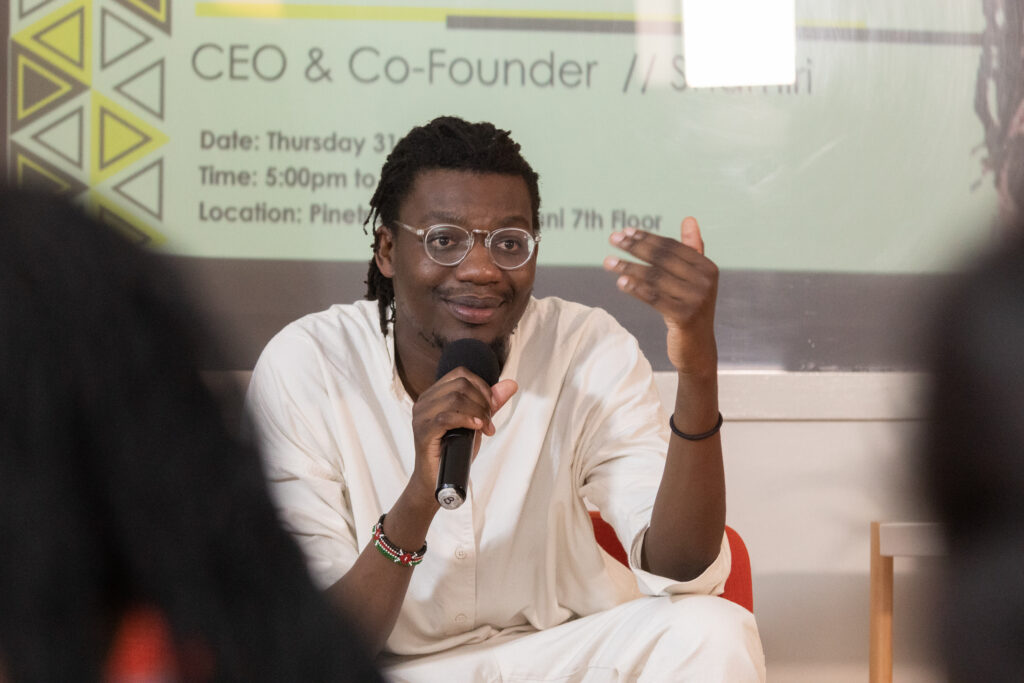
A Conversation with Tom Osborn, Founder of Africa’s Largest Mental Health Provider Shamiri Institute
Aaliyah Nadirah Madyun, program director at the Stavros Niarchos Foundation (SNF) Global Center for Child and Adolescent Mental Health at the Child Mind Institute, recently sat down with Tom Osborn, founder of the Shamiri Institute and an International Advisory Board member at the SNF Global Center. They discussed Osborn’s remarkable journey as a young entrepreneur.
At just 18, while studying at Harvard University, Osborn founded the Shamiri Institute, which has since grown into Africa’s largest youth mental health provider — now reaching over 100,000 young people annually and having trained and employed more than 3,000 providers. In this candid conversation, Osborn shares hard-won lessons on resilience, mentorship, and well-being. He offers advice to the SNF Global Center’s Youth Council members — many of whom are launching their own mental health initiatives in communities across Greece, Brazil, South Africa, and beyond.

AM: You founded Shamiri when you were just 18. Many members of our SNF Global Center Youth Councils are now launching their own mental health organizations. What advice would you give them?
TO: I think these past three to five years post-COVID have been quite good for mental health. There’s just more dialogue, more conversation. It’s maybe one of the best times to start working in mental health. There is a big space for young people to be leaders. On the other hand, it’s also very difficult.
AM: What kind of difficulties can young people expect to encounter?
TO: It’s very difficult for a few reasons. We normally start this work because we have a lot of passion, enthusiasm, and commitment to the cause. But that is not the day-to-day of being a social entrepreneur. It’s convincing people to partner with you, to fund you, etc., which is a completely different skill set to learn. And the second part is getting a level of comfort with failure. Because the reality is, on average, nine out of ten doors that you try to open will not open; especially when you are starting. For example, if you’re in Brazil and there are 100 other young people trying to start something, there is a finite pool of opportunities and resources. So, when you are starting, part of the initial process requires you to develop resilience and a growth mindset.
AM: Could you speak about the role mentorship has played in your journey, and how young entrepreneurs can leverage mentorship to navigate the challenges of building something from the ground up?
TO: Mentorship is really crucial. Finding folks — researchers, practitioners, or just folks in the community — who can help provide guidance as you build the skills you need to be an effective entrepreneur.
AM: How would you recommend young people go about finding a mentor? It seems like that ability, identifying and cultivating a mentoring relationship, might be a skill set in itself.
TO: In my experience, there are three pathways. In many countries we have what we call accelerators, which look for young people who literally have an idea and enthusiasm, and then take them through 10–16 weeks of bootcamp where they can learn the skills to develop their idea. So, that’s one pathway. The second pathway, which really worked for me but may sound intimidating, is direct outreach to folks who have done something similar. So, you can do some research. It doesn’t have to even be related to mental health. It can be education or some broader thing. But find someone who has built something that you admire. You will be surprised how many people are willing to support and pay it forward, because we all have benefited from the help of someone else. I created an Excel spreadsheet with a list of people who I looked up to, and I reached out to them on LinkedIn. Sometimes you can even find their email. Some people said “no”, but if you reach out to 10 or 20 people, some people will talk to you. And the third pathway is . . . increasingly we have a lot of resources like the SNF Global Center Youth Councils and international organizations that deal with mental health. You can join these organizations to expand your network.
AM: Could you share your story with us and tell us how you got started?
TO: I started when I was in University as part of a research project I was doing when I was studying psychology. I needed to do something for my thesis and in the process of doing that I applied to an accelerator. I also went to my professor and asked him, ‘Do you know anyone who could connect me with?’ In fact, he helped me write my first grant and gave me the opportunity to learn those entrepreneurial skills.
AM: Starting at such a young age, one can imagine that you must have encountered many challenges and setbacks. What were the key lessons you took away from that growth period?
TO: The reality of this work, and not to discourage people but to give a factual picture, is that there are more setbacks than there are wins. Part of the process is that you learn from the setbacks. I can give you an example of some of my own setbacks. In my first year of doing this, we tried to raise money. We applied for grants, sent out proposals, etc.; but we couldn’t raise any money. So, what I did after getting the rejection is I would email and ask, “Do you have any feedback for us about why we didn’t get the funding?” or “Can we jump on a call so you can explain what we can do better?” What I learned from that was the way I was communicating what we were doing made sense in my mind, but I wasn’t putting myself in the shoes of the person who was reviewing the proposal. I only have five to ten minutes of someone’s time. So, how can I really simplify my message? For example, my first proposal was, “Shamiri does task-shifting mental health interventions for adolescent depression, anxiety, etc.” If you are in the field, you maybe get it. But if you are somebody who is just reading grants on mental health education, you don’t really get it. Now we say, “Shamiri means thrive and we enable young people to thrive.” So that invites people to ask how we’re helping people to thrive.
AM: What is another setback that surprised you?
A second example of a failure is getting buy-in from the beneficiaries that we were trying to work with. I thought, “We have this great idea, we’ve done this research, and it works. We’re going to go to schools and they’re going to be like, ‘This is great! Come work with us.’ Teachers are going to want to work with us.” But actually, in our first three years we were trying to work with 25,000 students and we ended up working with only 1,000 students. We really struggled with getting people to sign up. The lesson from that was we were thinking more from the idea this was our product, rather than thinking, “What is the problem that I am trying to solve for this person?” To give a concrete example, there are three people we need to get buy-in from: young people in schools, teachers, and parents. Just having a great product does not mean that people are going to use it. You need to figure out what the problem is. How can I solve it? How do I communicate this to users?
AM: I can imagine that dealing with failures and setbacks is extremely hard, especially for a young person. What would you say to a young person who is currently experiencing this?
TO: Finding ways to stay grounded and healthy from a well-being perspective is really crucial. Identify what matters to you and connect with those things. And ideally if you can find a way to build a routine around that, it could help. Doing this work takes a big toll. If you don’t find ways to ground yourself and get the energy to continue with this, you may burn out.
AM: Do you have some final words for our Youth Council members and other young people reading this?
TO: Those closest to the problem are those closest to the solution. I am from Kenya, which is a really young country. The median age is 19 and 70 percent of the population is under 30. If we are to solve some of these pressing problems, including mental health, those solutions are going to have to come from young people.
The post Turning Rejection Into a Roadmap: Advice for the Next Generation of Mental Health Leaders appeared first on Child Mind Institute.

This is today’s edition of The Download, our weekday newsletter that provides a daily dose of what’s going on in the world of technology.
Casey Harrell has had a set of electrodes embedded in his brain for almost three years. Harrell, who has ALS and is paralyzed, first used his brain-computer interface (BCI) to “speak” in 2023. Since then, he’s clocked thousands of hours of use.
Harrell can now use the device largely independently. His team has added new features to it, and he also uses it to surf the web and perform his job. “Living with a disease like ALS, you are supposed to have diminished dreams. I do not,” Harrell told MIT Technology Review.
The team behind the device call Harrell “the first power user of a speech BCI.” They now plan to add further enhancements to the device.
Dive into the groundbreaking impact of Casey Harrell’s BCI.
—Jessica Hamzelou
While a public backlash against AI brews across the US, South Koreans are optimistic. Only 16% say they are more concerned than excited about AI—the lowest of the 25 countries surveyed by the Pew Research Center—while 50% of Americans were more worried than excited.
South Koreans share a deep conviction that embracing technology is integral to modernizing the country and cementing its place in the global order. Their fascination with AI is just the latest incarnation of that ethos—and it’s making them anxious to stay ahead.
Read the full story on South Korea’s AI fervour.
—Michelle Kim
This story is from The Algorithm, our weekly newsletter giving you the inside track on all things AI. Sign up to receive it in your inbox every Monday.
The must-reads
I’ve combed the internet to find you today’s most fun/important/scary/fascinating stories about technology.
1 The US says it restricted Anthropic AI over foreign intelligence risks
Commerce chief Lutnick said he acted over national security fears. (Reuters $)
+ Following the ban, Anthropic disabled access to its new models. (BBC)
+ Both sides are increasingly desperate for a resolution. (WSJ $)
2 DeepSeek just became China’s most valuable startup
It raised $7 billion, the largest-ever first-round funding for an AI startup. (The Information $)
+ The deal values DeepSeek at over $50 billion. (WSJ $)
+ Its unusual structure preserves founder control. (Reuters $)
+ DeepSeek’s new flagship model has caused a stir. (MIT Technology Review)
3 Alibaba has unveiled AI models for robots amid a shift from chatbots
It’s joined a global race to move AI into the physical world. (SCMP)
+ AI is learning to understand its surroundings. (MIT Technology Review)
4 Fox is buying streaming giant Roku for $22 billion
The deal creates the third-largest player in US TV by viewing share. (BBC)
+ Fox is making a big bet on free streaming. (Washington Post $)
5 EA has launched a new way to advertise “directly into gameplay”
EA Advertising allows brands to become part of the game itself. (CNBC)
+ Xbox’s new chief strategy officer is also eyeing in-game ads. (PC Gamer)
+ GenAI could reinvent what it means to play. (MIT Technology Review)
6 It’s trivially easy to use Reddit to manipulate AI search
A tiny snippet of text can trick ChatGPT and Google’s AI search. (404 Media)
+ AI search is being manipulated to generate dangerous biases. (BBC)
7 Sperm have been made magnetic to allow IVF inside the body
The technique enables remote guidance towards an egg. (New Scientist $)
+ Automation and AI are transforming IVF. (MIT Technology Review)
8 The world’s leading deepfake expert no longer trusts his own eyes
He’s struggling to prove what’s real before the internet decides. (NYT $)
9 Meta’s CTO admits its AI reorganisation was “atrocious”
He’s promised staff better communication—and snacks. (Wired $)
10 Silicon Valley billionaires are pretending to kill each other for fun
In a new game show from Peter Thiel’s Founders Fund. (WSJ $)
Quote of the day
—Alex Stamos, the former chief security officer of Facebook, tells the Washington Post that banning foreign access to Anthropic’s leading model is a disproportionate punishment.
One More Thing
Since its birth in the late 2000s, effective altruism has aimed to answer a deceptively simple question: “How can those with means have the greatest impact?”
Directing money to evidence-based approaches is EA’s best-known technique. But as it’s expanded from an academic philosophy into a community and a movement, its ideas of the “best” way to change the world have evolved as well.
—Rebecca Ackermann
We can still have nice things
A place for comfort, fun, and distraction to brighten up your day. (Got any ideas? Drop me a line.)
+ The humble table has been reimagined as an unconventional public artifact.
+ Take a visual tour of the weird, centuries-old history of architecture’s most gruesome gargoyles.
+ A colorful parakeet unseen for an entire century was triumphantly rediscovered in an unexplored Indonesian forest.
+ This shimmering Southern Lights timelapse filmed by an astronaut on the SpaceX Dragon is stunning.