Why do South Koreans love AI so much?

This story originally appeared in The Algorithm, our weekly newsletter on AI. To get stories like this in your inbox first, sign up here.

When I landed in Seoul after a grueling 12-hour flight from San Francisco, I walked through an unmanned immigration checkpoint, where a machine scanned my face and passport. On the subway home, people were glued to their phones (powered by flawless 5G even underground), as we raced past platforms lined with LED screens of ads celebrating K-pop idols’ birthdays. When I got off the station in Gangnam, a cartoon-eyed robot on wheels was waiting patiently at a crosswalk to deliver someone’s dinner. Internet cafés dotted the sidewalks, crammed with teenagers playing computer games, maybe hoping to become the next legendary pro gamer.

I stood at a bus stop with interactive touch screens showing real-time bus schedule updates. It will soon become an “AI bus stop,” the Gangnam district announced in June, with a kiosk that answers riders’ questions in multiple languages. The news didn’t surprise me. Having grown up in the city, I’ve watched Seoul transform from a scrappy boomtown into the gleaming tech capital it is today.

South Korea loves AI.

While a public backlash against AI is brewing across the US, South Koreans are optimistic. Only 16% say they are more concerned than excited about AI—the lowest of any of the 25 countries surveyed by the Pew Research Center—while 50% of Americans were more worried than excited. A majority of Koreans use AI every day, either as a sort of personal assistant or to do tasks at work, according to surveys by the Ministry of Culture, Sports, and Tourism and Korea Chamber of Commerce and Industry.

One of the most wired countries in the world, South Korea loves to street-test every new technology on the block—AI webcomics, virtual K-pop idols, and humanoid monks. And the appetite for experimentation doesn’t stop with ordinary citizens. Government agencies are early adopters too, deploying AI textbooks in schools and AI eldercare robots in welfare centers. South Koreans share a deep conviction that embracing technology is integral to modernizing the country and cementing its place in the global order. Their fascination with AI is just the latest incarnation of that ethos—and it’s making them anxious to stay ahead.

Engineered enthusiasm

All this techno-optimism has largely been engineered by South Korea’s national agenda to make AI a motor of economic growth. “The South Korean government has designated an AI-powered Fourth Industrial Revolution as the country’s path forward and aggressively promoted and invested in it,” says Chihyung Jeon, a professor of science and technology policy at the Korea Advanced Institute of Science and Technology. “South Koreans have consistently and relentlessly been told by the government about AI’s potential to create a better future.”

As South Korea rose from the ashes of the Korean War, technology lifted the nation from poverty into an economic powerhouse. In the 1970s, South Korea manufactured steel and ships, then semiconductors in the 1980s, broadband in the 1990s, and smartphones in the 2000s. Today, Samsung and SK Hynix supply most of the world’s high-bandwidth memory chips, which power the cutting-edge Nvidia hardware used to train AI models. South Korea’s economy now orbits these two semiconductor giants: The country’s main equity index, Kospi, surged to record highs in 2026, powered by the soaring share prices of both companies, each valued above $1 trillion.

Lee Jae-myung, president of South Korea, has pledged to vault the country into the ranks of the “top three AI powers” alongside the US and China. After taking office in 2025, he launched the Presidential Council on National AI Strategy to help buy massive amounts of computing power and a sovereign AI foundation model project that funds Korean companies to develop homegrown AI models. The government has also supported semiconductor titans, including Samsung and SK Hynix, through generous tax credits and low-interest financing. 

South Korea’s policy posture also prioritizes accelerating AI development over safety considerations. In 2024, South Korea’s legislature passed the AI Basic Act, one of the world’s first comprehensive AI laws, to promote AI development and establish light-touch regulatory guardrails. Seventy percent of South Koreans say advancing science and medicine through AI innovation is a bigger priority than protecting industries through regulation, according to the 2026 Stanford AI Index.

All of that effort might be paying off. The same index ranked South Korea as having the third largest number of notable AI models in the world, based on criteria such as state-of-the-art advancements or high citation rates. For many small countries like South Korea, AI is a chance to punch above their weight.

The blind spots

But that single-mindedness can crowd out critical reflection on AI’s broader societal impacts. “Because the national agenda on AI prioritizes economic development,” says Jeon, the professor of science and technology policy, “there isn’t much reflection on the social, political, ethical dimensions of the technology.” In 2025, the South Korean government faced a fierce backlash for rolling out AI textbooks riddled with factual inaccuracies and data privacy risks without testing them first in a pilot program to evaluate how they affect student learning.

And despite their optimism, South Koreans are still worried that AI could displace them from their jobs. After Hyundai announced in January that it will deploy Atlas humanoid robots across its car factories, the Hyundai Motor Group union protested vehemently. “Without labor-management agreement, not a single robot using new technology will be allowed to enter the workplace,” the union said. Sixty-four percent of South Koreans fear AI could displace human labor and exacerbate inequality, although 52% believe it could also increase productivity. 

On a recent Friday night in the Seoul Central Market, I went out with my cousins to a pocha, a late-night restaurant that serves fish cakes stacked in neat pyramids. As we clinked our cups of soju cut with beer—the scrappy staple cocktail of every Korean night out—one cousin asked me if I’d asked ChatGPT about my saju, a traditional Korean fortune-telling practice. A 29-year-old insurance agent in Seoul praying for a new job and a boyfriend, she said asking ChatGPT about work and dating was her favorite pastime. She pulled up her phone and punched my birth date into the chatbot. 

Addicted to their screens, trapped between unemployment and dead-end jobs, and priced out of marriage and homeownership, 46% of South Koreans in their 20s have used a chatbot to read their fortunes, according to a survey by Korea Gallup. 

My cousin said she also asks ChatGPT for tips on trading stocks, dreaming big about making bank on her investment accounts into which she’s been pouring her salary. ChatGPT, she believes, is her portal out of reality into a better future.

Despite how fond she is of the chatbot as her shaman and financial advisor, she fears losing her job to AI. She still uses ChatGPT feverishly at work, as all her coworkers do, afraid of falling behind. 

“I sometimes fear AI, but for now, it’s just so useful,” she said.
Group painting therapy for children and adolescents with bone tumors: a quasi-experimental trial evaluating anxiety, depression, post-traumatic growth, and health-related quality of life

BackgroundChildren and adolescents undergoing treatment for malignant bone tumors frequently experience heightened psychological distress, including anxiety, depression, and reduced health-related quality of life (HRQoL). Group painting therapy has been proposed as a supportive non-pharmacological strategy, yet empirical evidence in pediatric oncology remains limited. This study aimed to evaluate the impact of an eight-week structured group painting therapy program on anxiety, depression, post-traumatic growth (PTG), and HRQoL in this population.MethodsA quasi-experimental pretest–posttest study was conducted among children and adolescents (aged 8–18 years) with primary malignant bone tumors at Henan Cancer Hospital from December 2023 to December 2024. A total of 76 participants were consecutively enrolled and allocated to an intervention group receiving group painting therapy (n=39) or a control group receiving standard nursing care (n=37) using a nonrandomized ward-based approach. Anxiety, depressive symptoms, PTG, and HRQoL were assessed at baseline and post-intervention using validated instruments, including SCARED, DSRSC, PTGI, and PedsQL™ 3.0 Cancer Module.ResultsCompared with the control group, the intervention group demonstrated greater reductions in anxiety and depressive symptoms, along with significant improvements in PTG and selected HRQoL domains. Notable improvements were observed in emotional functioning, social communication, generalized anxiety, somatic symptoms, personal strength, and appreciation of life. No significant between-group differences were observed in physical symptom domains such as pain and nausea.ConclusionsGroup painting therapy was associated with improvements in emotional well-being, PTG, and selected HRQoL domains in children and adolescents with primary bone tumors. These findings suggest that painting therapy may be a promising adjunct to routine pediatric oncology care for promoting resilience and psychological recovery.

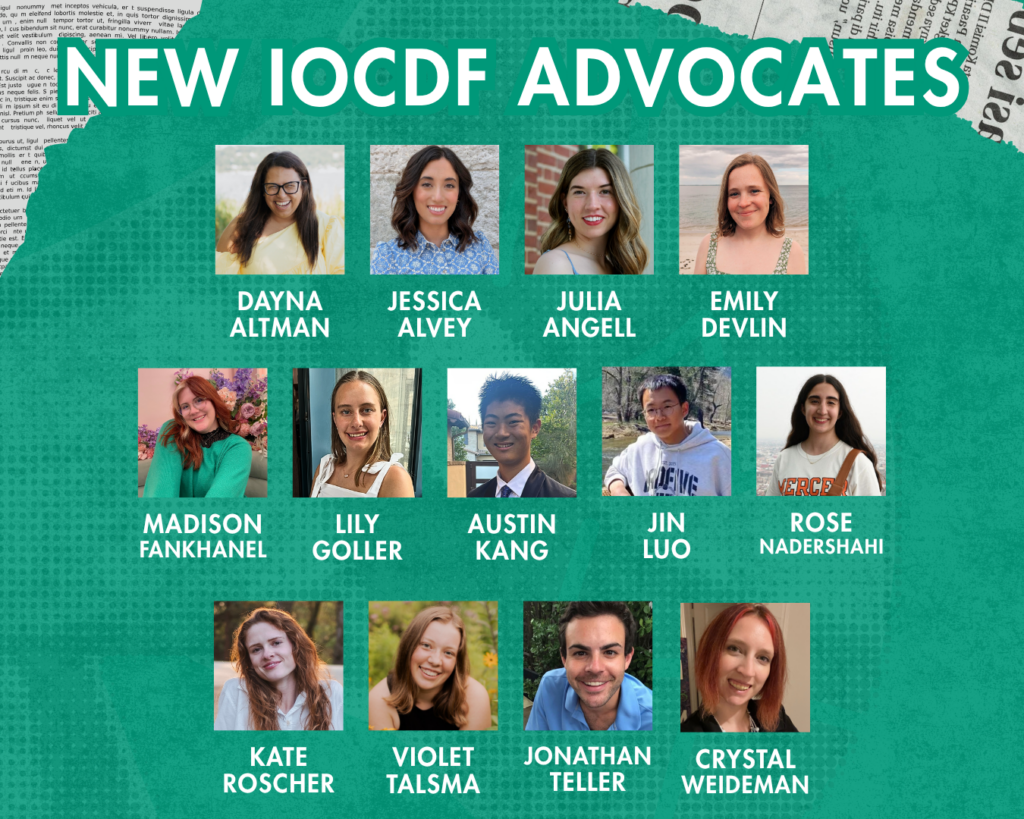
Welcome to Our New IOCDF Advocates

The IOCDF is thrilled to announce our newest cohort of Advocate volunteers! We’re welcoming 13 incredible new Advocates to our program, bringing our total to 64 dedicated volunteers working together to create meaningful change for the OCD and related disorders community.

These passionate individuals join us from bustling cities and quiet rural towns across the United States and around the world. From California to Massachusetts, and from countries including Canada and Ireland, this mix of local and global perspectives ensures we can reach and represent diverse communities everywhere.

The Power of Diverse Voices

Our newest cohort has a wide range of experiences and interests. They are passionate about addressing critical topics including:

  • Access to treatment
  • Diversity, multicultural issues, and LGBTQIA+ inclusion
  • Family issues and family accommodation
  • Young adult mental health and academic challenges
  • Public policy
  • Research advancement
  • Suicide prevention
  • Nutrition, fitness, and anxiety in athletes

This diversity of focus areas ensures that we can better represent and serve the full spectrum of our community’s needs.

Meet the Spring 2026 Advocates:

  • Dayna Altman 
  • Jessica Alvey 
  • Julia Angell 
  • Emily Devlin 
  • Madison Fankhanel 
  • Lily Goller 
  • Austin Kang 
  • Jin Luo 
  • Rose Nadershahi 
  • Kate Roscher 
  • Violet Talsma 
  • Jonathan Teller 
  • Crystal Weideman

You can see the full list of IOCDF advocates at iocdf.org/advocate-program

Your Voice Matters Too

Inspired by our Advocates? You can make a difference! Here are ways to start advocating today:

Fuel Our Mission Through Fundraising

Turn your passion into action by launching a personal fundraiser. Whether for a birthday, a race, or a creative project, you can rally your friends and family to raise critical funds. Every dollar helps build a world where everyone affected by OCD can thrive. Start your fundraiser here or explore all ways to give back here.

Advocate for policy change

Your voice can shape laws that improve access to care and insurance coverage. The IOCDF Public Policy Action Center makes it simple to find the latest bills and contact your elected officials with just a few clicks. True change starts here.

Join an IOCDF Special Interest Group

Connect with people who share your experiences or professional interests. IOCDF Special Interest Groups (SIGs) provide a platform for deeper discussion.

Whether you advocate on the national stage, share your story to fight stigma, or fundraise your way, every action creates a ripple effect of hope and understanding. Your journey, your voice, and your commitment are powerful tools.

Start today and help us build a world where everyone affected by OCD feels supported, seen, and empowered. Join a dedicated community committed to raising awareness.

Welcome again to our new IOCDF Advocates, we’re grateful to have you joining our mission!

The post Welcome to Our New IOCDF Advocates appeared first on International OCD Foundation.

<![CDATA[Let’s take a look at the next generation of pharmacotherapies for mood and anxiety disorders. ]]>

Using a Virtual Reality CAVE–Based Mindfulness Intervention to Promote Mental Well-Being in Adolescents With Anxiety Symptoms: Pre-Post Mixed Methods Pilot Study

Background: Adolescent anxiety is a growing public health concern associated with significant social and emotional impairment. Mindfulness-based interventions (MBIs) have shown promise in reducing anxiety and improving well-being; however, engagement remains challenging. Virtual reality (VR)–based delivery may enhance immersion and attention, potentially addressing barriers of traditional mindfulness formats. Evidence on VR-based mindfulness interventions for adolescents, particularly in Hong Kong, remains limited. Objective: This study aimed to evaluate the feasibility and acceptability of a VR-MBI delivered via a CAVE, an enclosed VR environment with three projected walls displaying immersive natural scenes and ambient sounds, for adolescents with mild-to-moderate anxiety symptoms in Hong Kong. Secondary aims were to explore preliminary effects on psychological outcomes and physiological stress regulation and to identify facilitators and barriers to engagement. Methods: A mixed methods, single-group pre-post study was conducted with adolescents experiencing mild-to-moderate anxiety symptoms, recruited from secondary schools and youth service organizations in Hong Kong. Participants completed an 8-week group-based VR-MBI. Feasibility and acceptability were assessed using recruitment, attendance, retention, homework practice frequency, dropouts, and adverse events. Psychological outcomes were measured using the Depression Anxiety Stress Scale–21 and the Mindful Attention Awareness Scale. Heart rate variability indices, including the standard deviation of normal-to-normal intervals and root-mean-square of successive differences, were collected at baseline and postintervention using a wearable device. Focus group interviews explored participants’ experiences. Paired-sample tests and Wilcoxon signed rank tests examined pre-post changes, and qualitative data were analyzed using thematic analysis, with findings integrated through triangulation. Results: A total of 42 participants (mean age 14.88, SD 1.90 years; 20/42, 47.6% female; 22/42, 52.4% male) enrolled and completed both assessments. Attendance was high, with 73.8% (31/42) of participants attending at least 80% (8/10) sessions, and participants engaged in regular homework practice. No dropouts or adverse events were reported. No significant pre-post changes were observed in self-reported distress, anxiety, depression, stress, or trait mindfulness (all >.05). However, significant improvements were observed in both heart rate variability indices, standard deviation of normal-to-normal intervals (mean difference 17.6 ms, 95% CI −33.88 to −1.32; =.04; Cohen =0.38) and root-mean-square of successive differences (mean difference 20.20 ms, 95% CI −38.76 to −1.65; =.03; Cohen =0.39), which may suggest preliminary enhancements in physiological stress regulation. Qualitative findings suggested perceived benefits in emotional regulation, stress reduction, focus, and sleep, with the immersive environment and group-based format identified as key facilitators. Conclusions: The CAVE-based VR-MBI was feasible and acceptable for adolescents with mild-to-moderate anxiety symptoms in Hong Kong. Despite no significant changes in self-reported outcomes, physiological improvements and positive qualitative feedback suggest early benefits not captured by self-report measures. These findings support further investigation of using controlled designs and longer follow-up periods.

Breaking Barriers in Student Mental Health Care With AI-Enhanced Group Cognitive Behavioral Therapy: Pilot Feasibility Study

Background: University students experience elevated psychological distress, with limited access to mental health services. While cognitive behavioral therapy (CBT) demonstrates efficacy for anxiety and depression, treatment gaps persist due to access barriers and insufficient between-session support. Large language model (LLM) chatbots could improve and scale CBT delivery. However, the scientific evaluation of chatbot-enhanced protocols is just emerging. Objective: This pilot study aimed to assess the feasibility, acceptability, and preliminary efficacy of an LLM-based ChatBot as an adjunct to group Unified Protocol (UP) therapy for between-session support in university students with subclinical anxiety and depression symptoms. Methods: A single-arm feasibility trial recruited university students aged 18 years and older with moderate subclinical symptoms (Social Phobia Inventory: 21‐40, Patient Health Questionnaire-9: 5‐14, or Generalized Anxiety Disorder-7: 5‐14), excluding those with current psychiatric disorders, suicidal ideation, or psychotropic medication use. The intervention comprised 4 weekly group UP counseling sessions complemented by an adjunctive Claude 3.7-Sonnet LLM ChatBot programmed with UP-based therapeutic prompts for between-session support rather than a stand-alone therapeutic agent. Primary feasibility outcomes included treatment adherence, chatbot engagement metrics, and system usability (System Usability Scale). Secondary outcomes assessed changes in generalized anxiety (Generalized Anxiety Disorder-7 Scale), social anxiety (Social Phobia Inventory), depression (Patient Health Questionnaire-9), and well-being (Short Warwick-Edinburgh Mental Wellbeing Scale) using paired tests. Qualitative feedback was collected through focus group interviews and analyzed using thematic analysis. Results: Of 72 screened participants, 37 met eligibility criteria and 19 initiated treatment (mean age 22.06, SD 1.78 years; 70.6% female). Retention was high with 17 completers (10.5% dropout rate). Among completers, 94.1% (16/17) attended ≥3 group sessions. The engagement with the CBT ChatBot was substantial: participants were active on a median of 23 days during the 34-day study period and exchanged a median of 15 messages in total. System usability was rated as excellent (mean 84.94, SD 10.98 out of 100). Pre-to-post comparisons revealed significant improvements in generalized anxiety (mean change −3.00, SD 3.46; =3.01, =.004; Cohen =0.71) and mental well-being (mean change +2.29, SD 3.65; =−2.17, =.02; Cohen =0.69). Social anxiety and depression showed nonsignificant trends toward improvement. Qualitative feedback highlighted the CBT ChatBot’s accessibility and nonjudgmental support while noting limitations in personalization. No adverse events or inappropriate chatbot interactions occurred. Conclusions: Augmenting a group UP therapy with an LLM ChatBot demonstrated high feasibility, acceptability, and preliminary efficacy signals for university students with subclinical symptoms. The hybrid intervention package achieved strong retention and engagement while maintaining safety. These findings support progression to a randomized controlled trial to definitively evaluate this technology-enhanced approach for expanding access to evidence-based mental health interventions.
<img src="https://jmir-production.s3.us-east-2.amazonaws.com/thumbs/ceb992b5356218740d97471bbda48397" />

Prevalence and Predictors of Self-Reported Adverse Experiences in Digital Meditation Training: 2 Randomized Controlled Trials

Background: Digital meditation-based interventions (MBIs) reach vast global audiences with millions of active users, yet concerns persist about the frequency and nature of adverse experiences (ie, AExs) occurring during meditation training. Some researchers have argued that AExs are substantially underdetected and reflect iatrogenic harm caused by meditation (ie, adverse effects [AEfs]). Others contend that these experiences largely reflect common stressors that would be experienced without meditation. These competing perspectives underscore the need for further research, particularly in the context of digital MBIs, the most widely used form of meditation training. Objective: This study examined the prevalence, predictors, and subjective evaluations of AExs during a digital MBI and tested whether reported experiences may be caused by meditation practice via comparisons between meditation-exposed and nonexposed participants. Methods: Data were drawn from 2 trials of the Healthy Minds Program. Exploratory study 1 (n=315) consisted of a sample of distressed US undergraduate students to estimate the prevalence of AExs and identify baseline predictors. Preregistered confirmatory study 2 (n=594) sampled distressed US adults from all 50 states to replicate findings from study 1 and to examine participants’ subjective evaluations of AExs. Study 2 additionally compared AEx rates between participants who did and did not complete guided meditations to assess whether AExs could be caused by meditation exposure. Study 3 (n=87) used qualitative methods to analyze study 1 participants’ responses to an open-ended question regarding their strategies for coping with AExs. Results: In studies 1 and 2, 27.9% (88/315) and 10.1% (40/396) of participants, respectively, reported at least one AEx during the study period, with 6.7% (21/315) and 3% (12/396) reporting functional impairment, largely aligning with previous research. Critically, in study 2, rates of AExs did not significantly differ between participants who did and did not complete guided meditations, suggesting that these experiences were not caused by meditation practice. Higher baseline depression, anxiety, loneliness, experiential avoidance, and perceived barriers to meditation predicted more frequent AExs. In studies 1 and 2, 89.8% (79/88) and 90% (36/40) of participants who reported AExs, respectively, indicated that they were glad to have learned to meditate. Qualitative analyses showed that participants used diverse coping strategies, often using skills learned through the Healthy Minds Program. Conclusions: AExs were relatively common but occurred at comparable rates among participants who did and did not meditate, challenging claims that such experiences were caused by meditation practice in distressed individuals. Although a small subset of participants reported some degree of functional impairment, most evaluated their AExs as tolerable and described their overall MBI experience as positive. Together, these findings highlight the importance of distinguishing AExs that likely reflect epiphenomena of preexisting distress or symptoms from iatrogenic harm attributable to MBIs. Trial Registration: Study 1: ClinicalTrials.gov NCT04741529; https://clinicaltrials.gov/study/NCT04741529; Study 2: ClinicalTrials.gov NCT06282523; https://clinicaltrials.gov/study/NCT06282523
<img src="https://jmir-production.s3.us-east-2.amazonaws.com/thumbs/09106e6bad7f3f15798304e0c00626ec" />

Logotherapy techniques to unlock resilience among Ukrainian refugees: a pre-post quasi-experimental design

The ongoing Russian-Ukrainian war has triggered a significant refugee crisis, resulting in widespread trauma, displacement, and mental health challenges among affected populations. This study aimed to explore the potential usefulness of logotherapy, a meaning-centered therapy, in addressing the mental health needs of Ukrainian refugees. The research was conducted in a naturalistic scenario of a group of 20 Ukrainian refugees residing in Europe who received a tailored logotherapy or meaning-centered psychological support, compared with controls who did not. Meaning-oriented techniques, namely, Socratic Dialogue, Modification of Attitude, Paradoxical Intention, and Dereflection were used during the intervention. Participants were assessed in a pre-post quasi-experimental design using validated self-report measures for anxiety (Generalized Anxiety Disorder-7), depression (Beck Depression Inventory), and general health (General Health Questionnaire-12). The improvements were clearly observed as reductions in their self-reported anxiety and depressive symptoms after the meaning-centeres psychological support. Overall, these preliminary findings indicate that logotherapy may be a promising and feasible approach to psychological support for refugee populations. However, given its pilot nature and quasi-experimental design, causal conclusions cannot be drawn, and further research using larger, randomized, and methodologically rigorous designs is warranted to examine long-term effects and broader applicability.

The Download: “reprogramming” aging, and the hidden sense of interoception

This is today’s edition of The Download, our weekday newsletter that provides a daily dose of what’s going on in the world of technology.

Why “reprogramming” is the buzziest approach to reversing aging right now

Earlier this week, Life Biosciences, a biotech company focused on reversing age-related diseases, announced that it had dosed its first volunteer. A person with glaucoma has had an experimental treatment injected straight into their eyeball.

The idea is to treat the disease by regenerating healthy nerves in the eye—but the company already hopes to go further. If the treatment can reverse glaucoma, similar treatments could reverse other diseases of aging. Maybe, just maybe, they could reverse aging altogether.

The approach relies on “reprogramming” cells to a younger state. It’s one of many strategies being explored by biotech companies looking to slow and reverse aging. But of all of them, it seems to be the one that is truly taking off.

Read the full story on the pursuit of reprogramming for rejuvenation.

—Jessica Hamzelou

This story is from The Checkup, our weekly newsletter giving you the inside track on all things biotech. Sign up to receive it in your inbox every Thursday.

Inside Interoception: The hidden sense of how you feel inside

Scientists have a word for how we sense ourselves from the inside: interoception. Today, thanks to a 2021 Nobel Prize and new tools that can map internal signaling across the body, research into interoception is taking off.

As researchers decode how signals move between body and brain, a clearer picture is starting to take shape—with implications for how we understand and treat conditions from obesity to chronic pain to anxiety.

Find out how it’s leading to a “new continent of awareness.”

—Katherine W. Isaacs

This story is part of MIT Technology Review Explains, our series untangling the complex, messy world of technology to help you understand what’s coming next. You can read more from the series here. 

The must-reads

I’ve combed the internet to find you today’s most fun/important/scary/fascinating stories about technology.

1 SpaceX has officially delivered the largest IPO in history
It’s raised a record $75 billion at a $1.77 trillion valuation. (Axios)
+ Making Elon Musk the world’s first trillionaire (on paper). (Reuters $)
+ The IPO will now put his “extreme ownership” to the test. (Wired $)
+ While China attempts to build a Starlink rival. (Rest of World)
+ And other challenges to SpaceX emerge. (MIT Technology Review)

2 Jeff Bezos wants to build an “artificial general engineer”
Through his new industrial AI startup, Prometheus. (NYT $)
+ Which just raised $12 billion, valuing it at $41 billion. (TechCrunch)
+ Meanwhile, OpenAI is building a fully automated researcher. (MIT Technology Review)

3 Chinese regulators are dramatically intensifying tech enforcement
A spell of relative restraint has ended. (SCMP)
+ Regulators have admonished e-commerce giants Alibaba and JD.com. (FT $)
+ And blocked Meta’s acquisition of Chinese AI startup Manus. (BBC)

4 Google says Chinese cybercriminals used Gemini to scam Americans
It’s suing the network over the alleged AI-powered scams.(NYT $)
+ “Supercharged scams” are one of our 10 Things That Matter in AI Right Now. (MIT Technology Review)

5 Ukraine’s defense AI chief predicts a “new paradigm” of warfare
He expects AI systems to unify into a single battlefield network. (Reuters $)
+ AI chatbots could be used for targeting decisions. (MIT Technology Review)

6 Anthropic has rankled users with its safety-first Fable model
Stringent safety rules and refusals to help have sparked a backlash. (NBC)
+ Anthropic has backtracked on some policies. (Wired $)

7 Pokémon Go data trained AI that could assist military drones
It could help them locate themselves in war zones. (Guardian)
+ Pokémon Go data is also training delivery robots. (MIT Technology Review)

8 Orbital data centers are harder than Silicon Valley thinks
Shedding heat in space requires ingenious new designs. (IEEE Spectrum)
+ We need a few things to put data centers in space. (MIT Technology Review)

9 A toy universe shows time could be a quantum illusion
It could emerge from quantum interactions, rather than just existing by default. (New Scientist $)

10 Chatbots keep telling stories about a lighthouse keeper called Ella
And now we may finally know why. (404 Media)

Quote of the day

“People are paying a trillion dollars for Elon.” 

—Ross Gerber, the CEO of Gerber Kawasaki, which owns SpaceX stock, tells the New York Times why he believes the company’s IPO is overvalued.

One More Thing

a knight standing in a virtual space

GEORGE WYLESOL


How generative AI could reinvent what it means to play

I was immediately attracted to open-world games, in which you’re free to explore a vast simulated world and choose what challenges to accept. To make them feel alive, these games are inhabited by crowds of “nonplayer characters” (NPCs). But the illusion starts to weaken when you spend enough time with them.

It may not always be like that. Just as it’s upending other industries, generative AI is opening the door to entirely new kinds of in-game interactions that are open-ended, creative, and unexpected. The game may not always have to end.

Discover how generative AI could make games—and other worlds—deeply immersive.

—Niall Firth

We can still have nice things

A place for comfort, fun, and distraction to brighten up your day. (Got any ideas? Drop me a line.)

+ My feet have fallen for the Crocs x Super Mario collection.
+ Denmark’s 2026 Mullet Championship is the hottest hairdo contest of the year.
+ Hungry at half-time? Here are seven mouth-watering international recipes inspired by the World Cup.
+ Feast your eyes on a helicopter bound for Mars and a flowery Milky Way frame in Nature’s top images from last month.