Traditionally, antibiotic discovery has involved the isolation of natural products from fungi and bacteria—largely actinomycetes. However, the perception that antibiotic-producing actinomycetes have yielded all they can, with little left to give, has motivated a recent shift toward novel antibiotic discovery processes.
However, a new study from researchers at McMaster University presents the isolation of a novel antibiotic from Streptomyces rimosus that showed efficacy against multiple bacteria, including multidrug-resistant Enterobacteriaceae. In addition, the compound—known as manikomycin—is the first antibacterial agent known to target the E-site in the large ribosomal subunit, opening the door to an entirely new class of treatments.
“Not a single antibiotic prescribed in clinics today does what manikomycin does,” says Gerry Wright, PhD, professor in the department of biochemistry and biomedical sciences at McMaster University in Ontario, Canada. “Not azithromycin, not tetracycline—none of them. So, we’ve not only found a brand-new drug candidate, but we’ve also established a brand-new target in bacteria that could potentially be exploited with other new drugs.”
This discovery marks the fourth new antibiotic candidate from the Wright lab in just over a year, underscoring a promising new approach to drug discovery at a time when antibiotic resistance is a growing global threat.
Given that many antibiotics used today target the ribosome, bacteria have evolved broad defense strategies against them. However, a drug targeting a different part of the ribosome will not face the same resistance mechanisms.
Manikomycin binds in the E-site of the large subunit of the bacterial ribosome, the authors write, “preventing entry of the 3′ end of the tRNA into the E-site and effectively hindering the translocation step of protein synthesis in a sequence-context-specific manner.”
“Even newly discovered drugs that attack those same old targets may quickly face resistance,” says Wright. “But, over the history of medicine, we’ve put absolutely no selective pressure on this particular target, so bacteria have no existing resistance mechanisms for manikomycin.”
The discovery of manikomycin builds on work that began more than 75 years ago, when scientists first discovered that the soil bacterium Streptomyces rimosus produced oxytetracycline, a powerful new drug that would help usher medicine into the antibiotic age.
While the breakthrough was one of several like discoveries made in the mid-1900s, S. rimosus and related bacteria have long since been abandoned as a potential source of new antibiotics.
“There is an overwhelming perception in science that these bacteria have been mined completely dry—that we’ve found all there is to find,” Wright says. “Our lab has found that this is not at all the case.”
Wright’s group, working with collaborators at the University of Illinois Chicago and the University of Hamburg in Germany, used an advanced fractionation method to uncover the new antibiotic. By filtering out oxytetracycline and other abundant compounds from the chemical mixtures produced by S. rimosus, the researchers were able to isolate scarcer molecules that had gone unnoticed over the years.
“There is likely so much still to be discovered through fractionation,” says Manpreet Kaur, PhD, a postdoctoral fellow in Wright’s lab. “Revisiting the extracts of even-well studied bacteria like Streptomyces may lead to similar discoveries in the future.”
Wright’s team is now advancing manikomycin toward clinical development. They have already shown that the new antibiotic is not toxic to human cells, and that it works well in a lab-controlled model of infection—key milestones on the early development pathway.
The team is now working on optimizing the drug’s “residency time”—or how long it stays active in the body—and have produced 60 different derivatives with plans to push the best one forward.
“We’re excited about this molecule’s potential,” Wright says. “There’s a clear path forward, and we may even be able to expand its spectrum so that it eventually affects even more bacteria, too.”
OTTAWA, ON – The Mental Health Commission of Canada (the Commission) today released “Finding New Pathways: An action plan for criminal justice and mental health in Canada”. The plan provides an evidence-based roadmap to address systemic gaps in care, coordination, and community supports, recognizing the impact of mental health on the criminal justice system.
Many are working to improve outcomes but needs remain high and progress is uneven. This action plan is a practical pan-Canadian reference point that seeks to contribute to the mental health and wellbeing of all individuals who interact with the criminal justice and forensic mental health systems, including those who work within them.
Developed through a rigorous five-year process, the action plan was shaped by input from national subject matter experts, research, and the lived and living experiences of justice-involved individuals and system workers. The action plan comes at a critical time, as individuals experiencing mental health challenges currently comprise roughly three-quarters of all federally incarcerated people in Canada.
“Meaningful and sustainable transformation is within reach for Canada,” said Lili-Anna Pereša, President and CEO of the Mental Health Commission of Canada. “While these transformative changes cannot be implemented overnight or by one group alone, this action plan serves as a starting point. It centralizes evidence-based approaches designed to break the cycle of recidivism and prioritize prevention, diversion, end-to-end supports and continuity of care.” The action plan stands on three strategic pillars:
Care, not criminalization: Ensuring all people in Canada have access to supports that help prevent involvement with the criminal justice system, and prioritizing diversion for those with mental illnesses.
Care during criminal justice involvement: Providing access to high-quality, trauma-informed, and culturally safe health and social supports for those within the system.
Care after criminal justice involvement: continuity of care and seamless integration into community-based mental health and substance use services upon release.
“Finding New Pathways” identifies 68 specific recommendations across individual, community, institutional, systemic, and societal levels. It pays particular attention to priority populations, including people from First Nations, Inuit, and Métis, and African, Caribbean, and Black, and other equity-deserving groups who are currently overrepresented in the justice system and face distinct mental health needs.
The action plan further highlights the critical importance of supporting the psychological health and safety of workers within the criminal justice and forensic mental health systems, noting that public safety personnel are significantly more likely to experience symptoms consistent with mental disorders than the general population.
Howard Sapers, current executive director of the Canadian Civil Liberties Association, former Correctional Investigator of Canada, and project advisor for the action plan, emphasized the necessity of these reforms: “ or too long, Canada’s criminal justice system has been asked to shoulder responsibilities it was never designed to carry. The over representation of people with mental health needs in police encounters, courts, and correctional facilities is a predictable consequence of systemic gaps in care, coordination, and community supports. The Mental Health Commission of Canada’s National Action Plan offers something we have been missing for years: a coherent, evidence-based roadmap that prioritizes health, human rights, and dignity.”.
Media Contact:
For English requests, please contact Josie Sabatino at jsabatino@summa.ca; 250-649-6856.
For French requests, please contact Carlene Variyan, cvariyan@summa.ca; 613-601-7456.
A global research team headed by scientists at University of Toronto’s Leslie Dan Faculty of Pharmacy has demonstrated the effectiveness of a suite of low-cost, portable biotechnology tools that are designed to improve access to laboratory research and diagnostics in resource-limited settings.
The newly reported study highlights how decentralized biomanufacturing tools and freeze-dried reagents can help researchers produce high-value biological materials locally—reducing reliance on fragile international supply chains and expanding access to life sciences innovation globally.
“For labs in low- and middle-income countries [LMICs], access to high-quality supplies and equipment is a chronic problem,” says research lead Keith Pardee, PhD, associate professor at the Leslie Dan Faculty of Pharmacy Pardee. “Shipping can take a long time, it’s expensive, and products often require a cold chain to retain their effectiveness. This research is in response to those challenges to develop tools that are more accessible for labs in lower-resource settings and improve research equity.”
Pardee, alongside collaborators including Camila González, PhD, at the Universidad de los Andes, Bogotá, Fernán Federici, PhD, at Millennium Institute for Integrative Biology (iBio), Santiago, and Lindomar Pena, PhD, at Aggeu Magalhães Institute (IAM), Oswaldo Cruz Foundation (Fiocruz), Recife, reported on the study in Science Advances. In their paper, “International multisite implementation of distributed cell-free protein biomanufacturing to advance health and research equity,” the authors concluded, “This study lays the foundation for fundamental shifts in biotechnology manufacturing practices in LMICs and developing nations, moving from reliance on centralized and outsourced production facilities to adopting decentralized, local production platforms.”
“Emerging biotechnologies hold transformative potential to strengthen economic and health security, while benefiting the planet,” the authors wrote. However, they pointed out, “Access to advanced tools, such as molecular diagnostics, life-saving treatments, and biomanufacturing infrastructure, remains largely concentrated in wealthier regions, thereby restricting access to transformative solutions for communities that need them most.”
A key factor is the reliance on centralized bioproduction systems, “… which require sophisticated, capital-intensive infrastructure and cold supply chains that are often unavailable in resource-limited settings.” Access to healthcare is similarly affected by the availability of biomanufacturing capacity and biologistics, which can slow delivery of diagnostics, delay disease control programs, and limit the ability to carry out life sciences research.
For their newly reported work the team focused on synthetic biology and cell-free systems—technologies that isolate and freeze-dry the molecular machinery needed to produce proteins commonly used in life sciences research. Because the reagents are freeze-dried, they can be shipped and stored without refrigeration, then reactivated simply by adding water. “One promising avenue to improving access is cell-free protein synthesis (CFPS), which offers the potential to empower communities through affordable, low-burden, on-site production of critical bioreagents, diagnostic tools, and therapeutic agents,” the researchers stated.
They paired these systems with low-cost, adaptable hardware, including a 3D-printed hand-powered centrifuge developed by postdoctoral fellow Mohammad Simchi, PhD, at the Leslie Dan Faculty of Pharmacy. Together, the technologies enabled teams to produce a range of research proteins and diagnostic tools in diverse settings, from conventional laboratories to remote field locations.
“With efficient, low-cost systems in place, rapid on-site production of high-value bioproducts for research, including growth factors, vaccines, and diagnostic enzymes, became achievable within a single day and at a fraction of the typical cost,” they commented.
Using the platform, researchers successfully produced growth factors used in life sciences research and therapeutics, as well as a SARS-CoV-2 vaccine candidate tested in mice and diagnostic tools targeting several clinically relevant pathogens. Using molecular, cell-based, animal model, and clinical sample testing, the bioproducts were validated through proof-of-concept studies and multisite clinical trials. “Direct comparisons with high-cost commercial reagents, the current gold standards, demonstrated similar performance, efficiency, precision, and reproducibility,” the investigators further noted.
First author Severino Jefferson Ribeiro da Silva, PhD, a postdoctoral fellow in Pardee’s lab, said, “Our work shows that it is possible to produce high-value bioreagents on site, essentially anywhere. Through this work, we demonstrated our tools across diverse international settings while maintaining performance comparable to commercial products.”
The authors say that, to their knowledge, the study is the first to translate cell-free biomanufacturing from laboratory to real-world use, across multiple geographic settings, including those that historically have had limited access to the bioeconomy. “By prioritizing accessibility, affordability, and reproducibility, we show that cell-free biomanufacturing is a transformative tool for expanding global research capacity and, ultimately, health equity and participation in the bioeconomy.”
A key component of the project involved testing the systems in a variety of environments across Canada and internationally. Da Silva travelled to the Algonquin Highlands to evaluate diagnostic tools for tick-borne pathogens and tuberculosis, while graduate student Quinn Matthews travelled to the Yukon where he produced and purified proteins using the portable system on a mountain outside Whitehorse.
Collaborators in Chile, Brazil, Colombia, and India also tested the systems, helping ensure the technologies addressed the practical realities faced by researchers in different regions. The project involved extensive international collaboration, including regular meetings, student exchanges and knowledge sharing among participating teams.
Da Silva says the research team experienced first-hand many of the logistical challenges their collaborators routinely face, including lengthy customs delays and damaged shipments containing critical reagents.
“Those experiences highlighted how dependent many researchers and labs still are on fragile international supply chains. If a shipment is delayed, an entire project can stop,” says da Silva. “This work makes it possible to reduce that dependency by enabling local production of key proteins directly at the point of need.”
The researchers say the long-term goal is to help research labs in remote and underserved regions gain access to high-quality diagnostics, research reagents and biomanufacturing capabilities produced closer to home, strengthening resilience against future supply chain disruptions while empowering their research capacity and address local healthcare needs. “With their low cost and operational simplicity, we see these platforms and similar disruptive technologies … as part of a new generation of tools that will help shape a future in which bioreagents, advanced diagnostics, and life-saving therapeutics are accessible to all.”
Da Silva added, “This work is really about access and scientific empowerment. Many labs worldwide have the expertise and ideas to conduct life sciences and applied science research, but they face major challenges accessing key bioreagents and essential materials. Decentralized biomanufacturing could help reduce those barriers and make research and diagnostics more accessible globally.”
Researchers are digging deeper into biology’s complexity. In preclinical research, the traditional in vivo models are simply not enough to fuel the engine with the relevant translational data needed to progress successfully to the clinic.
As research needs evolve in immunology and immune-oncology—as focus on neuroscience increases and metabolic drugs such as GLP-1-based therapeutics become more prevalent—in vivo model suppliers are being requested to up the game on new platforms. In response, these suppliers are expanding their humanization platforms while developing advanced models that can be used to study complex and overlapping disease biology.
Regulatory factors also affect this market. The continued focus on the reduction of the use of animals by U.S. and European regulatory authorities has further opened the door to new approach methodologies (NAMs). NAMs are not new. Organ-on-chip or microphysiological systems, organoids, and iPSCs have been available for years. Finally, these systems are entering the limelight. Although the NAM market still requires more standardization across platforms, these systems are starting to impact preclinical research.
Building translational engines
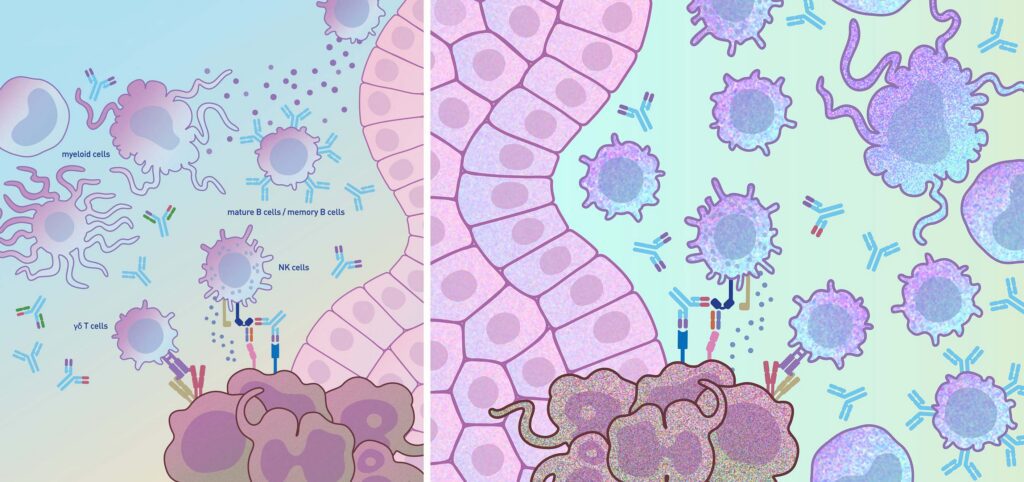
The Jackson Laboratory (JAX) recently launched its latest humanized model, the NSG®-SGM3-IL15-MHC I/II DKO (S15-DKO). The S15-DKO represents their latest advancement in generating PBMC-humanized mice, supporting broad engraftment of immune cell subtypes such as CD4+ and CD8+ T cells, CD33+ myeloid cells, and CD16+/CD56+ natural killer (NK) cells. The knockout of the murine MHC Class I/II receptors delays the onset of Graft vs. Host Disease (GvHD).
S15-DKO model is JAX’s latest advancement in generating PBMC-humanized mice, supporting broad engraftment of immune cell subtypes. The knockout of the murine MHC Class I/II receptors delays the onset of Graft vs. Host Disease (GvHD). [The Jackson Laboratory]
The model also supports the engraftment of rare immune cell subsets, including gd T cells and CD19+/CD38+ B cells that retain the memory state of the donor PBMCs.
Another advanced model for CD34+ hematopoietic stem cell (HSC) humanization, the NSG-FLT3-IL15 mouse generates a cellular-diverse human immune system encompassing myeloid cells, mature NK cells, functional dendritic cells, and T cells.
Both models are available in naïve strains, or off-the-shelf pre-characterized PBMC- and HSC-engraftment, along with full preclinical services tailored to immuno-oncology and autoimmune drug discovery.
“With the FDA’s renewed focus on reducing reliance on non-human primates in biologic development, demand for validated, translational preclinical models has never been higher,” said Luke Dimasi, senior director, JAX.
The genetically humanized FcRn platform and the newly expanded Tg32 hALB mouse address this need. Lacking murine Fcgrt and albumin while expressing their human counterparts, the Tg32 hALB is the first model for studying the pharmacokinetics and pharmacodynamics of human albumin therapeutics, as well as human IgG and Fc-domain-based biologics. Preclinical mAb testing services are available.
“Our offering extends beyond the vivarium,” Dimasi emphasized. JAX’s iPSC repository continues to grow with engineered lines carrying disease-relevant mutations linked to Alzheimer’s, Parkinson’s, ALS, and frontotemporal dementia. In 2025, JAX added HALO-tagged and TET-inducible lines to the collection. The acquisition and integration of the New York Stem Cell Foundation (NYSCF) brings complementary patient-derived iPSCs to the portfolio.
“As the field moves towards new approach methodologies (NAMs), we are evolving alongside it,” Dimasi pointed out. “Our in vivo mouse capabilities give us decades of deeply validated biological context. We are now layering human iPSCs and AI-computational phenotyping on top of that foundation to build a convergent translational engine that no single approach could deliver alone.”
Developing relevant models
According to Jason Rashkow, PhD, product manager for research models, Charles River Laboratories, the company’s comprehensive collection of spontaneously developing rat models spans metabolic disease, diabetes, hypertension, and heart failure, providing strong translational relevance across cardiometabolic indications.
Custom diet preconditioning services allow researchers to tailor disease progression to specific study objectives through strategic model selection and diet design. Standardized preconditioning offerings are planned. “This approach will accelerate study initiation, giving researchers faster access to these metabolic disease models,” said Rashkow.
The increasing prevalence of GLP-1-based therapeutics and next-generation incretin and poly-agonist therapies expanding into cardiometabolic indications such as heart failure with preserved ejection fraction (HFpEF) is accelerating demand for advanced disease models. The combination of established disease models, standardized preconditioning approaches, and custom solutions reflects the complexity of modern metabolic drug development.
In addition, optimization of the generation of CD34+ HSC-humanized mice continues. These models, developed on the severely immunodeficient NCG strain, support research in immuno-oncology, autoimmune disease, vaccine research, and related fields.
As immuno-oncology research needs shift, so does the need for models that enable the study of NK cell-based therapies, tumor microenvironment reprogramming, and cancer vaccines. “Although variant NCG models expressing human cytokines or HLA transgenes begin to meet these needs, transgenes can influence humanization requirements,” Rashkow noted.
To counteract this, the company expanded access to a peripheral blood mononuclear cell (PBMC) engrafted NCG variant strain carrying a double knockout for murine MHC class I and class II, which significantly delays the onset of GvHD, allowing for longer-term studies in the context of mature T cells.
To better support researchers studying HLA-A2-restricted immune responses in vivo, humanization optimization of a NCG variant expressing human HLA-A*02:01 was completed. Further development of the humanization protocols for other variant strains will support next-generation immunotherapy discovery and translational research.
Lastly, the expanded aged C57BL/6 mouse offerings support researchers investigating age-related disease. As a licensed distributor of JAX® Mice to researchers in Europe and Asia, Charles River Europe can now provide aged C57BL/6J mice up to 90 weeks of age. In North America, Charles River offers aged C57BL/6N mice up to 77+ weeks of age.
Improving translational fidelity
“Improved translational fidelity, increased demand for study-ready systems that better align with clinical endpoints, and the need to model complex and overlapping disease biology are driving model development,” related Michael Seiler, PhD, vice president of portfolio management, Taconic Biosciences.
Complex modalities such as checkpoint inhibitors and engineered cell therapies require more complete immune system function and deeper phenotyping. Expansion of the FcResolv® NOG portfolio and huSelect services reduces murine immune interference and donor variability. Advanced flow cytometry panels support deeper, standardized
immune profiling.
With the goal of improving translation relevance, Taconic develops in vivo models that reflect complex and overlapping disease biology in immunology, immuno-oncology, neurobiology, and cardiometabolic indications. [Taconic Biosciences]
Planned launches include platforms and models designed to support immuno-oncology, biologics, engineered cell therapies, infectious disease, and autoimmune research, with a focus on more complete and functional human immune system biology. Gene and protein analysis services are available.
In neuroscience, the shift is toward better alignment with clinical disease biology, particularly in Alzheimer’s disease and neuroinflammation, along with increased focus on blood-brain barrier (BBB) biology and CNS delivery. Parkinson’s disease model offerings include aSyn KI/KO, PINK1 KO, and LRRK2 KO rat models.
Future models include BBB-focused platforms such as TFRC and CD98, ARTE10 crosses with BBB models, and neuroimmunology-focused NOG variants, including IL-34 and TREM2-related models.
The rapid growth of obesity therapeutics, including GLP-1 and next-generation incretin approaches, is accelerating demand for more predictive metabolic and liver models in cardiometabolic disease. A range of models are aimed at obesity, MASH, cardiovascular disease, and DMPK applications.
Taconic is expanding its capabilities in transgene characterization, CRISPR off-target analysis, and tiered Custom Model Generation Solutions. The acquisition of TransCure bioServices significantly bolsters support of integrated in vivo study services, particularly in humanized immune system and immuno-oncology research. “We now offer a more seamless, end-to-end solution from model selection through study execution and data generation,” said Seiler.
“We continue to evolve toward integrated solutions rather than standalone models. This includes expanded CMS and CMGS capabilities, humanization-as-a-service, deeper phenotyping and multiomic analysis, and partner-enabled data generation,” Seiler added.
Importantly, the move toward integrating in vivo models with complementary technologies such as organoids, iPSCs, and AI-enabled analysis will influence how models are developed and deployed within research workflows.
Standardizing NAMs
The field is clearly shifting toward ready-to-use biology, producing a strong demand for standardized NAM platforms and services that deliver consistent, high-quality results. To facilitate scientists, MIMETAS continues to develop robust OrganoReady® models and advanced services, including immune-competent and vascularized systems across multiple organs.
“Last year, we strengthened our fee-for-service capabilities and advanced several models to deliver high-quality biology in a consistent, scalable way,” said Paul Vulto, PhD, co-CEO and co-founder, MIMETAS. “We made strong progress in our kidney tubuloid research program, CAR T-related applications, and a BBB model under unidirectional flow.”
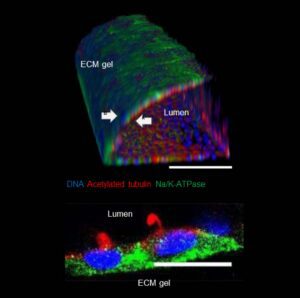
The novel human distal nephron-on-chip model in the OrganoPlate® replicates physiologic sodium and water transport using primary human kidney cells. This three-dimensional microfluidic platform, as detailed in Kidney360, serves as a high-throughput tool for functional drug screening and investigating distal nephron physiology and disease.1
A polarized kidney tubuloid in an OrganoPlate chip showcases apical and basolateral access. Immunofluorescence 3D reconstruction demonstrates tubule polarization and barrier formation: blue, DNA; red, acetylated tubulin; and green, Na /KATPase. [MIMETAS]
In addition, a three-dimensional BBB microvasculature model developed on the OrganoPlate Graft 48 UniFlow was evaluated in a recent Fluids Barriers CNS publication. Tri-cultures of endothelial cells, pericytes, and astrocytes were used to demonstrate that this pump-free, unidirectional perfused, three-dimensional BBB model outperformed simpler systems on vascular architecture and barrier function. Its high-throughput nature renders the model suitable for studies of BBB function in health, disease, and therapeutic development.2
This year, the company’s UniFlow technology will be offered for in-lab use, enabling customers to create a stable, perfusable vascularized bed for endothelial tissues. New OrganoServices for gastrointestinal toxicity (GI tox) and drug-induced vascular injury (DIVI), alongside a multi-donor expansion of the OrganoReady Colon Organoid product, are also planned.
A major trend in NAMs is the increased need for standardization and regulatory alignment across the field. With initiatives like IAMPS (Industry Alliance for MicroPhysiological Systems), of which MIMETAS is a founding member, industry innovators will work together to advance regulatory acceptance.
The space is evolving quickly, but Vulto emphasized that their focus remains unchanged: building robust human models that help researchers make better decisions.
Improving organoid access
“Organoids are part of a broader innovation focus to help researchers work with more predictive models, more advanced tools, and more connected workflows across the path from discovery to development,” commented Heather Hargett, PhD, head of cell biology reagents franchise at MilliporeSigma, the U.S. and Canada Life Science business of Merck KGaA, Darmstadt, Germany.
The regulatory landscape is becoming increasingly favorable to NAMs. In March 2026, the FDA issued a draft guidance to establish clear validation principles for NAMs, including organoids and in silico (or AI) models, when submitted in support of drug applications.
Phasing out animal use for research and regulatory purposes is also supported by the European Commission’s Roadmap Towards Phasing Out Animal Testing for Chemical Safety Assessments.
Patient-derived organoids (PDOs) retain individual genetic and phenotypic characteristics, enabling drug response testing across diverse patient backgrounds and disease subtypes. The image shows immunocytochemical (ICC) characterization of human colon PDOs that are positive for the colon-specific marker CA II (green), nuclei (blue) and actin (red). [MilliporeSigma, the U.S. and Canada Life Science business of Merck KGaA, Darmstadt, Germany
HUB’s advanced organoid capabilities are now being combined with the company’s cell culture expertise, manufacturing scale, global commercial reach, and broad life science portfolio to make organoids a more practical and scalable tool in drug discovery and translational research.
Key priorities include expanding the validated organoid biobank across additional therapeutic areas, tissues, disease states, and patient backgrounds. “Last October, we announced a strategic partnership with Promega Corporation,” said Hargett. “By combining our organoid expertise with Promega’s advanced reporter technology, we aim to enable high-throughput screening that helps researchers identify safer and more effective drug candidates.”
The case of petosemtamab, developed by Merus, is a notable example of the real-world impact of organoid technology. Petosemtamab’s efficacy was tested using HUB organoids. The EGFR x LGR5 bispecific antibody has received FDA Breakthrough Therapy Designation for use in combination with pembrolizumab for first-line treatment of PD-L1-positive recurrent/metastatic head and neck squamous cell carcinoma (HNSCC). A global Phase III trial is ongoing. Recently, Genmab acquired Merus for approximately $8 billion USD.
Adopting organoid technology is a capital efficiency strategy, according to Hargett. Patient-derived organoids retain individual genetic and phenotypic characteristics, enabling drug response testing across diverse patient backgrounds and disease subtypes. Organoids support a “fail fast” approach by identifying non-viable candidates earlier, reducing costly late-stage clinical trial failures, and allowing companies to redirect resources toward the most promising programs.
References
Bernardi MDL, Dilmen E, Kurek D et al. A Novel Human Distal Tubuloid-on-a-Chip Model for Investigating Sodium and Water Transport Mechanisms. Kidney360. 2025 Nov 1;6(11):1981-1993. doi: 10.34067/KID.0000000992.
Admiraal J, Emeh PO, Bokkers M et al. Building the blood-brain barrier: a scalable self-assembling 3D model of the brain microvasculature under unidirectional flow. Fluids Barriers CNS. 2026 Jan 23;23(1):29. doi: 10.1186/s12987-026-00765-x.
<strong>Background:</strong> The transition from child to adult mental health services is a vulnerable period marked by service disengagement, care gaps, and worsening mental health outcomes. Although planned, developmentally appropriate transition processes can improve functioning, youths report insufficient preparation, limited continuity of care, and unmet expectations for support. Existing transition supports remain underevaluated and require further adaptation for mental health contexts. Youth consistently report needing clearer information, concrete support, and sustained connection. Digital tools, particularly SMS text messaging, which is widely used, accessible, and acceptable to youth, offer a promising way to deliver timely transition supports. Yet most digital mental health tools are developed without meaningful youth involvement, highlighting the need for participatory approaches to ensure relevance, usability, and uptake. <strong>Objective:</strong> This study aimed to co-design and refine prototypes for a transition-focused SMS text messaging intervention by engaging youth with lived experience in a participatory co-design activity (design jam) to identify priority content, key functionality, and implementation enablers to support the transition from child to adult mental health services. <strong>Methods:</strong> We conducted a 3-hour mixed methods, participatory design jam to co-design transition-focused SMS text messaging prototypes, recruiting youth aged 16-26 years in Canada who had recently transitioned to, or were approaching transitioning to, adult mental health services. Data sources included workshop artifacts, observational field notes, and audio recordings from structured activities involving evidence review, brainstorming, rapid prototyping, brief team pitches, and evaluation. Rapid qualitative analysis, integrating open coding, content analysis of visual prototypes, and the rapid identification of themes from audio recordings, was used to identify priority content, key functionality, and implementation enablers. Findings were refined through a member-checking debrief with youth participants. <strong>Results:</strong> Seven youths aged 19-24 years participated in the design jam. Across two teams, participants generated 54 content ideas and 50 feature ideas. Two distinct prototypes were developed: one emphasizing long-term affirmation, self-advocacy, self-care, and profile-based customization, and the other prioritizing shorter-term informational support, navigation resources, and flexible message frequency. Youth across both groups highlighted the importance of interactive and visually engaging elements. Analysis revealed 3 thematic tensions shaping youth design preferences: balancing autonomy with ongoing support (roaming/reconnecting), balancing personalization with the need for simplicity (customization/convention), and balancing knowledge delivery with motivation for action (learning/living). Participants rated the design jam positively. <strong>Conclusions:</strong> Youth meaningfully contributed to co-designing an SMS text messaging intervention to support transition from child to adult mental health services, generating concrete content, functionality, and implementation priorities. Their prototypes highlighted the need to balance autonomy with support, personalization with simplicity, and information with motivational guidance. These findings demonstrate the value of participatory co-design in developing youth-centered digital transition supports and underscore the importance of evaluating such prototypes in real-world settings to determine feasibility and impact.
AstraZeneca and Daiichi Sankyo have received FDA approval for Datroway (datopotamab deruxtecan), an antibody-drug conjugate that offers an unprecedented improvement in survival to a patient population with no treatment options beyond chemotherapy.
“Datopotamab deruxtecan is the first and only medicine to significantly prolong overall survival in the first-line setting compared to chemotherapy in patients with metastatic triple-negative breast cancer who are not candidates for immunotherapy,” said Tiffany A. Traina, MD, medical oncologist at Memorial Sloan Kettering Cancer Center. “This approval will bring a much-needed treatment option for these patients.”
Datroway is an antibody-drug conjugate (ADC) that targets the TROP2 protein, which is broadly expressed in several types of solid tumors and is associated with an increased risk of tumor progression and lower survival rates in breast cancer patients. With this approval, the ADC is now commercially available in the U.S. for three indications, including HR+/HER2– breast cancer and EGFR-mutated non-small cell lung cancer. Regulators across the world are now reviewing applications to expand this approval to Australia, Canada, China, the EU, Singapore, and Switzerland.
The FDA decision is based on Phase III results from the TROPION-Breast02 clinical trial, where Traina was one of the investigators. In this trial, Datroway improved the median overall survival by five months and reduced the risk of disease progression or death by 43% compared to chemotherapy as a first line treatment. The ADC also achieved an objective response rate of 64% compared to 30% for chemotherapy.
“Triple-negative breast cancer is notoriously difficult to treat,” said Dave Fredrickson, executive vice president of the oncology hematology business Unit at AstraZeneca. “Patients with metastatic disease, especially those who are unable to receive immunotherapy, urgently need more effective, durable and tolerable treatment options, which extend survival. With today’s approval, we are proud to bring Datroway to a broad population of advanced triple-negative breast cancer patients and we continue to study its promise as a mainstay treatment across tumors, stages, and settings.”
Accounting for about 15% of all cases of breast cancer, triple-negative breast cancer is the most aggressive type of breast cancer, with only 15% of patients surviving five years after their diagnosis. Because it doesn’t express any of the three most common targets for established breast cancer treatments, patients with triple-negative breast cancer have limited treatment options.
Those patients whose tumors express PD-L1 are eligible to receive checkpoint inhibitor immunotherapy as a first line treatment in addition to chemotherapy. However, as many as 70% of patients with metastatic triple-negative breast cancer are not eligible for this form of immunotherapy, whether because their tumors do not express PD-L1 or because of comorbidities.
“For seven out of 10 patients with metastatic triple-negative breast cancer who are not candidates for immunotherapy, chemotherapy has remained the only treatment option,” said Arlene Brothers, executive director of the Triple Negative Breast Cancer Foundation. “Today’s approval of Datroway means that for the first time, these patients will have a new standard of care beyond traditional chemotherapy at the outset of their treatment.”
<strong>Background:</strong> Cognitive decline in aging populations underscores the need for early interventions in mild cognitive impairment (MCI), where pharmacological treatments show limited benefit. Eye-movement metrics serve as sensitive markers of cognitive deficits in MCI, and digital programs integrating these tasks offer scalable, data-driven training approaches. <strong>Objective:</strong> This study aimed to evaluate the effectiveness of a digital cognitive training program incorporating eye-movement tasks in individuals with MCI, and to determine whether eye-movement indicators can serve as objective markers of cognitive improvement. <strong>Methods:</strong> A total of 12 participants aged 60-85 years with MCI (Korean version of the Montreal Cognitive Assessment [K-MoCA] score of ≤22) completed baseline and postintervention assessments using the K-MoCA and Mini-Mental State Examination-Korean version (MMSE-K). Longitudinal changes in visuospatial attention and oculomotor performance were examined using Spearman correlations across sessions, and pre-post comparisons of eye-tracking metrics were conducted to assess training-related improvements. <strong>Results:</strong> Cognitive scores improved significantly, with K-MoCA increasing by 1.5 points (from mean 20.3, SD 1.1 to mean 21.8, SD 1.7; <i>P</i>=<i>.</i>004; Cohen <i>d</i>=1.38) and MMSE-K by 1.3 points (from mean 21.9, SD 2.0 to mean 23.2, SD 2.2; <i>P</i>=<i>.</i>002; Cohen <i>d</i>=1.29). Fixation duration decreased (<i>r</i>=0.248; <i>P</i>=<i>.</i>003), and saccade velocity increased (<i>r</i>=0.258; <i>P</i>=<i>.</i>002), indicating enhanced visual processing efficiency and faster attentional shifts, whereas fixation count and saccade amplitude showed no consistent changes. In addition, saccade duration decreased by 21.72 ms, and saccade velocity increased by 114.54 °/s. <strong>Conclusions:</strong> Digital cognitive training yielded measurable gains in visuospatial attention and oculomotor efficiency in MCI, with optimized fixation and saccade patterns indicating enhanced attentional control and information processing. These findings support eye-movement metrics as sensitive indicators of cognitive change and highlight digital interventions as scalable, noninvasive tools for cognitive support in aging populations.
BackgroundPsychoeducation for families of young adults with psychosis is an evidence-based intervention that alleviates carer burden. The implementation of programming is limited, leaving family carers shouldering a heavy burden without appropriate support.ObjectiveThis pre-post longitudinal pilot study evaluated the preliminary outcomes of a psychoeducational group intervention for family carers of young adults with psychosis, aimed at building skills and reducing carer burden to support recovery in their loved ones.MethodsThe intervention, co-developed and co-facilitated by healthcare professionals and individuals with family lived experience, was delivered in Edmonton, Canada. Participants (n= 13) completed the Family Burden Interview Schedule (FBIS) at pre-intervention, post-intervention, and at 6, 12, and 24-month follow-up. Linear mixed models assessed burden scores over time.ResultsThe overall model of total burden did not reach statistical significance. Exploratory post-hoc comparisons indicated a significant total burden reduction from pre-intervention to 6-months (p = 0.032), with no other significant changes. The overall family interaction burden subscale model showed no significant effect of time. Exploratory post-hoc analyses indicated a decrease in family interaction burden from pre- to post-intervention (p = 0.026) and to 6- months (p = 0.032), with no other significant changes.ConclusionThis pilot study provides preliminary and hypothesis-generating findings suggesting a co-produced, skills- and knowledge-based psychoeducational intervention may be associated with reductions in carer burden, particularly in the domain of family relations. Given the small sample size, further research with sufficient statistical power is warranted to evaluate the long-term impact and accessibility of the intervention and inform its integration into early psychosis care.
This is today’s edition of The Download, our weekday newsletter that provides a daily dose of what’s going on in the world of technology.
A plan to make drugs in orbit is going commercial
A startup called Varda Space Industries is betting that the future of pharmaceuticals lies in orbit. The company has signed a deal with United Therapeutics to test whether drugs crystallize differently in microgravity, potentially creating improved versions with new properties.
The idea sounds futuristic, but falling launch costs and reusable rockets are making space-based manufacturing seem increasingly plausible. Varda says the partnership could mark an important step toward building products in orbit for use back on Earth.
MIT Technology Review Narrated: NASA is building the first nuclear reactor-powered interplanetary spacecraft. How will it work?
Just before Artemis II began its historic slingshot around the moon, NASA revealed an even grander space travel plan. By the end of 2028, the agency aims to fly a nuclear reactor-powered interplanetary spacecraft to Mars.
A successful mission would herald a new era in spaceflight—and might just give the US the edge in the race against China. But the project remains shrouded in mystery.
This is our latest story to be turned into an MIT Technology Review Narrated podcast, which we publish each week on Spotify and Apple Podcasts. Just navigate to MIT Technology Review Narrated on either platform, and follow us to get all our new content as it’s released.
The must-reads
I’ve combed the internet to find you today’s most fun/important/scary/fascinating stories about technology.
1 Sam Altman claims Elon Musk tried to seize control of OpenAI Altman said Musk initially wanted 90% of the equity. (AFP) + And that control should go to his children when he dies. (BBC) + Altman also accused Musk of twice trying to end its non-profit status. (NPR) + Musk’s motivations for the suit are under scrutiny. (MIT Technology Review)
2 Google and SpaceX are in talks to launch data centers into orbit SpaceX could join Suncatcher, Google’s orbital data center project. (WSJ $) + The project’s first launch is slated for early 2027. (Guardian) + Anthropic and SpaceX have also discussed orbital data centers. (Wired $) + But there are a few hurdles to overcome. (MIT Technology Review)
3 Jensen Huang has joined Donald Trump’s high-stakes mission to China Nvidia is lobbying to sell its AI chips in the country. (Bloomberg $) + Elon Musk and Tim Cook are also on the trip. (CNBC) + But a tech rivalry and distrust have sapped hopes for big deals. (Reuters $)
4 ICE agents have a list of 20 million people on their iPhones, thanks to Palantir An ICE official said Palantir is speeding up raids and arrests. (404 Media) + ICE has also used facial recognition and Paragon spyware. (TechCrunch)
5 Defense tech firm Anduril just doubled its valuation to over $60 billion In a $5 billion funding round led by Thrive Capital and a16z. (FT $) Anduril, which makes AI-backed weapons, may go public next year. (NYT $)
6 Meta employees are protesting computer-tracking at work Flyers posted at offices are urging staff to oppose the program. (Reuters $) + Meta plans to track workers’ clicks and keystrokes to train AI. (CNBC)
7 OpenAI is facing another wrongful death lawsuit over ChatGPT medical advice The chatbot’s tips allegedly led to a teenager’s overdose. (Ars Technica)
8 The Canvas learning platform has paid hackers to delete stolen student data It caved to ransomware demands after the biggest-ever edtech breach. (BBC)
9 Scientific researchers are thinking twice about using AI Due to price hikes, usage limitations, and unreliable outputs. (Nature)
10 The latest AI compute solution? Putting data centers in your home Hardware hosts get subsidized electricity and internet. (Ars Technica)
Quote of the day
“Mr Musk did try to kill it.”
—Sam Altman claims that Elon Musk tried to destroy rather than protect OpenAI’s non-profit operations, the Guardian reports.
One More Thing
YOSHI SODEOKA
Why does AI hallucinate?
Chatbot fails are now a familiar meme. Meta’s short-lived scientific chatbot generated wiki articles about the history of bears in space. Lawyers have submitted court documents filled with legal citations fabricated by ChatGPT. Air Canada was ordered to honor a refund policy invented by its customer service chatbot.
This story is part of MIT Technology Review Explains, our series untangling the complex, messy world of technology to help you understand what’s coming next. You can read more from the series here.
We can still have nice things
A place for comfort, fun, and distraction to brighten up your day. (Got any ideas? Drop me a line.)


 services reduces murine immune interference and donor variability. Advanced flow cytometry panels support deeper, standardized