Pretty much everyone who cares about public health agrees that it’s a good idea to help people quit smoking, the No. 1 cause of preventable death in the U.S. Doctors may soon get some extra encouragement to lend a hand, thanks to proposed changes in Medicare’s physician fee schedules.
Physicians who offer counseling on quitting cigarettes or other tobacco products during visits with patients would get a 19% increase in reimbursement, according to a few paragraphs buried in the 1,592-page document released this week. The same adjustment would also apply to assessments of, and interventions for, alcohol and substance misuse during doctors’ visits.
“Given the evidence supported role these services play in preventing and managing chronic disease […] we believe that valuation should more accurately reflect the clinical intensity and work associated with these time-based services,” the proposal from the Centers for Medicare and Medicaid Services explains. Comments on the proposal are due Sept. 14.
“The prioritization of cessation as a service is long overdue, and we’re very excited about it,” said Anne DiGiulio, the American Lung Association’s senior director of nationwide tobacco cessation and health policy.
<![CDATA[Learn how clinicians manage bipolar disorder in women who may become pregnant—safer meds, contraception counseling, and relapse prevention.]]>
ATLANTA — Federal health officials have identified lettuce from Mexico served at Taco Bell locations across five U.S. states as a source of a widespread outbreak of diarrhea-causing parasite cyclospora.
The Centers for Disease Control and Prevention late Thursday warned consumers not to eat shredded iceberg lettuce from Taco Bell restaurants in Indiana, Kentucky, Michigan, Ohio and West Virginia. A record number of cyclospora cases have been reported in more than 30 states, and experts have said not every recent U.S. illness might be caused by a single source.
Want to stay on top of the science and politics driving biotech today? Sign up to get our biotech newsletter in your inbox.
Hiya. Today, we explore a gene therapy approach that’s drawing excitement but also skepticism, and see that Jennifer Doudna is moving into AI-designed gene editors that push beyond evolution.
Plus, our trusty podcasters unpack the buzzy prediction market Kalshi’s move into biotech.
By Mai El Shoush, Partnership Campaign Manager, SNF Global Center for Child and Adolescent Mental Health at the Child Mind Institute
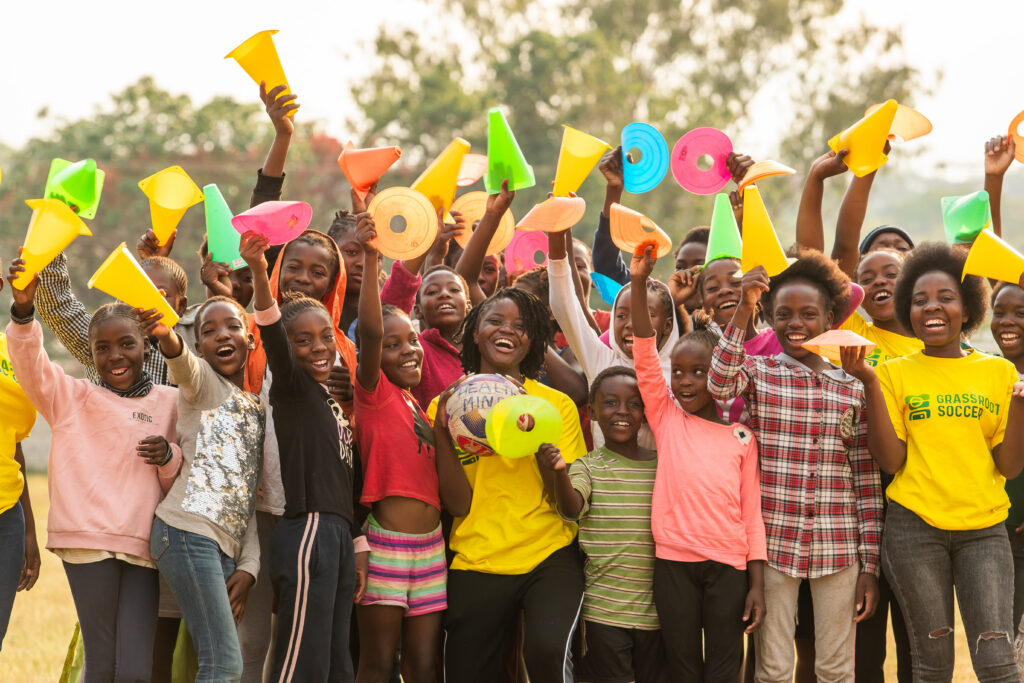
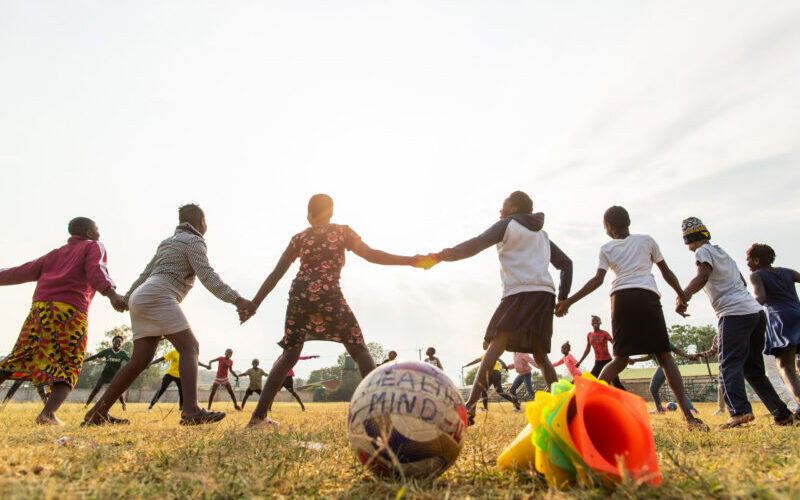
Few events unite the world quite like the FIFA World Cup, demonstrating soccer’s unique ability to connect people across cultures and communities. As millions tune in, the moment offers a timely reminder on how sports can reach young people far beyond the field. This belief underpins the work of Grassroot Soccer, a valued partner of the SNF Global Center for Child and Adolescent Mental Health at the Child Mind Institute. They utilize the power of soccer to advance youth mental health — and have reached more than 25 million young people around the world through this approach.
The partnership incorporates three interconnected areas:
Building capacity for frontline workers
Generating evidence
Contributing to thought leadership on child and adolescent mental health in low-resource settings
The 2026 Men’s World Cup in North America and the upcoming 2027 Women’s World Cup in Brazil present an important opportunity for the organization to take its mental health programming from sub-Saharan Africa and adapt it to the U.S. context.
We spoke with Grassroot Soccer’s Mental Health Specialist Charmaine Nyakonda about the organization’s approach, the impact of their collaboration with SNF, and the growing role of sports in improving the mental health of young people and communities globally.
Grassroot Soccer’s Mental Health Specialist, Charmaine Nyakonda
As international attention increasingly turns towards soccer’s global reach with the 2026 FIFA Men’s World Cup, what role can sports play in advancing youth mental health care across diverse communities?
Soccer is the most popular and accessible sport in the world. From the largest global stages like the World Cup to the most remote rural villages, it’s played everywhere on the planet. As the World Cup shows, soccer has the power to captivate across geographies, cultures, and time zones.
Soccer (and sport in general) is a powerful tool that teaches youth important life skills and character-building lessons like resiliency, hard work, courage, trust, and teamwork. On top of this, soccer’s universal appeal across diverse communities means using the language of the game can also be an effective way to break through the stigma around sensitive but pressing topics like mental health. This is why Grassroot Soccer uses soccer as a teaching tool for mental health.
Grassroot Soccer has successfully touched the lives of millions of young people across settings worldwide. What has the team learned about the universal role that sports can play in supporting mental health, resilience, and social connection?
Across our programs, soccer serves as a universal entry point that hooks young people and meets them where they are. From there, our play-based activities use soccer games and metaphors to make learning about mental health fun and engaging. They break down stigma and create safe spaces where young people can feel comfortable opening up and being vulnerable. This drives exceptional participation and completion rates.
Importantly, our signature soccer-based mental health promotion and prevention program, called MindSKILLZ, is guided by core mental health design principles. This includes grassroots co-creation, trauma-informed practice, relationship-centered delivery, and strengths-based learning — which ensures that programs are ethical, culturally grounded, and safe for adolescents in both stable and crisis-affected settings.
“Soccer (and sport in general) is a powerful tool that teaches youth important life skills and character-building lessons like resiliency, hard work, courage, trust, and teamwork.”
What elements of Grassroot Soccer’s approach do you believe could serve as a transferable blueprint for other organizations seeking to improve outcomes for young people in different sectors and communities?
Our commitment to co-design with young people: We believe that young people are the experts on their lives and needs, so we intentionally apply the principle of “Nothing about us without us” to our work. We put this into practice by engaging young people at every point in the program life cycle to ensure our work meets their needs, from design to implementation to evaluation.
In 2023, Grassroot Soccer officially launched a Youth Advisory Committee (YAC) composed of young leaders that serves as an internal advisory and advocacy body for the organization. The Committee consists of SKILLZ Coaches, Master Coaches, and trainers between the ages of 18 to 30 from the communities we serve.
Mental health integration: Mental health promotion and prevention must be woven into every service that young people access. Mental health is both a driver and an outcome of young people’s overall well-being. Unaddressed mental health challenges undermine progress in HIV, sexual and reproductive health, education, and other youth development areas. And those same factors profoundly shape young people’s mental health in return.
What has made the partnership with the SNF Global Center particularly valuable, and what role do cross-sector and multidisciplinary partnerships play in expanding support and opportunities for young people?
The diverse cultural perspectives from Greece, Brazil, the United States, and South Africa — and especially youth voices — have enriched our understanding of the barriers young people face, the values that motivate them, and the creative solutions they come up with when it comes to mental health.
We’ve also benefited tremendously from the scientific and clinical expertise at the SNF Global Center. We were able to co-develop an open-access, near-peer emotional support online training that aims to enhance the capacity of frontline workers to identify, refer, and support common mental health problems among children and adolescents. This is especially important in low-resource settings.
Additionally, through thought leadership and advocacy collaboration, this partnership has been valuable in contributing to an important shift in the global conversation to framing low-resource settings (the Global South) as sources of innovation that can positively impact the Global North.
Over the years, what has most reinforced your belief in the power of soccer to support youth mental health, and what examples best bring that impact to life?
We’ve seen a few powerful stories of impact in humanitarian settings, where the need for mental health care is at its greatest but resources are at its most limited.
For example, in 2024, relentless downpours following a tropical cyclone caused rivers in Malawi’s Nkhotakota and Karonga districts to overflow, leading to widespread flooding impacting over 150,000 people and forcing many displaced residents to seek refuge in makeshift internally displaced person (IDP) camps.
In the camps, people had no access to mental health and psychological support services or safe spaces, and youth were not attending school. The Malawi Ministry of Health identified a major gap in mental health support for adolescents and young people and called on Grassroot Soccer to deliver MindSKILLZ to respond to this need.
Grassroot Soccer’s response team focused heavily on play, coping skills development, and trauma-informed support, creating critical psychological and physical safe spaces for youth within the camp environment.
Looking ahead, how would you like to see the conversation evolve at the intersection of sports, youth well-being, and mental health?
Firstly, we would like to see the conversation move beyond asking whether adolescent girls and young women like to play sports and instead asking, “What can we unlock when they do?”
For too long, sports (and soccer in particular) have been understood as primarily a significant part of adolescent boys’ and young men’s lives only. That assumption has shaped who gets access, who feels welcome, and whose well-being is centered. Grassroot Soccer’s own programming challenges this directly — we have reached more adolescent girls than boys, and in doing so have created space for girls to reconstruct gendered ideas about soccer. The conversation on sports, youth, and mental health needs to evolve to view sports games like soccer as universal tools that can transcend gender norms, age, and socio-economic background to support young people.
At the same time, we want to see the conversation take adolescent boys’ mental health more seriously, not less. Qualitative insights from Grassroot Soccer show that rigid masculine norms remain a profound barrier for boys.
More broadly, we ultimately want to see the conversation shift from individual resilience to multi-systemic access and inclusive enabling environments. Young people need culturally grounded, safe environments that work for them — and include them in design and delivery to help them develop into healthy adults who carry that capacity forward.
What do you see as the greatest opportunities for the next generation of young people, and what must we do collectively to help make that future possible?
With the largest generation of adolescents coming of age, their ability to live healthy and productive lives will have a profound impact on not just their own life trajectories, but also on the world. Tackling critical global issues from poverty to climate change will require a generation of young people who are strong, healthy, and empowered — and their mental health is central to all this.
At Grassroot Soccer, we are committed to investing in youth mental health to realize a world where mental health challenges have been normalized. We want young people to understand their own mental health, have practical coping skills to deal with frustration and aggression, and recognize the value in seeking support from others. This will help develop a population with reduced symptoms of depression and anxiety, as well as overall improved mental well-being. Then we can collectively realize our vision for a better future.
Through the SNF Global Center, the Child Mind Institute partners with organizations around the world to strengthen child and adolescent mental health systems by combining scientific expertise, local leadership, evidence-based innovation and youth voices. Grassroot Soccer is one example of how cross-sector partnerships can expand access to mental health support in communities where young people already learn, connect, and thrive.
<![CDATA[Learn how clinicians tackle mood and substance use disorders together, boost patient engagement, and expand evidence-based addiction medications for bipolar and alcohol use.]]>
This is today’s edition of The Download, our weekday newsletter that provides a daily dose of what’s going on in the world of technology.
There’s a lot of hype around perimenopause. Don’t buy it.
Perimenopause used to be considered taboo, but not anymore. Thanks at least in part to TV doctors and social media influencers, conversations about the sometimes years-long period before menopause are now more open than ever. But the conversation is increasingly shaped by misinformation.
Despite what some marketers will claim, there is no test for perimenopause. That doesn’t mean women should have to put up with symptoms, but treatment suggestions often lack scientific evidence. And not all the symptoms women experience in midlife can be blamed on hormones.
This article is from The Spark, our weekly climate tech newsletter. Sign up to receive it in your inbox every Wednesday.
The must-reads
I’ve combed the internet to find you today’s most fun/important/scary/fascinating stories about technology.
1China’s AI gap with the US may have just narrowed A Chinese startup has released the world’s largest open AI model. (Reuters $) + It competes with some Anthropic and OpenAI models. (Gizmodo) + The model’s launch sent AI and semiconductor stocks sliding. (Bloomberg $) + Chinese Nvidia alternatives are also gaining traction. (SCMP) + Xi Jinping pitched China as an AI partner to the developing world. (CNBC) + The country is betting big on open-source. (MIT Technology Review)
2 Trump Media is selling instant access to “market-moving’ social posts It’s developed a new way to monetize the president’s posts. (Quartz) + And Trump could profit directly from selling access to his statements. (BBC) + Kalshi says it caught Trump’s teleprompter operator insider trading. (Verge)
3 Astronomers have found an atmosphere on a nearby Earth-like planet It’s the first potentially habitable world known to host an atmosphere. (NYT $) + Making it a top contender in the search for aliens. (404 Media) + But you need to know how to spot one. (MIT Technology Review)
4 A brain implant has restored feeling in a paralysed hand The recipient can now feed himself and drink from a cup. (Guardian) + Movement continued when the stimulation was turned off. (New Scientist $) + China has approved a world-first brain chip. (MIT Technology Review)
5 The EU has told Google to share search data and open up AI on Android It will be forced to share data with competing search providers. (Ars Technica) + And open Android phones to rivals’ AI bots. (WP $)
6 Period trackers are hiding privacy problems New research uncovers how they’re sharing users’ health data. (BBC)
7 The Tesla driver in a fatal Texas crash overrode FSD, investigators say He bypassed the tech by pressing the gas pedal to 100%. (Verge)
8 A new stealth drone spins so fast that it disappears Though its creators admit it can still be easily heard. (New Scientist $)
9 A space-station study suggests why astronauts’ bodies waste away Microgravity disrupts mitochondria, reducing protein production. (Nature)
10 “Adversarial clothing” that confuses facial recognition is all the rage Privacy could be the next big trend. (Guardian)
Quote of the day
“Xi’s message is clear: China is not going to follow anyone on both AI technology and standards. Instead, China is going to lead the world in both aspects.”
—George Chen, chair in digital practice at The Asia Group consultancy, gives Reuters his take on Xi Jinping’s speech at the World Artificial Intelligence Conference (WAIC) in Shanghai.
One More Thing
BRYN NELSON
How poop could feed the planet
A new industrial facility in suburban Seattle is giving off a whiff of futuristic technology. It can safely treat fecal waste from people and livestock while recycling nutrients that are crucial for agriculture but in increasingly short supply across the nation’s farmlands.
It’s among a range of systems reframing feces, urine, and their ingredients as invaluable natural resources to reuse instead of waste products to burn or bury. Several companies are now showing how to safely scale up the transformation with energy-efficient technologies.
Approximately 40% of patients with chronic kidney disease (CKD) experience cognitive impairment (CI), which is strongly associated with increased mortality. CI is driven by multiple factors, including vascular injury, accumulation of uremic toxins, disruption of the blood–brain barrier, and chronic inflammation. Recent evidence suggests that kidney disease and neurocognitive decline are mechanistically linked through dysregulated tryptophan metabolism. Tryptophan is metabolised through three main pathways: the kynurenine, indole, and serotonin pathways, each producing bioactive metabolites with distinct neurophysiological effects. The hallmarks of CKD include chronic inflammation, gut microbial dysbiosis, and impaired renal clearance, all of which alter tryptophan metabolism. Inflammation drives tryptophan metabolism towards the kynurenine pathway, increasing the formation of neurotoxic compounds that promote oxidative stress, excitotoxicity, and neuronal injury. However, reduced availability of tryptophan for serotonin synthesis impairs serotonergic signalling and neurotransmission, as well as melatonin biosynthesis, thereby contributing to circadian rhythm disturbances and impaired glymphatic clearance. Concurrently, gut dysbiosis and reduced renal clearance promote the accumulation of indole-derived uremic toxins, leading to endothelial dysfunction, neuroinflammation, and disruption of the blood–brain barrier. This review highlights the current evidence of dysregulated tryptophan metabolism in CKD and its impact on the pathogenesis of neurocognitive complications. The review also discusses potential biomarkers and therapeutic strategies, including kynurenine pathway inhibitors, gut microbiota modulation, uremic toxin adsorption, melatonin supplementation and personalised medicine to mitigate cognitive impairment in CKD.
Elevated densities of CD163+ perivascular macrophages have been reported in schizophrenia post-mortem brain tissue, particularly in regions involved in neurodevelopment, dopaminergic signaling, and blood–brain barrier (BBB) regulation. However, the biological significance and developmental lineage of these findings remain unclear. While CD163 is linked to regulatory and scavenging functions, macrophage activation states form a continuum and cannot be inferred from any single marker. This Perspective outlines a structured, testable research framework to determine whether this accumulation reflects altered responsiveness to persistent intracellular, inflammatory, systemic, or treatment-related signals. To test this, we propose sequential methodological aims, including defining CD163+ cell localization and phenotypes in predefined brain regions, and assessing viral and non-viral molecular signals using spatial transcriptomic and cell-specific methods. This framework also involves comparing macrophage activation states across schizophrenia and other psychiatric and non-psychiatric control groups, using single-cell and single-nucleus sequencing. By not presuming a specific infectious aetiology, this approach will provide a general methodology to investigate macrophage-related mechanisms across diverse potential triggers. Within this model, HSV-1 is evaluated strictly as an illustrative proof-of-concept candidate for testing intracellular pathogen responses, rather than an exclusive cause, as epidemiological associations have been inconsistent and localization of viral materials within these cells has not been demonstrated. Similarly, Bacille Calmette–Guérin (BCG)-associated trained immunity is introduced strictly as a preliminary, ex vivo/in vitro approach to probe macrophage reprogramming and plasticity. Ultimately, this framework provides a systematic approach for investigating macrophage-related mechanisms and their potential drivers in schizophrenia without presupposing a specific underlying aetiology.
Background and AimsGaming disorder (GD) and learning burnout (LB) are critical issues impacting adolescents, with GD recognized by the World Health Organization as a behavioral addiction and LB contributing to academic disengagement. While prior research has examined bivariate relationships, such as GD’s negative correlation with academic performance and physical education performance, or LB’s association with poor grades, no study has integrated all four variables into one model to explore their dynamic interactions longitudinally.MethodsA cross-lagged panel network (CLPN) model was applied to longitudinal data from 811 Chinese middle school students collected at two time points.ResultsGD and LB showed minimal direct effects on academic performance or physical education performance. Instead, academic performance and physical education performance acted as protective factors, significantly alleviating LB, particularly among boys. These two protective factors were mutually reinforcing. Cognitive exhaustion (a core component of LB) and GD functioned as reciprocal risk factors.ConclusionInterventions for adolescent maladjustment should prioritize addressing learning burnout through academic and physical avenues rather than overemphasizing gaming disorder, with tailored strategies for different genders.