When the Supreme Court handed Monsanto a major win in Roundup litigation on Thursday, the headlines sounded like a scientific event: a case about whether Roundup causes cancer.
But Monsanto v. Durnell did not settle that question. The court held that federal pesticide law preempts a state failure-to-warn claim when the Environmental Protection Agency has not required a cancer warning on the product label.
<strong>Background:</strong> Type 2 diabetes (T2D) is one of the most common noncommunicable diseases, requiring ongoing lifestyle changes and continuous glucose management through medication, diet, and physical activity. Traditional self-monitoring of blood glucose can be burdensome, especially with frequent finger pricks. As continuous glucose monitoring (CGM) becomes more affordable and accessible, it offers benefits such as increased glucose awareness, behavioral modifications, and reduced anxiety. However, challenges remain, including cost, discomfort, skin reactions, and privacy concerns. In the United Kingdom, perceptions of CGM among people with T2D, including both users and nonusers, are not well understood, limiting insight into factors influencing adoption and sustained use. <strong>Objective:</strong> This study aims to explore how adults with T2D perceive the benefits and challenges of using CGM, including both current users and nonusers. <strong>Methods:</strong> This study used a cross-sectional, online survey using YouGov’s nationally representative panel to explore experiences of CGM among adults with T2D in the United Kingdom. A total of 531 participants were recruited from November to December 2024. Thematic analysis of responses to 2 open-ended questions identified key perceived benefits and challenges associated with CGM use. <strong>Results:</strong> A total of 531 adults with T2D completed the YouGov online survey. Over half were male (297/531, 55.9%) and aged 65 years and older (281/531, 52.9%). Two-thirds (347/531, 65.3%) had lived with T2D for more than 5 years, and 9.6% (51/531) use or had previously used a CGM. Overall, 50.8% (270/531) responded to at least one free-text question, with 49% (260/531) commenting on benefits and 33.1% (176/531) on challenges. Thematic analysis identified five key benefit themes: (1) reduced monitoring burden, described as eliminating frequent finger prick testing and simplifying daily routines; (2) lifestyle feedback, enabling participants to better understand how diet and physical activity influence glucose levels; (3) greater control, by supporting more informed decision-making and increasing confidence in self-management; (4) feeling safer, through alerts for hypo- and hyperglycemia; and (5) sharing data with clinicians, which facilitated communication and more collaborative care. The main challenges were (1) access barriers, including restrictive eligibility criteria and the high cost of self-funding; (2) device issues, such as discomfort, inconvenience, and practical difficulties wearing the sensor; (3) technology reliance, with concerns about depending on devices rather than listening to bodily cues; (4) emotional strain, including anxiety, over-monitoring, and increased preoccupation with glucose levels; and (5) data concerns, particularly regarding accuracy, interpretation, and privacy. <strong>Conclusions:</strong> Adults with T2D, including both users and nonusers, described CGM as a practical and empowering tool that improves understanding, safety, and collaboration with health care providers. Nevertheless, access barriers, usability issues, and emotional and data-related burdens remain major obstacles to equitable adoption. Addressing these through improved affordability, digital literacy support, and customized clinical guidance may support ongoing and inclusive CGM use in routine care.
Background: Generative artificial intelligence (GenAI) conversational agents are increasingly integrated within digital mental health interventions (DMHIs). However, empirical data on real-world engagement, usage patterns, and satisfaction with GenAI conversational agents remain limited. Objective: This study examined real-world engagement among users who interacted with the GenAI conversational agent within Mental, a DMHI designed to support mental health. We aimed to (1) characterize users engaging with Mental’s GenAI conversational agent, (2) examine real-world usage patterns, (3) examine satisfaction and user feedback following sessions, and (4) explore preliminary predictors of engagement with Mental’s GenAI conversational agent. Methods: This retrospective study analyzed naturalistic user data from 5082 paid subscribers who engaged with Mental’s GenAI conversational agent between October 2024 and March 2026. Users’ onboarding characteristics (ie, sex, mindset, distress level, desire for greater discipline, and primary stressors) and session satisfaction were collected via optional app-native items; session-level engagement metrics were captured through backend app usage data. Descriptive statistics were used to characterize user demographics and usage patterns. Session satisfaction was compared across temporal engagement variables using ANOVAs and independent-samples tests. As an exploratory aim, session-level mixed-effects logistic regression was used to estimate predictors of session-to-session return, with session satisfaction as the primary predictor and moderation by self-reported mindset. Results: Among users reporting onboarding data, 78.8% (2610/3312) identified as male and 90.0% (2667/2964) reported moderate-to-high distress on an app-native item. A total of 59,602 sessions were recorded (mean 11.8 sessions per user), most frequently occurring in the evening (17,206/59,602, 28.9%) and outside traditional business hours (37,181/59,602, 62.4%). Mean session satisfaction was high (mean 4.5, SD 0.9) and did not differ by time of day or day of the week. The most commonly selected session descriptors were “Insightful” (9236/19,883, 46.5%), “Felt seen” (7974/19,883, 40.1%), and “Good advice” (7510/19,883, 37.8%). The session-to-session return rate was 92.6%, and 69.4% (3528/5082) of users returned after their first session. In an exploratory analysis, session satisfaction was a significant predictor of return (odds ratio 1.35, 95% CI 1.14-1.60; <.001), although this finding should be interpreted as hypothesis-generating. Conclusions: Users engaged with a GenAI conversational agent within the Mental app outside of traditional care hours and presented with high return rates. Objective behavioral engagement data (eg, session frequency, timing, and session-to-session return rate) provide novel evidence that GenAI conversational agents may sustain real-world engagement, including among individuals who face barriers to traditional mental health services. Future research should determine whether these engagement patterns translate into clinically meaningful outcomes.
This was my first year attending BIO. JPM is called the “Super Bowl of biotech,” so with delegations from dozens of countries in attendance, you might say BIO is the World Cup. The big question I had going in, like with any other industry event, was “what are the vibes going to be like?” After witnessing some, frankly, bad overall moods at other major events last year, I was struck by how different things felt at BIO 2026.
Joining me in San Diego were STAT biotech correspondent Meghana Keshavan, health tech reporter Brittany Trang, and Washington correspondent Daniel Payne. In this week’s STATus Report, you’ll get vibe checks from some industry executives and my three aforementioned colleagues and hear what difference a year can make.
Posted on
<![CDATA[New phase 3 analyses show centanafadine improves adult ADHD executive function and emotional regulation beyond core symptoms, as FDA review advances toward July 2026.]]>
By Florencia Assaneo, PhD, Research Fellow, Stavros Niarchos Foundation (SNF) Global Center for Child and Adolescent Mental Health at the Child Mind Institute
Educational challenges for Latin American children
Primary education in Latin America has faced a steady decline over recent decades, contributing to what many organizations now describe as an educational crisis. International institutions such as the Economic Commission for Latin America and the Caribbean (ECLAC), the United Nations Educational, Scientific and Cultural Organization (UNESCO), as well as the World Bank Group have all called for urgent action to address worsening learning outcomes across the region. The situation is particularly concerning in Mexico. Results from the 2022 Programme for International Student Assessment showed that Mexico scored well below the Organization for Economic Co-operation and Development (OECD) average in reading, mathematics, and science — placing the country among the lower-performing educational systems evaluated globally.
The consequences of this crisis extend far beyond the classroom. Educational difficulties during childhood are closely linked to long-term social and mental health outcomes. Research has shown that additional years of basic education are associated with lower rates of depression and anxiety (Kondirolli & Sunder, 2022), as well as higher levels of resilience and perceived control over one’s life (Niemeyer et al. 2019). In this sense, poor academic performance in primary school can have lasting effects that continue into adulthood, limiting employment opportunities, increasing vulnerability, and negatively affecting overall well-being.
Can rhythm-based video games improve learning?
Open-access interventions that strengthen children’s cognitive and academic abilities could have enormous value in low- and middle-income countries, where educational resources are often limited. Our work explores whether the ability to coordinate movements with rhythmic sounds — such as clapping, tapping, or dancing to music — can be leveraged to support children’s learning and cognitive development through engaging digital tools.
Over the last decade, multiple studies have shown that children who are better at synchronizing their movements to rhythm also tend to perform better on a wide range of cognitive and language-related tasks. These include reading, phonological awareness, processing speed, rapid naming, and other foundational abilities linked to academic success. Researchers have assessed these rhythmic coordination skills in multiple ways, from walking to the beat of music to tapping along with a steady rhythm or coordinating movements while playing musical instruments. Across these different approaches, one result consistently emerges: children who are better at aligning movement with sound also tend to show stronger cognitive performance.
Building on these study findings, my current fellowship project, supported by the Stavros Niarchos Foundation (SNF) Global Center for Child and Adolescent Mental Health at the Child Mind Institute, seeks to better understand how these rhythm synchronization abilities develop during childhood and whether they could eventually be strengthened through interactive digital interventions. Specifically, we are studying the developmental stage at which these abilities become established in children, and whether individuals with stronger rhythmic coordination also show advantages in attention and language-related skills. Understanding when these abilities emerge is particularly important because it may help identify the developmental window during which they are most malleable and therefore most responsive to training or intervention.
From left to right: Rebeca Hernández Soto, associated researcher at the lab; M. Florencia Assaneo; principal of the public primary school; and Moramay Ramos Flores, a PhD student working on the project. At the public school “Américas Unidas” in Querétaro, Mexico.
In parallel, we are using functional magnetic resonance imaging (fMRI) — a non-invasive brain imaging technique that allows us to observe which brain regions become active during different tasks — to explore the relationship between rhythmic synchronization and the brain’s reward system. Importantly, these same reward-related regions are also strongly engaged during video game play. If the pathways within this reward system are similarly activated during rhythmic coordination, this could mean that children who initially struggle to synchronize movements with sound may be able to strengthen these abilities through a carefully designed video game experience. One possible future application could involve an open-access mobile game in which children synchronize taps or hand movements to musical rhythms while progressing through increasingly challenging levels and unlocking rewards or visual customizations.
Overall, the current project seeks to generate the scientific evidence necessary to determine whether rhythm-based digital interventions could become a viable tool for supporting children’s cognitive development. This work has the potential to contribute to the future development of accessible and scalable tools that can strengthen foundational cognitive skills linked to academic performance in children. These tools can be applied to children in Mexico and, more broadly, across low- and middle-income countries (LMICs), expanding access to education resources and interventions.
The power of collaboration between the SNF Global Center and UNAM
Our laboratory at Universidad Nacional Autónoma de México (UNAM) is primarily dedicated to basic neuroscience research. Based at UNAM’s campus in Querétaro, our team brings together researchers and students from different disciplines — including neuroscience, psychology, physics, engineering, and data analysis — united by a shared interest in understanding how rhythm and brain dynamics shape human cognition and behavior. Here, we have access to excellent infrastructure for fundamental research, including neuroimaging facilities and high-performance computational resources. However, translating basic scientific discoveries into interventions capable of improving people’s daily lives is often much more challenging and requires strong cross-sector collaboration.
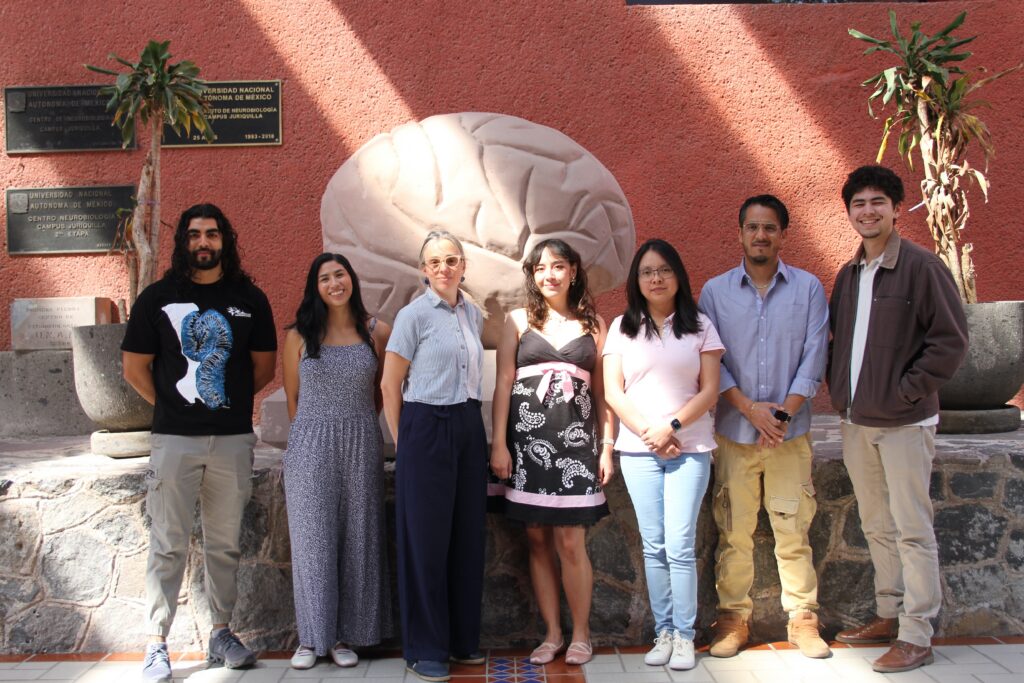
Members of the research team at the laboratory facilities on UNAM’s Querétaro campus.
The work I’m conducting as part of the SNF Global Center Research Fellowship has encouraged us to begin thinking beyond the laboratory. This current fellowship has given us the opportunity to test the core scientific assumptions behind our proposed open-access intervention. If the pilot project proves successful, the next stages of the work will become considerably more ambitious, involving both the technological development of the intervention and its large-scale implementation and evaluation in school settings. Advancing toward those goals will likely require the support of larger international organizations and cross-sector collaborations. In this context, the opportunities provided by the SNF Global Center at the Child Mind Institute to share, disseminate, and give visibility to our work are extremely valuable, helping create the connections and momentum necessary to move from foundational research toward real-world impact.
More broadly, this kind of collaboration highlights the importance of building bridges between global institutions and local research communities. By combining international support with local expertise and close engagement with schools and communities, it becomes possible to develop solutions that are both scientifically rigorous and genuinely connected to the realities of the populations they aim to serve.
This is today’s edition of The Download, our weekday newsletter that provides a daily dose of what’s going on in the world of technology.
Heat waves mess with your brain. Scientists are trying to figure out why.
—Jessica Hamzelou
It’s been hot in London this week. Really hot. A dangerous heat wave has hit Western Europe. On Wednesday, the UK recorded its highest ever June temperature at 36.1 °C (about 97 °F). But as the weather app on my phone confirmed, it felt like 39 °C.
Much of Western Europe is suffering, bringing awful consequences for agriculture, infrastructure, and the health system. But heat can also affect the brain.
Studies have confirmed that as temperatures rise, people seem to get more irritable and more violent. And they have shown that firefighters find it harder to focus immediately after heat exposure. Rising temperatures can also have particularly disastrous outcomes for children and people with mental health disorders.
Research on lab animals suggests that excessive heat can alter the function of chemical signals in our brains. But we still need a better understanding of the mechanisms behind these effects.
I’ve combed the internet to find you today’s most fun/important/scary/fascinating stories about technology.
1 The Trump administration has asked OpenAI to limit its next model release It wants to vet the first GPT 5.6 users before a wider launch. (Bloomberg $) + OpenAI said each of the initial partners will be government-approved. (FT $) + It’s the first US firm to be told to restrict an AI model before release. (Axios) + Anthropic is also still feuding with Washington. (MIT Technology Review)
2 Apple and Xbox have hiked prices, blaming AI-driven chip costs Some MacBooks, iPads, and Xboxes are going up in price by over 20%. (BBC) + Apple’s shares plummeted after the announcement. (NBC) + AI data center demand has pushed up memory and storage prices. (WSJ $) + The shortages have been dubbed “RAMaggedon.” (The Verge)
3 Colossal and the US are building an endangered species “biovault” It aims to cryptopreserve over 2,300 plant and animal samples. (Wired $) + It comes amid growing threats to endangered species protections. (NYT $) + Colossal is also growing chickens in artificial eggshells. (MIT Technology Review)
4 The US has banned Polestar from selling its EVs due to anti-China rules The Sweden-based company is majority-owned by China’s Geely. (CNN) + The ban is because its connected-vehicle tech is linked to China. (Reuters $) + What happened to China’s overseas EV factory boom? (Rest of World)
5 China is betting on humanoids to beat its demographic decline It wants the robots to narrow the labour gap. (FT $) + Gig workers are training humanoids at home. (MIT Technology Review)
6 The “fingerprints” of a black hole’s event horizon have been detected The discovery was made by studying ripples in space-time. (AFP)
7 OpenAI is now expected to delay its IPO until next year It’s been spooked by choppy global markets and SpaceX’s slump. (NYT $)
8 Data centers have moved to the forefront of environmental lawsuits The litigation is linked to energy sources, water consumption, and air pollution. (Guardian)
9 A master gene that turns on human development has been uncovered It results in cells forming a human body. (New Scientist $)
10 Grok’s most popular feature? Smut It accounts for “well over half” of the chatbot’s traffic. (The Information $)
Quote of the day
“The most advanced AI is built by a handful of American companies, on American soil, under American law, and what the rest of us are permitted to do with it can change on a Friday afternoon.”
—Nathan Benaich, AI investor at London-based venture firm Air Street Capital, tells the Financial Times about the geopolitical reality of US AI dominance.
One More Thing
MAX-O-MATIC
How technology helped archaeologists dig deeper
In 1991, construction workers in Manhattan unearthed hundreds of coffins. Further investigation revealed that the remains were between 200 and 300 years old, and they were all African and African American.
This discovery came at an inflection point in scientific history. Breakthroughs in chemical and genetic analysis allowed researchers to figure out where many of these people were born, the physical challenges they faced, and even the routes they took from Africa to North America.
Today, archaeologists are using techniques they could only dream of then: lasers, 3D photography, lidar, satellite imagery, and more. These tools are revealing where people came from, how ancient cities were built, and the lives of those who built them.
Amblyopia is a neurodevelopmental disorder of the visual cortex which leads to issues in visual acuity, contrast sensitivity and eye movement patterns, all characteristics which, along with other deficits may negatively influence reading skills. Individuals with reduced reading capabilities due to amblyopia or other binocular vision disorders may have difficulties navigating various social aspects of daily life including employment and academics. Reading is an active viewing task which involves multiple oculomotor and cognitive processes. In this review, we introduce how a lack of binocular vision or other low vision issues such as blur, low illumination or altered contrast sensitivity may contribute to impaired reading performance. These impairments, particularly in amblyopia, include changes to reading speed, eye movements and crowding. Though reading is such an important daily skill, and is known to be impacted in amblyopia, there are no known treatments for this condition which are specifically designed to improve reading. Binocular therapies may be leveraged to address these issues. This narrative review provides available evidence on alterations to reading ability in amblyopia and why this may be relevant for developing novel amblyopia therapies.