Good morning, everyone, and welcome to another working week. We hope the weekend respite was relaxing and invigorating because that oh-too-familiar routine of meetings, deadlines, and the like has returned with a vengeance. You knew this would happen, yes? To cope, we are relying, as always, on a cuppa stimulation. Our choice today is old-fashioned vanilla. Feel free to join us. Remember, no prescription is required. Meanwhile, here are some tidbits to help you along. Best of luck accomplishing your goals today, and of course, do keep in touch. …
Metastatic pancreatic cancer patients who received a targeted pill from Revolution Medicines lived nearly twice as long as patients who received chemotherapy, a striking result in a notoriously deadly and intractable malignancy, STAT reports. Patients who took the daily pill, called daraxonrasib, lived a median of 13.2 months, compared to 6.7 months for patients who received chemotherapy. The company plans to use the data to apply for approval, although it did not say when. Revolution received a Commissioner’s National Priority Review Voucher, part of a controversial U.S. Food and Drug Administration program to review drugs in just one to two months, so the pill could be considered quickly. The pill blocks a notorious group of genes called RAS. Mutant forms of the protein are present in roughly 30% of all human cancers, including over 90% of pancreatic cancers. But nearly all efforts to curb it have failed.
The FDA — again — an experimental treatment for advanced skin cancer developed by Replimune, STAT notes. The treatment, an engineered virus designed to rev up the immune system against melanoma, has been a flashpoint in a simmering debate over shifting standards at the agency. In October, Replimune resubmitted the drug and sought accelerated approval. A spokesperson said the company added new analyses on the drug’s mechanism of action and on how patients fared relative to prior treatment with an approved immunotherapy. A rejection letter posted by the agency noted that reviewers were concerned that the effects of Replimune’s drugs couldn’t be properly teased out, because the virus is given alongside Opdivo, Bristol Myers Squibb’s approved PD-1 checkpoint inhibitor.
Uri Maoz loved doing his human research, back when he was getting his PhD. He was studying a very specific topic in computational neuroscience: how the brain instructs our arms to move and how our gray matter in turn perceives that motion.
Then his professor asked him to deliver an undergrad lecture. Maoz assumed his boss was going to tell him exactly what to do, or at least throw some PowerPoint slides his way. But no. Maoz had free rein to teach anything, as long as it was relevant to the students. “I could have gone to human brain augmentation,” he says. “Cyborgs or whatever.”
Yet that admittedly fun and borderline sci-fi topic wasn’t what popped, unbidden, into his mind. His idea, he recalls with excitement: “What neuroscience has to say about the question of free will!”
How—or whether—humans make decisions (like, say, about what to discuss in an undergrad lecture) had been on his mind since he’d read an article in his early twenties suggesting that … maybe they didn’t. This question might naturally beget others: Had he even had a choice about whether to read that article in the first place? How would he ever know if he was responsible for making decisions in his life or if he just had the illusion of control?
“After that, there was no turning back,” says Maoz, now a professor at Chapman University, in California. He finished his PhD work in human movement, but afterward he scooted further up the neural chain to find out how desires and beliefs turn into actions—from raising an arm to choosing someone to ask out to dinner on a Friday night.
Today, Maoz is a central figure in the attempt to (sort of, maybe) answer how that neural chain functions. His research has since overturned and reinterpreted canonical neuroscience studies and united the straight-scientific and philosophical sides of the free-will question. More than anything, though, he’s succeeded in uncovering new wrinkles in the debate.
Machines and magic tricks
The concept of free will seems straightforward, but it doesn’t have a universally accepted definition. One intuitive notion is that it’s the ability to make our own decisions and take our own actions on purpose—that we control our lives. But physicists might ask if the universe is deterministic, following a preordained path, and if human choices can still happen in such a universe.
That’s a question for them, Maoz says. What neuroscientists can do is figure out what’s going on in the brain when people make decisions. “And that’s what we’re trying to do: to understand how our wishes, desires, beliefs, turn into actions,” he says.
By the time Maoz had finished his PhD, in 2008, neuroscientific research into the question had been going on for decades. One foundational study from the 1960s showed that a hand movement—something a person seemingly decides to do—was preceded by the appearance in the brain of an electrical signal called the “readiness potential.”
Building on that result, in the 1980s a neuroscientist named Benjamin Libet did the experiment that had first piqued Maoz’s interest in the topic—one that many, until recently, interpreted as a death knell for the concept of free will.
An electrical impulse in our brains can shed only so much light on whether we truly are the architects of our own fates.
“He just had people sit there, and whenever they feel like it, they would go like this,” says Maoz, wiggling his wrist. Libet would then ask where a rotating dot was on a screen when they first had the urge to flick. He found that the readiness potential appeared not only before they moved their hand but before they reported having the urge to move—or, in Libet’s interpretation, before they knew they were going to move.
Studies since have confirmed the observation and shown that the readiness potential appears a second or two—and maybe, fMRI implies, up to 10 seconds—before participants report making a conscious decision. “It suggests we are essentially passengers in a self-driving car,” says Maoz. “The unconscious biological machine does all the steering, but our conscious mind sits in the driver’s seat and takes the credit.”
Maoz initially approached his own research with variations on Libet’s experiments. He worked with epilepsy patients who already had electrodes in their brains, for clinical purposes, and was able to predict which hand they would raise before they raised it.
Still, some of the Libet-inspired studies people were doing nagged at him. “All these results were about completely arbitrary decisions. Raise your hand whenever you feel like it,” he says. “Why? No reason.” A decision like that is quite different from, say, choosing to break up with your partner. Try telling someone they weren’t in the driver’s seat for that.
The field wasn’t looking at meaningful decisions, he says—the ones that actually set the course of lives.
Maoz began pulling in philosophers to help guide his approach. They would challenge him to confront the semantic differences between things like intention, desire, and urge. Neuroscientists have tended to lump those concepts together, but philosophers tease them apart: Desire is a want that doesn’t necessarily progress toward an action; urge carries implications of immediacy and compulsion; and intention involves committing to a plan. (Maoz has come to focus specifically on intention—including, recently, the potential intentions of AI.)
In 2017, he organized his first in a series of free-will conferences, drawing many autonomy-interested philosophers. “Thank you so much for coming,” he recalls saying at the opening of the meeting. “As if you had a choice.” One day, the crew took an excursion out on a lake. As the group munched on shrimp, someone joked that they hoped the boat didn’t sink, because everybody in the field would die.
The comment didn’t make Maoz feel existential dread. Instead, he figured that if the whole field was already there, why not lasso them all into writing a research grant? “He just thinks what should be the next step and just has a very good ability to just make it happen,” says Liad Mudrik, a neuroscientist at Tel Aviv University and a frequent collaborator.
That ability is special among scientists, says Chapman colleague Aaron Schurger, with whom Maoz co-directs the Laboratory for Understanding Consciousness, Intentions, and Decision-Making (LUCID, appropriately). “I really think that Uri is kind of at the nexus of this field right now because he’s really, really good at bringing people together around these big ideas,” he says.
Donations and interruptions
Maoz has recently been making progress on one of the big ideas that have consistently occupied his working hours: how trivial and significant decisions play out differently in the brain. In collaborations with Mudrik, he’s parsed the neural difference between picking and choosing—their terms for arbitrary decisions and those that change your life and tug on your emotions.
Readiness potential? Their measurements didn’t clock it ahead of choices. In 2019, Maoz and a crew published a paper measuring the electrical activity in people’s brains as they pressed a key to choose one of two nonprofits to donate $1,000 to—for real, with actual dollars. Then the researchers compared that activity with what they saw when the same group pressed a key at random to donate $500 each to two nonprofits. The team saw the readiness potential in the arbitrary decision, but not for the $1,000 question.
Libet’s result, they concluded, doesn’t apply to the important stuff, which means readiness potential might not actually be a sign that your brain is making a choice before you’re aware of it. “If Libet would have chosen to focus on deliberate decisions, then maybe the entire debate about neuroscience proving free will to be an illusion would have been spared from us,” Mudrik says.
Maoz’s research has spurred others to reinterpret Libet’s work. It’s “enriched my thought process a great deal,” says Bianca Ivanof, a psychologist whose dissertation scrutinized Libet’s methods. They turn out to identify readiness potential at different times depending on how the rotating-dot setup is designed, complicating the ability to compare and interpret results.
Maoz has also continued to gather data on the subject. Last year, for example, he used an EEG to measure electrical signals in people’s brains as they got ready to press a keyboard space bar. At random moments, he interrupted their preparations with an audible tone and asked them about their intentions. He saw no connection between the readiness potential and whether or not they were planning to tap the key—evidence that the potential doesn’t represent the buildup of either conscious or unconscious plans. The team did see a signal, though, in a different part of the brain when people said they were preparing to move.
So … that’s free will? Sadly, Maoz would be compelled to say Well, not exactly. An electrical impulse in our brains can shed only so much light on whether we truly are the architects of our own fates. And maybe the confusing data from neurons is actually the point. “I don’t think it is a yes-or-no question,” Maoz says. Maybe our less meaningful choices aren’t mindfully made but big ones are; maybe we have the conscious power to change an intended action, but only if our brains are in a particular state.
Neuroscientists likely can’t figure out, on their own, if free will exists. But they can, Maoz says, parse how semantically distinct decision-making forces—desires, urges, intentions, wishes, beliefs—manifest in our brains and become actions. “That is something that we are making progress on,” he says, “and I think that that’s going to help us understand what we do control.” And perhaps also help us make peace with what we do not.
Sarah Scoles is a freelance science journalist and author based in southern Colorado.
The initial public offering (IPO) market showed signs of life for the first time in more than a month as Boston-based Avalyn Pharma filed a registration statement on Wednesday seeking to raise capital to develop its pipeline of respiratory disease treatments.
It’s too early to know how much money Avalyn plans to raise—the registration statement includes a placeholder “$100 million” figure that will inevitably be revised, and doesn’t say how many shares will be sold. It’s also too soon to know how much of the proceeds will go toward each of the three pipeline candidates cited in the filing to the U.S. Securities and Exchange Commission:
AP01—An inhaled version of pirfenidone, a small molecule modulator of cytokines and growth factors whose development the IPO would advance through Phase IIb topline data and into Phase III. AP01 is under study in the Phase IIb MIST trial (NCT06329401) as a potential treatment for progressive pulmonary fibrosis.
AP02—An inhaled version of nintedanib, a small molecule inhibitor of multiple tyrosine kinases, being developed to treat idiopathic pulmonary fibrosis (IPF). Avalyn plans to advance AP02 into the Phase II AURA-IPF trial (NCT07194382) after completing single-ascending dose (SAD) and multiple-ascending dose (MAD) Phase I trials in healthy adult volunteers and IPF patients.
AP03—A preclinical inhaled fixed-dose combination of AP01 and AP02 designed to combine what Avalyn says is their ability to substantially reduce or eliminate the adverse effects of oral pirfenidone and oral nintedanib.
Pirfenidone is an IPF drug marketed as Esbriet® by Genentech, a member of the Roche Group, with several other companies selling generic versions. Nintedanib is a kinase inhibitor with indications in treating IPF and chronic fibrosing interstitial lung diseases (ILDs) and slowing the rate of decline in pulmonary function in adults, marketed as Ofev® by Boehringer Ingelheim, with generic versions approved this month.
“The change we aim to make in the treatment paradigm of pulmonary fibrosis and other ILDs parallels the decades-long evolution seen in the treatment of asthma and COPD,” Avalyn stated in its S-1 statement.
In those diseases, the company explained, treatments advanced from broad, systemic oral therapies to targeted inhaled treatments, and ultimately to combination inhalers.
Pulmonary fibrosis “opportunity”
“We see a similar opportunity in pulmonary fibrosis, where the field still relies on oral antifibrotics today. Our programs are designed to drive a similar evolution, first by shifting treatment toward inhaled, lung-targeted formulations of existing antifibrotics that aim to improve safety and efficacy,” Avalyn explained. “We aspire to deliver inhaled therapies that combine complementary mechanisms into a single device for even greater therapeutic impact.”
In discussing the use of its proceeds, Avalyn said it envisioned advancing AP01 and AP02 through Phase IIb and Phase II topline data, respectively, into Phase III trials. AP03 would be advanced into the clinic and Phase I topline data using capital from the IPO.
Whatever isn’t spent on the pipeline candidates will be set aside for R&D activities for additional programs, working capital, and general corporate purposes, Avalyn added.
Avalyn is the first biotech IPO filing since Generate: Biomedicines completed the year’s largest to date, raising $400 million in gross proceeds toward clinical trials, as well as platform and pipeline R&D efforts. To date, seven companies have completed biotech IPOs, raising just over $1.7 billion in combined proceeds, Jefferies analyst Andrew Tsai wrote in a research note.
“The IPO market has been more of a laggard but showed signs of strength this quarter, with Q1 offerings the largest in the past four years,” Tsai wrote. As a result, he added, the IPO market is on pace to exceed historical levels except for the 2020–2021 IPO boom due to the COVID-19 pandemic.
Mixed on IPO improvement
Heading into 2026, analysts were mixed on whether this year would see improvement in the IPO market compared to 2025, when 11 U.S. companies raised a total of $3 billion on Wall Street. “We think it will be slightly better, but we have not seen enough to suggest that it’s truly rebounding,” Subin Baral, EY global life sciences deals leader, told GEN.
However, Michael Allwin, head of biopharma investment banking, Truist Securities, told GEN that IPOs are typically “the last shoe to drop” after other non-IPO financings show signs of recovery, giving him hope and optimism that 2026 would see a much more active IPO market than 2025: “While we’re not anticipating a resurgence in activity to the tune of what we saw at all-time highs in 2020 and 2021, we are anticipating a more normalized level of activity, maybe on parity with 2019.”
As for Avalyn, should its planned IPO raise the placeholder $100 million amount, it would nearly double the $138.359 million in cash, cash equivalents, and marketable securities with which Avalyn finished 2025.
Avalyn ended last year with no revenue and a net loss of $85.204 million, a 71% increase over the $49.744 million net loss the company reported for 2024. As a result, Avalyn’s accumulated deficit rose from $180.2 million at the end of 2024 to $265.4 million on December 31, 2025.
The IPO comes nine months after Avalyn completed its last financing, an oversubscribed $100 million Series D round completed in July and led by investment firms Suvretta Capital Management and SR One.
Survetta and SR One are two of 18 firms that have invested in Avalyn. The 18 include Novo Holdings, the asset manager of the foundation that controls Novo Nordisk.
Novavax rises on shareholders’ opposition
Novavax (NASDAQ: NVAX) enjoyed a small but noticeable surge in its stock price this past week after its second-largest shareholder ramped up its opposition to the vaccine developer’s leadership on several fronts.
Shah Capital Opportunity Fund, which holds an approximately 9% stake in Novavax, said it will oppose the company’s nominees for re-election to the board of directors when Novavax holds its annual shareholder meeting, scheduled for June (no date had been announced at deadline).
In an open letter to Novavax’s board, Raleigh, NC-based Shah Capital also requested that Novavax:
Shrink the board from eight to five members and elect new members “with emphasis on pragmatic entrepreneurial experience to turn Novavax into an equity success story.”
Buy back 10 to 20 million shares.
Retire its outstanding $225 million convertible bond with cash on hand “at the earliest.” Novavax reported $244.213 million in convertible notes payable and $240.634 million in cash and cash equivalents as of December 31, 2025.
Persuade a strategic long-term investor to take a 10–20% ownership stake “to reshape Novavax entirely.”
Shah Capital cited a 27% drop in Novavax’s share price from $11 on January 1, 2023, when John C. Jacobs took over as president and CEO, to $8 on March 31, 2026. The fund also expressed frustration that the COVID-19/influenza combination vaccine Novavax is developing with Sanofi (Euronext Paris: SAN)—a potential $5+ billion category, according to Shah Capital—hasn’t yet begun Phase III trials. Sanofi shared positive Phase I/II data in December and told Novavax it is working with regulators on next steps.
“Management has failed to implement aggressive cost-cutting measures necessary to achieve consistent profitability,” Himanshu H. Shah, the fund’s managing partner and chief investment officer, advocated in an open letter to Novavax’s board. “The current senior management team should be reduced by 30% to reflect Novavax’s new royalty and partnership business model.”
“The board size should also be reduced to five from eight, including electing new members with emphasis on pragmatic entrepreneurial experience to turn Novavax into an equity success story,” Shah added.
At odds for months
Shah has been at odds with Jacobs and Novavax leadership for months, having called for a sale of the company last October. Shah has held off pursuing a proxy campaign since the board’s majority has favored current management.
Novavax is based in Gaithersburg, MD, and reported approximately 749 employees as of December 31, 2025, down 21% from 952 a year earlier, according to Form 10-K annual reports.
Novavax investors responded to the Shah Capital letter with a buying spurt that sent shares climbing 5.5% Wednesday, from $7.98 to $8.42 after rising to $8.60 during intraday trading. The momentum continued somewhat on Thursday as shares rose another 1.4%, to $8.54, though Novavax slumped 5% Friday to finish the week at $8.12.
Shah Capital’s letter also sparked a statement to GEN and other news outlets from Novavax, which asserted that its board and management team “are committed to progressing our growth strategy, which is designed to leverage partnerships and R&D innovation to maximize the value of our technology.”
The statement cited recent Novavax efforts that include its up-to-$530 million (plus royalties) partnership with Pfizer (NYSE: PFE), which entered into a non-exclusive license agreement with Pfizer for use of Novavax’s Matrix-M® adjuvant; additional and expanded material transfer agreements with pharmaceuticals; and what the company called “continued progress” on its partnership with Sanofi, from which Novavax generated $225 million in milestone payments last year.
“In addition, we continue to make targeted investments in R&D with the intention of driving further value from our technology, while continuing to significantly reduce costs in our lean and efficient operating model,” Novavax continued. “We maintain constructive dialogue with our shareholders, and we welcome collaborative input that is in the best interest of Novavax and all of its shareholders.”
Shah essentially controls 14,845,097 shares of Novavax stock, including 125,359 shares he owns personally, and 14,719,738 shares owned by Shah Capital and its investment adviser.
Leaders and laggards
Invivyd (NASDAQ: IVVD) shares jumped 32% from $1.35 to $1.78 Thursday after the company announced positive progress in its REVOLUTION clinical program for VYD2311, a monoclonal antibody candidate designed to prevent symptomatic COVID-19. As of April 6, when the first 1,500 of 1,818 subjects reached Day 45, clinical events supported statistical powering for the high end of anticipated VYD2311 efficacy levels in the Phase III DECLARATION trial (NCT07298434), with about half of the base study still to be carried out, Invivyd said. DECLARATION will enroll ~500 additional subjects, which, according to the company, will likely, depending on recruitment rates, push back the timing for data release by approximately two months, from mid-year to Q3 2026. Invivyd also announced the discovery and advancement of a “highly potent,” half-life-extended, high-resistance-barrier measles monoclonal antibody candidate, VMS063.
Replimune Group (NASDAQ: REPL) shares tumbled 19.5% from $5.91 to $4.76 Friday after the developer of oncolytic immunotherapies disclosed that the FDA for a second time had rejected the company’s biologics license application (BLA) for its lead product candidate RP1 (vusolimogene oderparepvec) in combination with nivolumab to treat advanced melanoma, instead issuing a complete response letter (CRL). Replimune criticized the FDA for an inconsistent review process, saying the agency contradicted earlier guidance to the company and assessed the resubmitted BLA through a different review team that replaced the team that previously interacted with the company. Replimune also defended the combination therapy’s data in the Phase II IGNYTE trial (NCT03767348)—a 34% response rate with a median duration of 24.8 months and a favorable safety profile, the basis of the combo’s breakthrough therapy designation. “We have no choice but to eliminate jobs, including substantially scaling back our U.S.-based manufacturing operations,” stated Replimune CEO Sushil Patel, PhD. Nivolumab is the cancer immunotherapy marketed as Opdivo® by Bristol Myers Squibb (NYSE: BMY).
FairJourney Bio (FJBio), a CRO, opened its advanced cryo-electron microscopy (cryo-EM) structural biology facility in San Diego. The new site significantly expands the company’s presence in the U.S. market and incorporates atomic-resolution structural biology directly into its antibody discovery platform, according to Christopher Arthur, PhD, CSO, structural biology, FairJourney Bio.
The facility houses a 300 kV cryo-EM infrastructure, including two ThermoFisher Titan Krios 5 systems, which enables native-state structure determination of antibody-target complexes. The technology is designed to provide detailed insights across the R&D value chain—from epitope mapping and hit generation to structure-guided lead optimization and candidate selection.
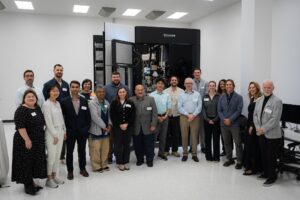
FairJourney Bio’s San Diego facility opening event. [FairJourney Bio]
The cryo-EM services, launched in January 2026, complement FJBio’s antibody discovery and biologic development portfolio. The services enable scientists to visualize protein structures at atomic resolution, including protein-protein and protein-ligand complexes, providing high-quality and interpretable results to inform confident decision-making across programs.
The facility is strategically positioned within a leading global biotech hub, complementing FJBio’s existing U.S. presence in San Francisco and its operations across Europe.
“Structural biology has historically been a late-stage tool, used to confirm decisions already made,” notes Arthur. “We are redefining that paradigm. In San Diego, we are building a premier, full-service cryo-EM CRO that brings together decades of deep expertise in sample preparation, data collection, and computational analysis, embedding structural insight at the very start of discovery, where it shapes epitope selection and determines which leads are worth advancing.”
Radiation therapy remains a cornerstone of lung cancer treatment, yet its long-term effectiveness is often undermined by a persistent challenge: tumors adapt and become resistant. Understanding, and overcoming, this resistance is a major priority in oncology.
A new study from researchers at The University of Texas MD Anderson Cancer Center, published in Cancer Research, identifies a metabolic mechanism that allows lung cancer cells to evade radiation-induced death and proposes a clinically actionable strategy to counter it.
A hidden driver of resistance
Radiotherapy works by damaging cancer cells in multiple ways, including triggering ferroptosis—an iron-dependent form of cell death driven by oxidative stress. However, many tumors develop the ability to suppress this process, allowing them to survive treatment.
The new study pinpoints a key player in this resistance: the mitochondrial enzyme dihydroorotate dehydrogenase (DHODH). Researchers found that radiation exposure increases DHODH activity in lung cancer cells, enabling them to withstand ferroptosis and continue growing.
“This is an important finding because of the immediate translational opportunity,” said Boyi Gan, PhD, senior author of the study. “By understanding how DHODH is preventing cell death in radioresistant cancer cells, we were able to develop a strategy to overcome radiation therapy resistance in tumor models.”
A metabolic shield against cell death
DHODH is best known for its role in nucleotide synthesis, helping cells produce the building blocks needed for DNA repair and replication. But the study highlights an additional function that is particularly relevant in cancer.
The enzyme also supports the production of ubiquinol, a molecule that protects cells from oxidative damage. In the context of radiation therapy, this acts as a shield, preventing the lipid damage required to trigger ferroptosis.
By simultaneously promoting DNA repair and suppressing ferroptosis, DHODH enables cancer cells to survive what would otherwise be lethal radiation-induced stress.
Repurposing an existing drug
Rather than developing a new inhibitor from scratch, the researchers turned to leflunomide—an FDA-approved drug currently used to treat rheumatoid arthritis, which is known to inhibit DHODH.
In preclinical models, blocking DHODH alone modestly increased sensitivity to radiation. However, the most striking results emerged when the team combined three treatment modalities: radiation therapy, immune checkpoint blockade, and DHODH inhibition.
Radiation plus immunotherapy alone was insufficient to control tumor growth. But when leflunomide was added, the combination restored ferroptosis and led to a marked reduction in tumor progression.
“DHODH inhibition alone had some effect on sensitization to radiation therapy, but it was really this triple combination that had a marked effect,” Gan said.
Leveraging the immune response
A key aspect of the strategy lies in its interaction with the immune system. Immunotherapy, specifically anti–PD-1 checkpoint blockade, stimulates the production of interferon-gamma (IFN-γ), a signaling molecule that can enhance ferroptosis.
However, in resistant tumors, this signal alone is not enough to overcome the protective effects of DHODH. By inhibiting the enzyme, the researchers effectively remove this metabolic barrier, allowing IFN-γ–driven ferroptosis to proceed.
The result is a coordinated therapeutic effect in which radiation induces stress, immunotherapy amplifies cell death signals, and DHODH inhibition prevents tumor cells from escaping.
Toward clinical translation
One of the most compelling aspects of the study is its translational potential. Leflunomide is already widely used in clinical practice, with a well-characterized safety profile, potentially accelerating its evaluation in oncology settings.
“These findings provide a good rationale for testing this combination in clinical studies,” Gan said in a press release.
If validated in patients, this approach could offer a new strategy for overcoming resistance not only in lung cancer but potentially in other solid tumors treated with radiotherapy.
A broader shift in cancer therapy
The findings also reflect a broader trend in cancer research: targeting metabolic pathways that enable tumor survival under stress. While traditional therapies focus on directly damaging cancer cells, emerging approaches aim to disrupt the adaptive mechanisms that allow tumors to recover.
By linking metabolism, immune signaling, and cell death pathways, the study provides a more integrated view of how resistance develops—and how it can be reversed.
Although the results are based on preclinical models, they offer a clear path forward. Future clinical trials will be needed to determine whether the triple combination strategy can improve outcomes in patients with radioresistant lung cancer.
More broadly, the work highlights the importance of identifying “druggable” vulnerabilities within resistance pathways, especially those that can be targeted with existing therapies.
In this case, a drug originally developed for autoimmune disease may help solve one of the most persistent challenges in cancer treatment: restoring the effectiveness of radiation therapy when it begins to fail.
With thousands of illegal e-cigarettes for sale in the U.S., both the Trump and Biden administrations have vowed to crack down on the illicit fruit- and candy-flavoredvapes that hold particular appeal to minors. But a new government report suggests law enforcement efforts by the Department of Justice lag far behind the scope of the problem.
Most DOJ enforcement actions between fiscal year 2022 and fiscal year 2025 — 50 out of a total of 88 — were to add the names of remote e-cigarette sellers to a list of unauthorized businesses, according to the report from the Government Accountability Office. The second-most common type of enforcement actions (20 out of 88) noted in the report were injunctions to stop legal violations.
Is it the Department of Defense or the Department of War? The Gulf of Mexico or the Gulf of America? A vaccine—or an “individualized neoantigen treatment”?
That’s the Trump-era vocabulary paradox facing Moderna, the covid-19 shot maker whose plans for next-generation mRNA vaccines against flus and emerging pathogens have been dashed by vaccine skeptics in the federal government. Canceled contracts and unfriendly regulators have pushed the Massachusetts-based biotech firm to a breaking point. Last year, Robert F. Kennedy Jr., head of the Department of Health and Human Services, zeroed in on mRNA, unwinding support for dozens of projects—including a $776 million award to Moderna for a bird flu vaccine. By January, the company was warning it might have to stop late-stage programs to develop vaccines against infections altogether.
That raises the stakes for a second area of Moderna’s research. In a partnership with Merck, it’s been using its mRNA technology to destroy tumors through a very, very promising technique known as a cancer vacc—
“It’s not a vaccine,” a spokesperson for Merck jumped in before the V-word could leave my mouth. “It’s an individualized neoantigen therapy.”
Oh, but it is a vaccine. And here’s how it works. Moderna sequences a patient’s cancer cells to find the ugliest, most peculiar molecules on their surface. Then it packages the genetic code for those same molecules, called neoantigens, into a shot. The patient’s immune system has its orders: Kill any cells with those yucky surface markers.
Mechanistically, it’s similar to the covid-19 vaccines. What’s different, of course, is that the patient is being immunized against a cancer, not a virus.
And it looks like a possible breakthrough. This year, Moderna and Merck showed that such shots halved the chance that patients with the deadliest form of skin cancer would die from a recurrence after surgery.
In its formal communications, like regulatory filings, Moderna hasn’t called the shot a cancer vaccine since 2023. That’s when it partnered up with Merck and rebranded the tech as individualized neoantigen therapy, or INT. Moderna’s CEO said at the time that the renaming was to “better describe the goal of the program.” (BioNTech, the European vaccine maker that’s also working in cancer, has shifted its language too, moving from “neoantigen vaccine” in 2021 to “mRNA cancer immunotherapies” in its latest report.)
The logic of casting it as a therapy is that patients already have cancer—so it’s a treatment as opposed to a preventive measure. But it’s no secret what the other goal is: to distance important innovation from vaccine fearmongering, which has been inflamed by high-ranking US officials. “Vaccines are maybe a dirty word nowadays, but we still believe in the science and harnessing our immune system to not only fight infections, but hopefully to also fight … cancers,” Kyle Holen, head of Moderna’s cancer program, said last summer during BIO 2025, a big biotech event in Boston.
Not everyone is happy with the word games. Take Ryan Sullivan, a physician at Massachusetts General Hospital who has enrolled patients in Moderna’s trials. He says the change raises questions over whether trial volunteers are being properly informed. “There is some concern that there will be patients who decline to treat their cancer because it is a vaccine,” Sullivan told me. “But I also felt it was important, as many of my colleagues did, that you have to call it what it is.”
But is it worth going to the mat for a word? Lillian Siu, a medical oncologist at the Princess Margaret Cancer Centre, in Toronto, who has played a role in safety testing for the new shots, watches US politics from a distance. She believes name change is acceptable “if it allows the research to continue.”
Holen told me the doctors complaining to Moderna were basically motivated by a desire to defend vaccines—which are, of course, among the greatest public health interventions of all time. They wanted the company to stand strong.
But that’s not what’s happening. When Moderna’s latest results were published in February, the paper’s main text didn’t use the word “vaccine” at all. It was only in the footnotes that you could see the term—in the titles of old papers and patents.
All this could be a sign that Kennedy’s strategy is working. His agencies often appear to make mRNA vaccines a focus of people’s worries, impede their reach, devalue them for companies, and sideline their defenders.
Still, Moderna’s strategy may be working too. So far, at least, the government hasn’t had much to say about the company’s cancer vacc— I mean, its individualized neoantigen therapy.
This article first appeared in The Checkup, MIT Technology Review’s weekly biotech newsletter. To receive it in your inbox every Thursday, and read articles like this first, sign up here.
We had crash-landed on the planet. We were far from home. The spaceship could not be repaired, and the rescue beacon had failed. Besides me, only the astrogator, part of the captain, and the ship’s AI mind were left.
Outside, the atmosphere registered as hostile to most organisms. We huddled in the lifeboat, which was inoperable but still held air. Vast storms buffeted our cockleshell shelter, although we knew from prior readings that other areas remained calm. All that remained to us was to explore, if we wanted to live. The captain gave me the sole weapon. She tasked the astrogator with carrying some tools that would not unduly weigh him down.
Little existed on the planet except deserts of snow. But alien artifacts lay in an area near us. We were an exploration team, so this discovery had oddly comforted us, even though we had been on our way elsewhere. The massive systems failure had no discernible source, and the planet had been our only choice for landfall.
The artifacts took the form of 13 domes, spread out over that hostile terrain. The domes had been linked by cables just below shoulder level, threaded through the tops of metal posts at irregular intervals. Whether intended or not, these cables and rods formed a series of paths between the domes.
Before our instruments failed, the AI had reported that the domes appeared to have a heat signature. The cables pulsed under our grip in a way that teased promised warmth far ahead. It took some time to get used to the feeling.
The shortest path between domes was a thousand miles long. The longest path was 10 thousand miles long. Our suit technology was good: A suit could recycle water, generate food, create oxygen. It could push us into various states of near hibernation while motors in the legs drove us forward. For the captain, the suit would compensate for having lost her legs and ease her pain. We estimated we could reach the nearest path and follow it to the nearest dome … and that was it. If the dome had life support capabilities, or even just a way to replenish our suits, we would live. Otherwise, we would probably die.
We revised the estimate of our survival downward when we reached the path and soon encountered the skeletons of dead astronauts littering the way. In all shapes and sizes, cocooned within their suits. Their huddled forms under the snow displayed a serenity at odds with their fate. But when I wiped the frost from face plates, we saw the extremity of their suffering.
It is difficult to explain how we felt walking among so many fatalities. So many dead first contacts.
We no longer had to puzzle over the systems failure. Spaceships came here to crash, and intelligent entities came here to die, for whatever reason. We could not presume our fate would be any different, and adjusted our expectations accordingly. The AI’s platitudes about courage did not raise morale. There were too many lost there in the frozen wastes.
Here were the ghastly emissaries of hundreds of spacefaring species we had never before encountered.
The number of the bodies and their haphazard positioning hampered our ability to make progress to the dome. The AI estimated our chances of survival at below 50% for the first time. We would starve in our suits as the motors propelled us forward. We would become desiccated and exist in an elongation of our thoughts that made us weak and stupid until the light winked out. But still, we had no choice. So even in places where the dead in their suits were piled high, we would simply plunge forward, over and through them, headed for the dome.
What we would find there, as I have said, we did not know. But we were in an area of the galaxy where ancient civilizations had died out millions of years ago. We had been on our way to a major site, an ancient city on a moon with no atmosphere in a wilderness of stars.
Although our emotions fluctuated, a professional awe and curiosity about the dead eventually came over us. This created much debate over the comms. We had made a discovery for the ages, but our satisfaction was bittersweet. Even if we lived longer than expected, we would never return home, never see our friends or family again. The AI might continue on after we were dead, but I doubt it envied being the one to report on our discovery centuries hence. And to who?
Here were the ghastly emissaries of hundreds of spacefaring species we had never before encountered. Their suits displayed an extraordinary range, although our examination was cursory. Some even appeared to be made out of scales and other biological substances from their home worlds, giving us further clues as to their origins.
The burial of the suits by snow and the lack of access to anything other than a screaming face or faces, often distorted by time and ice, worked against recording much usable data. This issue was compounded in those cases where the suit was part of the organism and they had not needed any “artificial skin,” as the AI put it, to survive harsh conditions. That many had died despite appearing well-prepared for the planet’s environment sobered us up even before our own suits dispensed drugs to help our mental states.
After a time, each face seemed to express some aspect of our own stress and terror at the seriousness of our situation. After a time, the sheer welter of detail defeated us and caused us extreme distress. The captain made the observation that even one instance of alien contact might cause physiological and mental conditions, including anxiety, stress, fatigue. Here, we were constantly encountering the alien dead of what seemed at times an infinite number of civilizations.
We stopped recording. We recommitted ourselves to the slog toward the nearest dome.
The captain’s drugs unit had failed, but the AI found a way to help her by turning off the heating element in select panels of her suit. Some parts of her would soon be lost to the cold, but the system would allow her to live on with some measure of comfort.
I must admit, we were just glad the screaming had stopped and welcomed her counsel.
II.
For a long time, as we labored in our spacesuits on that planet—following the path, beleaguered by snowstorms—we could not understand why we found so many dead astronauts, of so many unknown alien types, and yet no spaceships. During good visibility, our line of sight reached, unbroken, for 500 miles. Where were the crash sites?
But one day we chanced upon an antenna sticking up out of the ground. Clumsy attempts at excavation soon revealed that below this antenna lay a vast dead spaceship of a kind we had never seen before. The gash that had opened it to the elements had laid bare its unique architecture, but also gave the illusion that the snow had spilled out of it to create the world around us rather than having infiltrated and accumulated inside over time.
Aspects of the spaceship’s texture gave the startling suggestion that it had been made of some ultra-hard wood or wood equivalent. Clambering partway up to stare at the inner compartments, we all felt the strangeness of the dimensions and proportions of the living quarters. There was no sign of the occupants. Perhaps, I suggested, they had headed for the domes. Perhaps they had even made it to the domes. I tried and failed to keep hope from my voice.
But the captain had ordered the AI to perform a materials analysis. The “snow” in this region had been contaminated by ash and tiny particles of bone. The AI estimated that more than 70% of the white surrounding us was made of the remains of vertebrate sentient life and the remnants of suits. Of invertebrates there was no telling. A thaw might bring not just the drip, drip of water but a shushing sound indicative of bone particulate in the mixture. I imagined there might even be the clink of small objects not rendered down by whatever intense heat had created the ash.
The astrogator had insisted on digging deeper into the ship, with the idea that some recognizable commonality between technologies might yield a part or parts with which he could fix our ship. The rest of us allowed this delusion for the obvious reasons. But upon his return, he held in his hands ovals of snow not much larger than the space formed by the circle between a thumb and finger. Many of them had soft indentations, as one might find in the afterbirth of reptiles from eggs. A kind of ghostly cilia-like tread appeared along the bottoms of these objects.
The astrogator did not find any technology of use to us. Instead, he discovered that the species piloting the spaceship had been so different from us as to be safely encapsuled in suits the size of eggs. Much of what had spilled into or spilled out of the gash constituted the bodies of the crew, in their hundreds of thousands. Their suits had been inadequate to the conditions. They had died en masse attempting to escape their own ship.
The AI speculated that it had been a generation ship, perhaps fleeing a planet with a dying star. If we wondered how the AI had reached this conclusion, it was because we did not want it to be true.
The captain became silent upon receiving this further news and did not speak to us for more than 100 miles of further progress.
As we left that site, unsure exactly what we stepped upon, we also knew that since the spaceship was entirely covered by snow, it had been falling into the sediment for days or months or years. We knew then that our ship might not be visible against the horizon should we retrace our steps. The already bleak probability of rescue through visual identification of a crash site from above would be lost to us in time, even as the line of cables remained perpetually visible to the horizon. We now thought of the planet as a trap. But of what sort?
III.
We could not be sure, but in the absence of the captain’s voice, it may have been the AI that put forward the idea of the planet’s being “duplicitous.” The phrasing concerned us, for there was a duplicity in using the planet as the subject of the spoken sentence. A sphere rotating around a sun in deep space could not exhibit forethought or premeditation or other qualities of sentience.
The AI meant whoever or whatever had created the conditions on the planet that allowed spacecraft to be trapped and then the occupants placed in a perilous situation with no recourse. But I distinctly recall the AI using the words “the planet.” In addition to being inaccurate, this also let us know that the AI did not have any analysis available that might help us understand the agency and motivations acting upon us.
But in a sense, the AI only voiced something I had felt for several miles: that there existed an overlay to the planet’s surface, an area or space or different landscape unavailable to us. This overlay had also not been available to any of the prior astronauts who had died here. In this area or space or different landscape existed a wealth of the usual hoped-for things: a breathable atmosphere and abundant food and water.
While we struggled with the line through the snow and through the storms that welled up, others could see us but chose to ignore us for reasons or perhaps just for their own well-being. For hundreds, possibly thousands of years, as explorers had died here in merciless and terrible ways, there raged a sumptuous feast for the senses, as excessive as it was ancient and unending.
I cannot tell you how powerfully the AI’s words struck us, so that our mouths watered at the thought of real food and of clean, unrecycled water, of a freedom unencumbered by suits and breathing apparatus. Even at our intended destination, we would have spent most of our days aboard a small space station. This tedium would have been broken only by the arduous process of reaching the unbreathable surface and its ancient ruins of jagged black stone.
This vision that overtook us functioned not just as tantalizing delusion. It scared us so much that we could not compartmentalize it in our thoughts. It continued to overwhelm us like a wave.
We fought for the first time, with the astrogator expressing the wish to return to the ruined spacecraft and explore nearby areas for parts, while the captain broke silence to order us to continue to make progress toward the nearest dome. The AI, which had brought us to this point, stole the captain’s silence and said no more.
For each of us, those endless white plains with no real elevation, just the metal rope and the metal posts, had become a kind of repetition that hurt the brain, and the mind with it.
As I looked out across the white, I could not help seeing the impression of shapes in the wind, as if invisible entities fled by, carried there by gusts, unable to get purchase, swept up for hundreds and hundreds of miles before being dashed to the ground.
We did not give up, however.
IV.
About halfway to the nearest dome, amid a storm that reduced our progress incrementally and our line of sight to nothing, we came upon a peculiar tableau.
Six astronaut suits had fallen across and around the metal rope. With the flurries of snow, it took us, even with our powerful headlamps, some minutes to determine the nature of the obstruction. The six suits had been created for a humanoid species that must have had torsos like nine-foot-long slabs, attached to six limbs, three for walking. Their heads had flared out like thick fans. All the helmets were cracked open, and curled inside were the skeletons of some other intelligent species no larger than 40 or 50 pounds, possibly warm-blooded. With no sign of the original occupants.
After a brief analysis cut short by the conditions, we postulated that the warm-blooded species had worn breathable skin suits that, as they failed, required these intruders to seek shelter. All they could find were these six dead astronauts. Because we could discover no trace of the original occupants, the AI put forward the theory that this smaller species had eaten every scrap of the remains within the suits.
Then they too had perished, and in time, the AI suggested, something smaller would take up residence inside those bodies, then smaller still within those, and smaller still—
At this point, the captain attempted a soft reboot of the AI using a coded question. We could hear the concern in her voice.
Yet the AI continued undeterred, suggesting that we might find this to be a common situation. It might be replicated across the planet, depending on a system’s ability to break down and process meat that had not evolved alongside the devourer for millions of years. In all likelihood, most who attempted to eat in this way died soon after, poisoned by alien flesh.
The astrogator had taken to muttering inside his suit, off comms, as if he no longer thought we functioned as a team. No amount of castigation from the captain served to change his mind.
In the terse harshness of the captain’s reprimand, I recognized that her pain levels had spiked once again.
V.
The AI began to talk to us in strange alien voices at mile 700, as we labored through the snowstorm to hold onto the cables and thus the path. The AI warbled and chirped and howled and hummed and clucked. The AI spoke in voices like fossilized choruses of beasts, vast and harmonious. And in voices like dry grass spun to fire by the sun. And in voices like the dissolution of all things, darkness in the blinding white that scared me.
At first we thought the AI was deranged. Then that the AI channeled voices from the dome 300 miles ahead. But finally, the AI managed to make known to us that these were the voices of the dead astronauts we had come across from time to time. Huddled frozen. The suits in so many shapes and sizes. That the voices of the dead were channeled through the AI, and nothing could stop them.
We chose to believe that the AI had begun to malfunction. We did not waste time with a response. The captain asked the AI to perform self-shutdown and whispered the numbers in the correct sequence. We knew what we lost with this act, and yet we knew if we did not shut down the AI it might become harmful to us beyond the mental distress of what it had just conveyed to us.
Soon after, the AI gave up its own voice, and all that came from it were the sounds of the others.
A little later, the AI no longer spoke at all.
VI.
The snow began to betray us, as the storms created different forms of ice. Often, our arms became weary, our legs cramping, and we had to rest with greater frequency. We came to accept the solid crunch that could support our weight. We came to reject the feather-light freshness that felt effortless underfoot but could give way just as easily as if it were air. In some places, slick purple-hued ice welled up in sluggish layers as if something half-alive. In others, we discovered strange islands of elevation, with brutal curls and curves that suggested two continental shelves had clashed in that space.
As we adapted to these conditions, and as conditions worsened and still we adapted, we came to feel an illusion of competency, one that made even the astrogator temporarily cheerful. The sounds through the comms of our efforts, the deeper breathing, the occasional muffled curse, seduced us in this regard. We felt that we were becoming adroit at handling the snow. We began to believe if we could only make it to the dome, we would be saved.
Yet this uptick in morale ran parallel to, rather than intersected with, the idea of our ultimate survival.
VII.
We lost track of the distance left to us without the AI to tell us. Or the captain, in her pain, no longer thought to issue updates. But across the distance left to us came sights beyond reckoning: three giant astronauts spaced 50 miles apart. Larger than most starships, each body lay sprawled across an area larger than several fields and in very different conditions.
The first had been badly burned and was thus unrecoverable, even in terms of salvage. The astronaut had crawled or pulled itself along for some distance. It had left a long smudge of black and red across that expanse. The alien species was, as ever, unknown to us, but the five arms were sunk in the ground as if in agony. The skull had once held three eyes, and the face plate had been cracked by force so strong it resembled a meteor strike. The body was bloated, the fabric of the suit gray with a shimmer of green that came and went, linked to photosensitive skin cells. The way the flesh took up space, and how it exhibited aspects more plant than animal, made it impossible to study further.
The second was a sprawl of limbs, with the suggestion of a defensive posture. The debris of conflict flared out to the side in an incomprehensible display. The suit had an intactness that surprised us, but a similar crack in the face plate without any trace of body within. The rest of the suit had become inhabited by a wealth of other dead astronauts of varying sizes and shapes, who had sought shelter or sustenance and then become trapped or simply … given up. As the AI had predicted, we had once again encountered bodies providing other bodies with temporary sustenance and shelter.
I felt like a parasite who beheld a god. Or was the scale even more ludicrous?
But this condition was not at first evident to us, becoming apparent only after we had clambered for an hour to reach the cracked face plate and the entry hole extended like a broken archway before us.
Despite the number of remains within, and the difficulty in moving through them to explore, the captain ordered an exhaustive recon. Her pulse in the readings had a thready quality. Sometimes I felt, and the astrogator too when we took private comms, that the captain had begun to say things similar to the AI’s delusions. Yet we obeyed the order, on the chance that some internal calculation on the captain’s part meant she believed this was the only way we would survive.
What did we expect to find in the dead body of a once-intelligent giant? Food? Oxygen? Some cause of death? To put off the thought of our own death by seeking shelter with a death so large we could not comprehend it?
I felt like a parasite who beheld a god. Or was the scale even more ludicrous? I had trouble envisioning the way the body must have twisted as it pitched forward into that icy ground. I had trouble holding onto my own thoughts.
More and more pressure moved through my skull as I contemplated that scene. We were in the midst of something none of my kind had ever known. We might be the only ones, ever. I better understood the unraveling of the AI and of the captain. My sharpness had dulled, taking my calm with it.
It was impossible to tell how long the astronaut had taken to die. Unless somewhere within that fallen figure some hint of life hid that we would never find.
The storms fell away, rose, then fell away again.
VIII.
The third huge astronaut was full of light and life and shone out across the wasteland of snow like a beacon. For a moment, I thought we had pierced the invisible layer and could see what lay beyond the veil. We would have comforts beyond anything found on our ruined spaceship even when it had been fit to cross galactic space. There would not be recycled urine for our water. There would not be the faint stink of sweat creeping into our suits as the ventilation system began to fail. Our liquid food would not taste stale and moldy.
As we approached, the suit extended almost to the horizon in that foreshortened perspective created by the left foot. We noted through our remaining instrumentation that the suit remained intact. The pressure told us a kind of air circulated within its sealed surfaces.
We climbed with a renewed energy, the promise of sanctuary so close making us giddy. We each exhorted the others on with such exuberance that it made me a little afraid. What lay on the other side of this state of mind but a fall?
When we reached the helmet plate, we could see inside not a face or a skull, but instead such a richness of healthy growth that we fell silent before it. None of us could, I believe, understand exactly what we saw, except that it equaled ecosystem—resplendent with vibrant greens and blues, stippled with other colors. There might be some parallel to a terrarium full of moss and exotic plants. There might be some sense of life moving amongst those plants, as of jewel-like amphibians or even tiny shy sapphire birds. We could not smell or taste or hear what lay behind the face plate. We could not experience it in that way, but somehow we each imagined enough to be calmed and comforted by it.
The astrogator said he might be able to create a hole in the plate or elsewhere on the body to let us in, and then patch the surface such that not too much air or vitality would spill out. This workaround might take an hour or two, due to the delicate nature of what we saw within. But it was possible.
The captain considered the astrogator’s proposal and then agreed. The weather had begun to turn dangerous again. That we should begin immediately did not need to be said. With the proper pressure brought to bear, we would have some measure of sanctuary from which to recover for a final push to the dome. It could be the difference between life and death, the astrogator said. If the atmosphere was breathable, we might even be able to give the captain some better solution to her pain.
I unclipped the astrogator’s equipment from his waist and threw it off the mountain that was the astronaut and watched it sail through the air and into the snow. Then I used my weapon to fry it where it lay. Then I threw my weapon into the snow, too, in a place where the featheriness would cover it and hide it forever.
We were a team and I had helped my team while showing them I posed no threat—although I knew the astrogator and the captain would not see it that way. I stood there on the face plate that we could no longer open with the diminished tools at our disposal as they both yelled at me through the comms. It’s unimportant what they said to me. They were admonishing me for something that had already happened and that they had no power to stop. I did not bother to explain, but began to make the descent to the ground so we could once again take up the metal rope and make for the dome.
Will you follow, I asked them from the ground, when I saw they still stood on the heights. There came no reply, but when they saw me take up the rope, they climbed down to take up the rope too.
I waited then, and let them catch up.
IX.
The captain died not long after. The pain was too great or the wounds she had suffered too damaging. I had known for some time she would never make it to the dome, but there was no point in emphasizing that to her. Nothing she had done until the end had required her to be removed from command. Her last words were the name of our ship and giving her love to someone who would be dead of old age even if we found a way to escape this place and return home. But the astrogator told her he would carry those words forward.
Then we left her by the marker that meant we had 100 miles left to the dome. We knew the snow would cover her for burial. It had done so faithfully for all the rest.
That in that frozen hellscape, the persistence of life in that manner, an oasis in the midst of nothing, could be categorized as a miracle.
As the astrogator followed me down the rope line, he cried out for explanation. The captain’s death required it for some reason, in his mind. The captain had not deserved my betrayal. The captain would not rest easy until I told him why.
You must believe in ghosts, I replied.
ROGAN BROWN
This reply incensed him and he castigated me in words not used among members of a team that respect each other. Once more, I ignored him, but told him if our oxygen got low, he could have mine if we calculated he could make it to the base. I meant this, as I knew the odds were low anyway. I had hurt my knee taking the equipment from the astrogator and then making my way so rapidly down from the dead astronaut.
The astrogator did not reply, by which I knew he did not accept my answer.
The reason I took the tools and destroyed them is because the wind had told me something it had not whispered to the captain or the astrogator. The wind had not spoken to me before, so I believed what it told me. That the astronaut within the suit lived on, if unable to move. That what we saw on the outside and registered as ecosystem, as separate “plants” and “animals,” instead formed a composite life-form and that to crack open the suit or cut through the suit at a leg would have been a violation.
That in that frozen hellscape, the persistence of life in that manner, an oasis in the midst of nothing, could be categorized as a miracle.
I would not snuff that out. I could not allow that to be snuffed out. But I remembered too how I felt looking at that vast and alien country behind the face plate. So calm, so comforted, overcome by the depths of an emotion I could not place. Would I replace that feeling with the feeling of seeing all those explorers dead within the other vast suit? Even as I become one of them?
Because the planet had already told us the rules, the consequences, and the ultimate outcome. There are no odds so terrible that they could not be experienced, and in dozens of ways, in this place.
So I trudged on and the astrogator cursed me and cursed me and called out my childhood and how badly I must have been brought up and how I must have cheated to pass the psych exams, and yet I had thought the same of him at various points during our journey.
See how beautiful the snow is, falling now, I said to him over the comms. See how precise and geometric this line we follow across this expanse.
He did not reply, but a little later he told me he no longer believed in the line at all, and by his calculations he would get to the dome faster if he abandoned it and struck out on his own.
I could not stop the astrogator and did not want to, so I watched him become a smaller and smaller figure against the white until the white ate him up and I was alone.
X.
I have been walking a long time, visiting with the dead. Here, against an arch of heaven that appears no different than what I see directly in front of me.
Jeff VanderMeer is the author of the critically acclaimed, bestselling Southern Reachseries, translated into 38 languages. His short fiction has appeared in Vulture, Slate, New York Magazine, Black Clock, Interzone, American Fantastic Tales (Library of America), and many others.
A study of more than 400,000 posts in the social media platform Reddit has identified previously unreported side effects from the increasingly popular GLP-1 weight loss and diabetes drugs. Users reported symptoms affecting menstrual cycles and body temperature, which have not yet been described in clinical trials or included in drug labels.
Published today in Nature Health, the study covers over five years of public online posts from nearly 70,000 Reddit users discussing their personal experience taking the GLP-1 drugs semaglutide and tirzepatide.
“Some of the side effects we found, like nausea, are well known, and that shows that the method is picking up a real signal,” says Sharath Chandra Guntuku, PhD, research associate professor in computer and information science at Penn Engineering and the study’s senior author. “The underreported symptoms are leads that came from patients themselves, unprompted, and clinicians could potentially pay attention to them.”
Although the study is not representative of the broader population—Reddit users are generally younger, more likely male and based in the U.S.—the symptoms reported collectively match known side effects of semaglutide and tirzepatide. About 44% of users described at least one known side effect, most commonly symptoms of gastrointestinal distress.
“Clinical trials generally identify the most dangerous side effects of drugs, but they can fail to find what symptoms patients are most concerned about,” says Lyle H. Ungar, PhD, professor in computer and information science at Penn Engineering. “Online patient communities work a lot like a neighborhood grapevine. People who are living with these medications are swapping notes with each other in real time, sharing experiences that rarely make it into a doctor’s office visit or an official report. Even though social media is not necessarily representative, a large collection of posts may reflect additional concerns.”
The study uncovered a series of side effects that were previously unreported for these drugs. This included discussions of menstrual cycle changes, such as intermenstrual bleeding, heavy bleeding, and irregular cycles. Other users reported chills, hot flashes, fever, and other temperature-related symptoms. In addition, fatigue symptoms ranked as the second most common complaint in these online posts despite rarely being reported in clinical trials.
“We can’t say that GLP-1s are actually causing these symptoms,” says Neil K. R. Sehgal, doctoral student at the University of Pennsylvania and the study’s lead author. “But nearly 4% of the Reddit users in our sample reported menstrual irregularities, which would be even higher in a female-only sample. We think that’s a signal worth investigating.”
While efforts to scour the internet for self-reported drug side effects have been ongoing for more than a decade, screening through social media posts at scale remained challenging until the arrival of large language models such as ChatGPT or Gemini. In particular, these tools can prove instrumental in mapping the language users use to describe their symptoms to clinical terminology defined in the Medical Dictionary for Regulatory Activities (MedDRA), used to officially report symptoms in clinical trials.
“Large language models have made it possible to do this kind of analysis much faster with a level of standardization that could be difficult to achieve before,” says Sehgal.
The researchers hope these findings will encourage researchers and drug developers to investigate the side effects discussed by users online. In future work, the team plans to expand beyond Reddit and English-language discussions to confirm whether the same symptoms appear across different social media platforms and populations.
While this approach is not intended as a replacement for clinical trials, screening social media posts for clues on unreported side effects can make a significant difference in terms of speed. This can be especially relevant for drugs like semaglutide and tirzepatide, originally diabetes drugs that quickly became mainstream when the FDA granted them approval as weight loss drugs.
“Clinical trials are the gold standard, but by design, they are slow,” says Guntuku. “The whole point of this kind of approach is that it can move quickly, and that’s exactly when it’s most valuable.”
Popular low-calorie sugar substitutes can negatively affect both the balance of microbes in the gut and gene expression in a heritable way, preclinical research suggests.
The findings in mice, published in Frontiers in Nutrition, challenge long-standing assumptions that non-nutritive sweeteners (NNS) are metabolically inert and underscore their potential to influence health across generations through microbial and molecular pathways.
Both sugar alternatives studied had an impact: sucralose, a popular artificial sweetener that is around 600 times sweeter than sugar, and stevia, a no-calorie natural alternative extracted from the leaves of a South American plant.
Lead researcher Francisca Concha Celume, PhD, from the University of Chile, said the changes seen in glucose tolerance and gene expression could be interpreted as early biological signals related to metabolic or inflammatory diseases.
“For example, the animals did not develop diabetes. Instead, what we observed were subtle changes in how the body regulates glucose and in the activity of genes associated with inflammation and metabolic regulation,” she explained.
“It is possible that such changes could increase susceptibility to metabolic disturbances under certain conditions, such as a high-fat diet.”
Celume and team divided 47 male and female mice into three groups receiving either plain water, or water with sucralose or stevia added over 16 weeks at levels comparable to those seen in a usual human diet.
These mice were then bred, with each of the two subsequent generations just receiving plain water.
The team found there were no differences in glycemic response in the initial group, but that it had mildly altered in the male offspring of those fed sucralose in both successive generations. By the second generation, female mice with stevia-consuming grandparents had elevated fasting blood sugar.
Fecal microbiomes in both sets of animals receiving sweeteners were more diverse than in those given plain water. But sweetener-fed mice also had lower levels of short-chain fatty acids, which could signal epigenetic changes and could indicate that bacteria may be generating less beneficial metabolites and that this was passed on to subsequent generations.
Mice that had consumed sucralose were particularly affected and had more pathogenic bacteria and fewer beneficial species in their fecal microbiomes. The impact of this sweetener tended to be more consistent and persistent across generations.
The researchers also examined the impact of five genes relating to inflammation, gut barrier function, and metabolism in the liver and intestines.
Overexpression in the inflammation-linked toll-like receptor-4 (tlr4) and tumor necrosis factor (tnf) genes was seen both in animals that consumed sucralose and stevia. This was also seen in the immediate offspring of the former but not the latter.
The expression of sterol regulatory element-binding protein 1 (Srepb1), which is linked with regulation of lipid and carbohydrate metabolism, was decreased in the liver of sucralose-fed animals and subsequent generations.
“In summary, our findings demonstrate that parental consumption of sucralose or stevia induces persistent, intergenerational changes in host metabolism, intestinal and hepatic gene expression, gut microbiota composition, and microbial metabolite production in unexposed offspring,” the researchers concluded.
They added: “Given the widespread use of NNS during critical developmental periods, these findings raise important questions about their safety and long-term impact.”