Background: Generative artificial intelligence (GenAI) conversational agents are increasingly integrated within digital mental health interventions (DMHIs). However, empirical data on real-world engagement, usage patterns, and satisfaction with GenAI conversational agents remain limited. Objective: This study examined real-world engagement among users who interacted with the GenAI conversational agent within Mental, a DMHI designed to support mental health. We aimed to (1) characterize users engaging with Mental’s GenAI conversational agent, (2) examine real-world usage patterns, (3) examine satisfaction and user feedback following sessions, and (4) explore preliminary predictors of engagement with Mental’s GenAI conversational agent. Methods: This retrospective study analyzed naturalistic user data from 5082 paid subscribers who engaged with Mental’s GenAI conversational agent between October 2024 and March 2026. Users’ onboarding characteristics (ie, sex, mindset, distress level, desire for greater discipline, and primary stressors) and session satisfaction were collected via optional app-native items; session-level engagement metrics were captured through backend app usage data. Descriptive statistics were used to characterize user demographics and usage patterns. Session satisfaction was compared across temporal engagement variables using ANOVAs and independent-samples tests. As an exploratory aim, session-level mixed-effects logistic regression was used to estimate predictors of session-to-session return, with session satisfaction as the primary predictor and moderation by self-reported mindset. Results: Among users reporting onboarding data, 78.8% (2610/3312) identified as male and 90.0% (2667/2964) reported moderate-to-high distress on an app-native item. A total of 59,602 sessions were recorded (mean 11.8 sessions per user), most frequently occurring in the evening (17,206/59,602, 28.9%) and outside traditional business hours (37,181/59,602, 62.4%). Mean session satisfaction was high (mean 4.5, SD 0.9) and did not differ by time of day or day of the week. The most commonly selected session descriptors were “Insightful” (9236/19,883, 46.5%), “Felt seen” (7974/19,883, 40.1%), and “Good advice” (7510/19,883, 37.8%). The session-to-session return rate was 92.6%, and 69.4% (3528/5082) of users returned after their first session. In an exploratory analysis, session satisfaction was a significant predictor of return (odds ratio 1.35, 95% CI 1.14-1.60; <.001), although this finding should be interpreted as hypothesis-generating. Conclusions: Users engaged with a GenAI conversational agent within the Mental app outside of traditional care hours and presented with high return rates. Objective behavioral engagement data (eg, session frequency, timing, and session-to-session return rate) provide novel evidence that GenAI conversational agents may sustain real-world engagement, including among individuals who face barriers to traditional mental health services. Future research should determine whether these engagement patterns translate into clinically meaningful outcomes.
Background: The use of artificial intelligence and machine learning (ML) tools is now common in the advancement of health care services and clinical risk estimation. Legacy systems make use of highly informative feature sets developed from years of clinical expertise and research to estimate different outcomes, but only recently have they been tested against novel statistical approaches. One such system, the Johns Hopkins Adjusted Clinical Group (ACG) System, is a long-standing and widely used approach to categorizing clinical risk factors, and it is amenable to ML techniques. Objective: This study aims to test the ACG System using a contrasted area under the receiver operating characteristic (AUROC) and classification optimization strategy and compare its performance against traditional logistic regression methods. Assuming that selected ML algorithms can be tuned to enhance overall measures of performance, this would strengthen arguments for incorporating them into ACG-related workflows. Methods: Using a retrospective observational design, prospective year estimates of all-cause hospitalization and elevated total cost were modeled using a cross-validation framework. Patients with elevated costs were identified as those falling above the 95th percentile of total amounts billed, including pharmacy costs. Hyperparameter settings for XGBoost (Extreme Gradient Boosting), random forest, and elastic net were determined using average cross-validated performances for and AUROC in a grid search aimed at maximizing either statistic. Additional iterated cross-validation was used to compare point-estimated average AUROC and -scores between models, further decomposed by sensitivity, positive predictive value, and -beta statistics. Results: There were 350,463 patients selected in 2019 from the Johns Hopkins Health System. Model features identified by the ACG System for predicting prospective year hospitalization and total cost were included in these analyses. Findings suggest small but statistically significant improvements in cross-validated AUROC and -scores over logistic regression, using either optimization strategy and XGBoost. Logistic models achieved average receiver operating characteristic values of 0.886 and 0.841 for cost and hospitalization, respectively, whereas XGBoost achieved 0.891 and 0.849, respectively. optimization yielded similar findings, with logistic models achieving 0.367 and 0.341 on average for hospitalization and cost, respectively, but XGBoost exceeded values for cost but not for hospitalization (0.411 and 0.328, respectively). Conclusions: The clinical implications of these findings and the effect of class imbalance on model calibration are explored, along with the limitations of these data and approach. The core finding is that logistic regression remains very well-suited to these tasks, especially in situations where the efficiency or interpretability of models is critical. Under conditions of imbalance, regressions tended to yield high-precision estimates for the outnumbered class. Nevertheless, the findings also underscore a diversity of suitable models depending on clinical use cases, each having its own tradeoffs for evaluating performance. As such, health systems must clearly identify the needs and expectations of a model before calibrating one for use.
<img src="https://jmir-production.s3.us-east-2.amazonaws.com/thumbs/cc6a31773ec690198d6914d248fe33eb" />
A blood protein long associated with dementia in older adults may also identify people at increased risk decades before symptoms develop, according to a large international study published in Science Advances.
Analyzing data from six large longitudinal cohorts, researchers from the National Institute on Aging found that elevated levels of growth differentiation factor-15 (GDF15)—a circulating cytokine involved in inflammation and cellular stress responses—in adults younger than 55 years were associated with a significantly greater risk of developing dementia later in life, particularly vascular dementia. The findings suggest that molecular changes associated with neurodegeneration may be detectable years before cognitive symptoms emerge.
“Our findings extend existing evidence by demonstrating that elevated GDF15 levels are detectable in midlife—before age 55—in individuals who later develop dementia,’” the authors write.
The study included approximately 500,000 participants from the UK Biobank, more than 15,000 from the Atherosclerosis Risk in Communities (ARIC) study, nearly 5,700 from the AGES-Reykjavik Study, and three additional cohorts. Participants were followed for 15 to 25 years, enabling investigators to determine whether plasma GDF15 levels measured in midlife predicted future dementia.
Across nearly all cohorts, elevated plasma GDF15 was associated with increased risk for all-cause dementia. However, the relationship was strongest for vascular dementia, with effect sizes approximately two to five times greater than those observed for Alzheimer’s disease.
The distinction suggests GDF15 may be particularly useful for identifying individuals at risk for vascular cognitive impairment rather than the amyloid-driven pathology typically associated with Alzheimer’s disease. As the authors note, “the association was particularly pronounced for vascular dementia,” supporting the protein’s potential as an early marker of vascular brain injury.
To investigate whether GDF15 might play a biological role in disease rather than simply reflect ongoing pathology, the researchers performed Mendelian randomization analyses using genetic data. The analyses supported a potential causal relationship between elevated circulating GDF15 and Alzheimer’s disease and related dementias.
Additional analyses linked higher plasma GDF15 concentrations with several established indicators of neurodegeneration, including cerebral small vessel disease, elevated phosphorylated tau (pTau-181) in both plasma and cerebrospinal fluid, and increased neurofilament light, a marker of neuronal injury. In contrast, GDF15 was not associated with amyloid pathology, suggesting that it may reflect alternative disease mechanisms.
Instead, multiple lines of evidence pointed toward inflammation and immune dysregulation. Individuals with elevated GDF15 exhibited cerebrospinal fluid protein signatures consistent with neuroimmune activation, including complement activation, inflammatory signaling pathways, and disease-associated microglial responses.
To better understand these mechanisms, the investigators exposed cultured human macrophages to recombinant GDF15. The protein altered cellular pathways involved in interferon signaling, energy metabolism, and heme scavenging—processes that have all been implicated in dementia risk. Together, the experimental and clinical findings suggest that GDF15 may actively influence neurodegeneration through immune and vascular pathways rather than acting solely as a marker of biological aging.
The authors conclude that “these findings support circulating GDF15’s role as an early biomarker—particularly for vascular dementia and neuroinflammation—and identify the mechanisms by which it may drive dementia risk.”
Background: Artificial intelligence (AI) has the potential to enhance resource efficiency, improve patient treatment, and increase safety in health care. Still, there is limited knowledge on how to implement and evaluate AI solutions in real-world clinical settings. To address this gap, we conducted a formative process evaluation of the first large-scale procurement and implementation of a commercial AI solution in Norwegian health care. F The Non-Adoption, Abandonment, Scale-up, Spread, and Sustainability (NASSS) framework, was used for the formative process evaluation throughout the 4-year project to guide data collection, analysis, and real-time feedback. Objective: This study aimed to evaluate the usefulness of the NASSS framework for formative process evaluation of AI implementation in health care. Methods: A formative process evaluation was conducted from 2020 to 2024, covering the procurement, preimplementation, and implementation phases. Data included 65 interviews, observations, and document analysis. Data were analyzed thematically using the 7 NASSS domains, supplemented with subtopics within each domain to capture emerging infrastructural complexities and temporal dynamics. Real-time findings were discussed with the implementation team, decision-makers, and clinicians. Results: Key factors for successful implementation included clinician trust, workflow integration, task distribution, and digital maturity. Major challenges comprised limited documentation of Conformité Européenne–marked solutions, deskilling, and misaligned financial incentives. The NASSS framework enabled the identification of sociotechnical values and complexities, but did not fully capture workflow evolution and changing user perceptions over time. Conclusions: The NASSS framework is useful for evaluating AI implementation but requires adaptation to capture temporal dynamics and workflow changes better. These findings contribute to improving evaluation approaches for AI in health care.
<img src="https://jmir-production.s3.us-east-2.amazonaws.com/thumbs/b9322988a1331e55bc3e6cfe83e31278" />
Laura Sepp-Lorenzino, PhD, is scientific advisor and former chief scientific officer at Intellia Therapeutics, a clinical-stage genome editing company developing potential curative CRISPR-based medicines. Previously, she was vice president and head of Nucleic Acid Therapies at Vertex Pharmaceuticals and part of External Innovation. She also held roles at Alnylam Pharmaceuticals and Merck & Co. In addition, she currently serves as the director of the American Society of Gene and Cell Therapy (ASGCT).
Shengdar Tsai, PhD
Associate Member, Department of Hematology St. Jude Children’s Research Hospital
Panelist
Shengdar Tsai, PhD
Shengdar Tsai, PhD, is an associate member in the Department of Hematology at St. Jude Children’s Research Hospital. His lab’s research focuses on developing genome editing technologies for therapeutics, with a special interest in editing human HSCs for treatment of hemoglobinopathies such as sickle cell disease and T cells for cancer immunotherapy. In 2020, he was chosen as one of the American Society for Gene and Cell Therapy (ASGCT) Outstanding New Investigators.
Broadcast Date:
Time:
Complex biologics such as bifunctional antibodies are opening new therapeutic possibilities in oncology, but these molecules present CRISPR is now a household term. Stories of genome editing therapies like Casgevy and Baby KJ have been headlines in our inboxes for years. Despite those cases, and the optimism they bring, genome editing has had significant challenges moving into the clinic.
This GEN Live show will bring together a panel of leading experts to break down the latest advances, innovations, and challenges shaping genome editing. The discussion will cover a lot of bases: CRISPR breakthroughs, emerging gene editing platforms, clinical trial milestones, regulatory shifts, access, off-target effects and safety considerations, and the growing role of large-scale population genomics in guiding precision therapies. Please join us to learn more and—because we plan to take questions from the audience—please bring your questions for our panelists, too!
Researchers at Weill Cornell Medicine and Roswell Park Comprehensive Cancer Center have genetically engineered CAR T cells that specifically target and kill bladder cancer (BCa) cells. Through their preclinical study the team, co-led by Taha Merghoub, PhD, a professor at Weill Cornell Medicine, identified the protein MUC16 as a clinically relevant target for bladder cancer, and demonstrated that direct delivery of MUC16-targeting CAR T cells into the bladder via a catheter can control bladder tumors in mice. The investigators say their study raises hopes that a similar approach may be effective in humans.
The team reported on their results in Journal of Experimental Medicine, in a paper titled “Intravesical mesothelin-based CAR T cells targeting MUC16 effectively control bladder cancer in preclinical models,” concluding that their findings “… not only establish MUC16 as a clinically relevant target for anti-BCa CAR T-cell therapy, but also suggest that intravesical delivery, a commonly used administration route in urological practice, represents a viable, easy-to-implement, and more effective strategy of antitumoral adoptive CAR T-cell transfer.”
Approximately 600,000 new cases of bladder cancer are diagnosed worldwide each year, causing nearly 200,000 deaths, the authors wrote. Treatment generally involves surgical removal of the tumor followed by chemotherapy or immunotherapy. But these approaches are associated with high recurrence and progression rates, often necessitating complete removal of the bladder, a life-altering procedure that can lead to significant complications. “Intravesical therapies are the mainstay of bladder cancer (BCa) management, but their efficacy is limited by toxicities and recurrences,” they continued. “Given these challenges there is a significant unmet clinical need, driving renewed interest in bladder-sparing therapies for patients with high-risk bladder cancer who are unfit or unwilling to have their bladder removed,” Merghoub said.
CAR T cells are immune cells genetically engineered to express an artificial receptor protein capable of specifically targeting cancer cells. This type of immunotherapy has been successfully used to treat many different types of blood cancer. But success against solid tumors has so far been limited due to challenges that include poor tumor infiltration and off-target toxicity. Merghoub and colleagues attempted to overcome these issues by creating CAR T cells with high specificity for bladder cancer cells and then delivering them directly to the bladder via a catheter, known as intravesical delivery.
The team developed an antigen discovery pipeline, through which they identified MUC16 as a promising BCa target. “In this study, we leveraged a computational antigen-identification pipeline, which prioritized high tumor specificity and minimal pan-tissue expression to rationally identify MUC16 as a potential target for BCa-directed CAR T-cell therapy,” they stated. The researchers also noted that MUC16 and its soluble form, CA-125, have previously been identified as prognostic biomarkers for BCa, and MUC16 has been investigated as a CAR T-cell therapy target in other malignancies, and particularly ovarian cancer.
Through their newly reported study the investigators found that MUC16 is highly expressed on the surface of many bladder cancer cells, including types that are resistant to existing therapies, but is largely absent from normal bladder cells and other healthy tissues. “Given its favorable expression profile, absence in normal bladder, and high expression across a broad spectrum of bladder tumors analyzed collectively spanning a total of 1,292 patients, including those recalcitrant to existing therapies, MUC16 was selected as the lead candidate for BCa-specific CAR T-cell therapy development,” they wrote.
The researchers then generated CAR T cells that target MUC16. In initial tests these CAR T cells were able to kill MUC16-positive tumors grown in the lab from patient-derived bladder cancer cells. Merghoub and colleagues then tested the ability of the MUC16-targeting CAR T cells to control the growth of human bladder cancer cells implanted in the bladders of mice. The team found that the CAR T cells were ineffective when administered intravenously, but when delivered intravesically, they reduced tumor growth and extended survival. When administered directly into the bladder, the CAR T cells were unable to spread into the rest of the body, minimizing the risk of any side effects in other tissues. “Intravesical delivery of these CAR T cells reduced the growth of BCa xenografts and prolonged survival in xenograft-bearing mice, showing superior efficacy compared with typical systemic CAR T-cell administration,” the investigators noted.
“Development of engineered T cells for solid tumors has been challenging, in part due to normal tissue expression of potential target antigens,” Wolchok says. “Using a compartmentalized delivery system allows us to overcome this hurdle and hopefully come one step closer to broader use of CAR and transgenic T cells for common solid tumors, like bladder cancer.”
“Our findings establish MUC16 as a clinically relevant target for CAR T-cell therapy in bladder cancer, and highlight that intravesical delivery, a commonly used administration route in urological practice, represents a feasible, effective, and readily easy-to-implement strategy for adoptive CAR T-cell transfer,” Merghoub said. “This approach could be useful for both initial treatment of bladder cancer as well as treatment refractory subsets of tumors, offering an attractive therapeutic option for patients who may have limited therapeutic alternatives besides bladder removal.”
In their paper the team also suggest that their findings “… lay the groundwork for refining CAR T-cell therapies targeting other antigens for BCa.”
By Florencia Assaneo, PhD, Research Fellow, Stavros Niarchos Foundation (SNF) Global Center for Child and Adolescent Mental Health at the Child Mind Institute
Educational challenges for Latin American children
Primary education in Latin America has faced a steady decline over recent decades, contributing to what many organizations now describe as an educational crisis. International institutions such as the Economic Commission for Latin America and the Caribbean (ECLAC), the United Nations Educational, Scientific and Cultural Organization (UNESCO), as well as the World Bank Group have all called for urgent action to address worsening learning outcomes across the region. The situation is particularly concerning in Mexico. Results from the 2022 Programme for International Student Assessment showed that Mexico scored well below the Organization for Economic Co-operation and Development (OECD) average in reading, mathematics, and science — placing the country among the lower-performing educational systems evaluated globally.
The consequences of this crisis extend far beyond the classroom. Educational difficulties during childhood are closely linked to long-term social and mental health outcomes. Research has shown that additional years of basic education are associated with lower rates of depression and anxiety (Kondirolli & Sunder, 2022), as well as higher levels of resilience and perceived control over one’s life (Niemeyer et al. 2019). In this sense, poor academic performance in primary school can have lasting effects that continue into adulthood, limiting employment opportunities, increasing vulnerability, and negatively affecting overall well-being.
Can rhythm-based video games improve learning?
Open-access interventions that strengthen children’s cognitive and academic abilities could have enormous value in low- and middle-income countries, where educational resources are often limited. Our work explores whether the ability to coordinate movements with rhythmic sounds — such as clapping, tapping, or dancing to music — can be leveraged to support children’s learning and cognitive development through engaging digital tools.
Over the last decade, multiple studies have shown that children who are better at synchronizing their movements to rhythm also tend to perform better on a wide range of cognitive and language-related tasks. These include reading, phonological awareness, processing speed, rapid naming, and other foundational abilities linked to academic success. Researchers have assessed these rhythmic coordination skills in multiple ways, from walking to the beat of music to tapping along with a steady rhythm or coordinating movements while playing musical instruments. Across these different approaches, one result consistently emerges: children who are better at aligning movement with sound also tend to show stronger cognitive performance.
Building on these study findings, my current fellowship project, supported by the Stavros Niarchos Foundation (SNF) Global Center for Child and Adolescent Mental Health at the Child Mind Institute, seeks to better understand how these rhythm synchronization abilities develop during childhood and whether they could eventually be strengthened through interactive digital interventions. Specifically, we are studying the developmental stage at which these abilities become established in children, and whether individuals with stronger rhythmic coordination also show advantages in attention and language-related skills. Understanding when these abilities emerge is particularly important because it may help identify the developmental window during which they are most malleable and therefore most responsive to training or intervention.
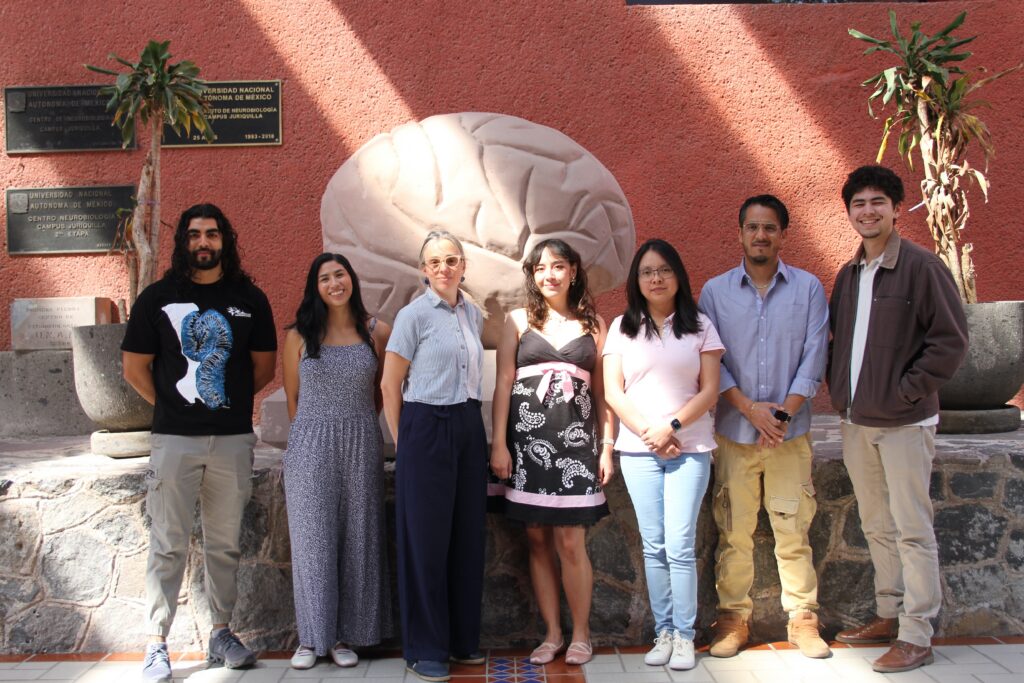
From left to right: Rebeca Hernández Soto, associated researcher at the lab; M. Florencia Assaneo; principal of the public primary school; and Moramay Ramos Flores, a PhD student working on the project. At the public school “Américas Unidas” in Querétaro, Mexico.
In parallel, we are using functional magnetic resonance imaging (fMRI) — a non-invasive brain imaging technique that allows us to observe which brain regions become active during different tasks — to explore the relationship between rhythmic synchronization and the brain’s reward system. Importantly, these same reward-related regions are also strongly engaged during video game play. If the pathways within this reward system are similarly activated during rhythmic coordination, this could mean that children who initially struggle to synchronize movements with sound may be able to strengthen these abilities through a carefully designed video game experience. One possible future application could involve an open-access mobile game in which children synchronize taps or hand movements to musical rhythms while progressing through increasingly challenging levels and unlocking rewards or visual customizations.
Overall, the current project seeks to generate the scientific evidence necessary to determine whether rhythm-based digital interventions could become a viable tool for supporting children’s cognitive development. This work has the potential to contribute to the future development of accessible and scalable tools that can strengthen foundational cognitive skills linked to academic performance in children. These tools can be applied to children in Mexico and, more broadly, across low- and middle-income countries (LMICs), expanding access to education resources and interventions.
The power of collaboration between the SNF Global Center and UNAM
Our laboratory at Universidad Nacional Autónoma de México (UNAM) is primarily dedicated to basic neuroscience research. Based at UNAM’s campus in Querétaro, our team brings together researchers and students from different disciplines — including neuroscience, psychology, physics, engineering, and data analysis — united by a shared interest in understanding how rhythm and brain dynamics shape human cognition and behavior. Here, we have access to excellent infrastructure for fundamental research, including neuroimaging facilities and high-performance computational resources. However, translating basic scientific discoveries into interventions capable of improving people’s daily lives is often much more challenging and requires strong cross-sector collaboration.
Members of the research team at the laboratory facilities on UNAM’s Querétaro campus.
The work I’m conducting as part of the SNF Global Center Research Fellowship has encouraged us to begin thinking beyond the laboratory. This current fellowship has given us the opportunity to test the core scientific assumptions behind our proposed open-access intervention. If the pilot project proves successful, the next stages of the work will become considerably more ambitious, involving both the technological development of the intervention and its large-scale implementation and evaluation in school settings. Advancing toward those goals will likely require the support of larger international organizations and cross-sector collaborations. In this context, the opportunities provided by the SNF Global Center at the Child Mind Institute to share, disseminate, and give visibility to our work are extremely valuable, helping create the connections and momentum necessary to move from foundational research toward real-world impact.
More broadly, this kind of collaboration highlights the importance of building bridges between global institutions and local research communities. By combining international support with local expertise and close engagement with schools and communities, it becomes possible to develop solutions that are both scientifically rigorous and genuinely connected to the realities of the populations they aim to serve.
This is today’s edition of The Download, our weekday newsletter that provides a daily dose of what’s going on in the world of technology.
Heat waves mess with your brain. Scientists are trying to figure out why.
—Jessica Hamzelou
It’s been hot in London this week. Really hot. A dangerous heat wave has hit Western Europe. On Wednesday, the UK recorded its highest ever June temperature at 36.1 °C (about 97 °F). But as the weather app on my phone confirmed, it felt like 39 °C.
Much of Western Europe is suffering, bringing awful consequences for agriculture, infrastructure, and the health system. But heat can also affect the brain.
Studies have confirmed that as temperatures rise, people seem to get more irritable and more violent. And they have shown that firefighters find it harder to focus immediately after heat exposure. Rising temperatures can also have particularly disastrous outcomes for children and people with mental health disorders.
Research on lab animals suggests that excessive heat can alter the function of chemical signals in our brains. But we still need a better understanding of the mechanisms behind these effects.
I’ve combed the internet to find you today’s most fun/important/scary/fascinating stories about technology.
1 The Trump administration has asked OpenAI to limit its next model release It wants to vet the first GPT 5.6 users before a wider launch. (Bloomberg $) + OpenAI said each of the initial partners will be government-approved. (FT $) + It’s the first US firm to be told to restrict an AI model before release. (Axios) + Anthropic is also still feuding with Washington. (MIT Technology Review)
2 Apple and Xbox have hiked prices, blaming AI-driven chip costs Some MacBooks, iPads, and Xboxes are going up in price by over 20%. (BBC) + Apple’s shares plummeted after the announcement. (NBC) + AI data center demand has pushed up memory and storage prices. (WSJ $) + The shortages have been dubbed “RAMaggedon.” (The Verge)
3 Colossal and the US are building an endangered species “biovault” It aims to cryptopreserve over 2,300 plant and animal samples. (Wired $) + It comes amid growing threats to endangered species protections. (NYT $) + Colossal is also growing chickens in artificial eggshells. (MIT Technology Review)
4 The US has banned Polestar from selling its EVs due to anti-China rules The Sweden-based company is majority-owned by China’s Geely. (CNN) + The ban is because its connected-vehicle tech is linked to China. (Reuters $) + What happened to China’s overseas EV factory boom? (Rest of World)
5 China is betting on humanoids to beat its demographic decline It wants the robots to narrow the labour gap. (FT $) + Gig workers are training humanoids at home. (MIT Technology Review)
6 The “fingerprints” of a black hole’s event horizon have been detected The discovery was made by studying ripples in space-time. (AFP)
7 OpenAI is now expected to delay its IPO until next year It’s been spooked by choppy global markets and SpaceX’s slump. (NYT $)
8 Data centers have moved to the forefront of environmental lawsuits The litigation is linked to energy sources, water consumption, and air pollution. (Guardian)
9 A master gene that turns on human development has been uncovered It results in cells forming a human body. (New Scientist $)
10 Grok’s most popular feature? Smut It accounts for “well over half” of the chatbot’s traffic. (The Information $)
Quote of the day
“The most advanced AI is built by a handful of American companies, on American soil, under American law, and what the rest of us are permitted to do with it can change on a Friday afternoon.”
—Nathan Benaich, AI investor at London-based venture firm Air Street Capital, tells the Financial Times about the geopolitical reality of US AI dominance.
One More Thing
MAX-O-MATIC
How technology helped archaeologists dig deeper
In 1991, construction workers in Manhattan unearthed hundreds of coffins. Further investigation revealed that the remains were between 200 and 300 years old, and they were all African and African American.
This discovery came at an inflection point in scientific history. Breakthroughs in chemical and genetic analysis allowed researchers to figure out where many of these people were born, the physical challenges they faced, and even the routes they took from Africa to North America.
Today, archaeologists are using techniques they could only dream of then: lasers, 3D photography, lidar, satellite imagery, and more. These tools are revealing where people came from, how ancient cities were built, and the lives of those who built them.
IntroductionAlzheimer’s disease (AD) is associated with progressive cognitive decline, functional impairment, and reduced quality of life. Although pharmacological treatments such as cholinesterase inhibitors and memantine are commonly used, their clinical benefits remain limited and heterogeneous. Cognitive stimulation therapy (CST) may provide additional benefits when combined with standard pharmacotherapy. This randomized controlled trial (RCT) aimed to evaluate the clinical efficacy of modified CST combined with standard drug therapy on cognitive function, activities of daily living, and quality of life in patients with mild-to-moderate AD and to explore key predictors of CST efficacy using a multivariate regression model.MethodsThis evaluator-blinded randomized controlled trial enrolled 80 patients with mild-to-moderate Alzheimer’s disease (AD), who were randomly assigned in a 1:1 ratio to either the modified CST plus standard pharmacotherapy group (study group, n = 40) or the standard pharmacotherapy-alone group (control group, n = 40).The modified CST program comprised 14 weekly 45-minute sessions. The primary endpoint was the change in the Alzheimer’s Disease Assessment Scale–Cognitive Subscale (ADAS-Cog) score from baseline to post-intervention. Secondary measures included the Activities of Daily Living (ADL) scale and the Quality of Life in Alzheimer’s disease (QOL-AD) questionnaire. Data were analyzed using an intention-to-treat (ITT) approach. Independent predictors of treatment efficacy were identified using a two-stage screening strategy (univariate screening and stepwise regression).ResultsA total of 75 patients completed the study, and 80 were included in the ITT analysis. After 14 weeks of intervention, baseline-adjusted ANCOVA showed that the study group had significantly better post-intervention ADAS-Cog scores than the control group. The adjusted mean difference in ADAS-Cog score was -3.28 points (95% CI: -3.72 to -2.83; P < 0.001), favoring the study group. Significant baseline-adjusted between-group differences were also observed for ADL (adjusted mean difference = -4.93, 95% CI: -8.39 to -1.47; P = 0.006) and QOL-AD (adjusted mean difference = 2.69, 95% CI: 1.01 to 4.37; P = 0.002), both favoring the study group. Higher years of education (β = -0.54, P < 0.001), regular physical activity (β = -0.28, P = 0.003), higher baseline Mini-Mental State Examination (MMSE) scores (β = -0.22, P = 0.001), and active hobbies (β = -0.20, P = 0.002) were significant independent predictors of CST efficacy.DiscussionModified CST combined with medication significantly delays cognitive decline and improves QOL-AD in patients with mild-to-moderate AD. Educational attainment, lifestyle factors, and cognitive reserve are key determinants of CST efficacy. Relevant institutions should develop targeted enhancement protocols for patients with lower educational levels or insufficient cognitive reserves when implementing CST.Trial RegistrationChinese Clinical Trial Registry, identifier ChiCTR2600118654, https://www.chictr.org.cn.
Suicide and suicidal behavior in the Gulf Cooperation Council (GCC) countries remain underrepresented in empirical research, largely due to cultural stigma, legal prohibitions, and systematic underreporting. The behavioral and sociocultural determinants of suicidal behavior in these contexts—where rapid modernization intersects with Islamic normative frameworks and large-scale labor migration—have received particularly limited systematic attention. This review synthesizes available evidence on the prevalence, behavioral patterns, risk factors, and structural determinants of suicidal behavior across Bahrain, Kuwait, Oman, Qatar, Saudi Arabia, and the United Arab Emirates. Following PRISMA 2020 guidelines, we searched PubMed, Scopus, ScienceDirect, Web of Science, and Google Scholar for primary research published between 2000 and 2025. Fifty studies (34 GCC-specific and 16 contextual/comparative) met the inclusion criteria. Methodological quality was appraised using the Newcastle–Ottawa Scale, JBI checklists, the Mixed Methods Appraisal Tool, and the AACODS checklist. The review protocol was registered on the Open Science Framework (DOI: 10.17605/OSF.IO/RZXY7; URL: https://osf.io/rzxy7/). The findings were organized into six dimensions: (1) suicide prevalence, risk factors, and associated behaviors; (2) cultural and religious influences; (3) mental health of specific at-risk populations; (4) healthcare and support services; (5) migrant worker vulnerabilities; and (6) research trends. Reported suicide rates in the GCC range from 1.5 to 4.2 per 100,000 but likely underestimate the true prevalence due to forensic misclassification and stigma. Migrant workers constitute a high-risk subgroup, with suicidal ideation reaching 68% among those facing acute financial distress. Islamic religiosity is associated with lower suicide mortality but simultaneously deters help-seeking by stigmatizing mental distress. Interpreted through a Durkheimian lens, these findings position suicidal behavior in the GCC as a social fact shaped by weakened social integration and normative fragmentation under rapid modernization. Effective prevention requires culturally adapted behavioral interventions that integrate labor welfare reforms with community-based mental health strategies.