

IntroductionCompulsive Sexual Behavior Disorder (CSBD) and problematic pornography use (PPU) frequently co-occur with substance use disorders, yet their associations with specific substances in non-clinical populations remain poorly understood. The present study examined associations between alcohol and cannabis use severity and CSBD and PPU symptoms in a non-clinical adult sample.MethodsEligible adults were invited to complete an anonymous online survey between May and October 2025. Alcohol and cannabis use severity scores were assessed using AUDIT and CUDIT-R questionnaires, respectively. Participants compulsive sexual behavior disorders (CSBD) and problematic pornography use (PPU) scores were assessed using CSBI-13 and BPS questionnaires. Associations between substance use severity and compulsive sexual behaviors were assessed using linear adjusted regression.ResultsA total of 158 adults (61.4% women) aged 18–60 years were analysed with a mean alcohol and cannabis use severity scores of 16.29 (± 4.53) and 15.49 (± 5.08), respectively among current users, and a mean compulsive sexual behavior disorders of 21.14 (± 7.74), with a mean PPU score of 6.99 (± 2.55). In unadjusted regression models, increases in alcohol and cannabis use severity were associated with increases in CSBD and PPU scores. However, no significant increase of both outcomes was observed for alcohol use severity (CSBD: B = 0.18, 95% CI [-0.13; 0.49], p = .251; PPU: B = 0.04, 95% CI [-0.05; 0.13], p = .381) and cannabis use severity (CSBD: B = 0.09, 95% CI [-0.13; 0.31], p = .409; PPU: B = 0.03, 95% CI [-0.03; 0.09], p = .325) after controlling for age and gender.ConclusionOur study showed a positive but non-significant association between alcohol and cannabis use severity with both CSBD and PPU after controlling for age and gender, suggesting the underlying associations may be explained by sociodemographic differences in the study population. However, longitudinal studies and advanced analysis approaches including those that handle zero inflated data or latent dependant variable are needed to validate these findings.
Strengthening evidence-based practices in assessment and treatment planning for substance use disorder: an evaluation of a Swedish training program for social services
Background and aimSocial workers regularly encounter clients affected by substance use disorders (SUD), yet training in evidence-based assessment and interventions remains limited. In Sweden, municipal social workers have statutory responsibility for SUD assessment, intervention planning and client follow-up which underscores the need for targeted professional education. This study aimed to: (i) describe social workers’ baseline self-assessed competence in evidence-based practices for SUD and its associations with demographic and professional characteristics, and; (ii) examine knowledge gains associated with completion of an evidence-based educational intervention.MethodsA non-randomized pre–post design included 173 municipal social workers recruited from 64 municipalities across five cohorts (2021–2023). Baseline self-assessed competence was analyzed using ordinal logistic regression, and knowledge gains were assessed using module-specific pre–post items with paired t-tests with Cohen’s d.ResultsBaseline competence was rated as low to moderate, with professional experience predicting higher perceived competence. Substantial baseline knowledge gaps were observed, particularly in evidence-based psychosocial interventions and use of digital technology in assessment and planning of treatment. Knowledge increased significantly across all modules after training completion (d = 0.26–1.41). The largest knowledge gains were for modules on use of technology in the assessment and treatment-planning, biopsychosocial interventions, research-informed use of the assessment tool Addiction Severity Index (ASI), and the professional role in assessment and care planning. Score variability decreased across several modules.ConclusionCompletion of an immersive, online, evidence-based training was associated with meaningful improvements in social workers’ knowledge related to substance use assessment, intervention planning, and use of technology. Although causal inference is limited by the non-randomized single-group pre–post design, the findings support the potential of scalable educational interventions to address competence gaps in substance use services even in organizations with high caseloads, workforce turnover, and limited training opportunities.
RFK Jr. presents $700 million in mental health funding, but experts say grants aren’t new
The Trump administration on Wednesday said it was announcing $700 million in “new funding” for mental health and addiction programs, with an emphasis on combating homelessness resulting from severe, untreated mental illness.
But behavioral health experts instantly cast doubt on the claim, identifying the $700 million not as new funding but as the long-awaited release of existing grants that Congress had previously authorized and that the federal government already planned to spend.
STAT+: DOJ’s swift win in OhioHealth case should have hospitals studying their contracts, experts say
Legal experts say the speed and decisiveness of the Department of Justice’s proposed antitrust settlement with OhioHealth should put other hospitals on notice.
The DOJ and Ohio attorney general’s proposed settlement announced Wednesday would require nonprofit OhioHealth to quit using certain contracting practices that the agencies say prevented health insurers from selling cheaper policies. The deal, which comes just four months after the agencies sued the Columbus-based system, will likely push other health systems to examine their own contracting practices.
“I would expect lawyers will get pretty busy looking at contracts with payers,” said Katie Keith, the director of Georgetown University’s Center for Health Policy and the Law.
FTC, four state AGs sue transgender health group over care standards
The Federal Trade Commission and four state attorneys general have sued the main professional organization for gender-affirming care clinicians, alleging it made false claims to sell medical services to kids.
The lawsuit against the World Professional Association for Transgender Health (WPATH), filed Wednesday in a federal court in Texas, is part of the Trump administration’s broader effort to end gender-affirming care for minors.
NIH diversity programs doubled undergraduates’ odds of getting a Ph.D., 20-year study finds
The path to becoming a scientist is long and twisting, making it difficult to assess whether programs intended to help those careers along are successful.
But on Wednesday, the results of one such study are being published after 20 years of research. The paper in the journal Science Advances found that two diversity-oriented programs supported by the National Institutes of Health doubled the odds that an undergraduate student would earn a Ph.D.
Luigi Mangione will assert psychiatric defense in murder case in UnitedHealthcare CEO’s killing
NEW YORK — Luigi Mangione plans to assert a psychiatric defense at his state murder trial, claiming he was suffering from extreme emotional disturbance when he gunned down UnitedHealthcare CEO Brian Thompson, a judge said Wednesday. It wouldn’t absolve him of the Dec. 4, 2024, killing, but could free him from prison sooner.
If a jury accepts that defense, the panel would convict Mangione of manslaughter and he would face up to 25 years in prison. Alternatively, the jury could reject the extreme emotional disturbance defense and convict him of murder, which carries a potential life sentence. That defense isn’t available in his federal case.
Vibrating Pill Predicts Anorexia Relapse
A vibrating capsule that assesses how nerve signals from the stomach are registered by the brain could help identify patients with anorexia at risk of relapse, a clinical trial suggests.
The findings, in JAMA Psychiatry, offers an insight into how the eating disorder affects the nervous system as well as a way to personalize and assess the success of treatment.
The results suggest that disruptions in gastrointestinal (GI) interoception—involving the detection, transmission, and processing of signals in the digestive tract—can increase the risk of anorexia returning, even if weight has normalized.
Gastric signals could therefore act as scalable biomarkers to identify who is at increased risk of relapse and track whether treatment is improving gut-brain signaling.
“People with anorexia nervosa do not simply ignore signals from the body,” explained researcher Sahib Khalsa, PhD, at the University of California, Los Angeles.
“Rather, their nervous system may process gut sensations differently, making those signals harder to detect, trust and learn from. Over time, that may contribute to the persistence of symptoms even after weight is restored.”
Khalsa and co-workers asked 62 girls and women with anorexia nervosa whose weight had been restored to healthy levels to swallow the vibrating capsule in their crossover trial.
The capsule could be remotely controlled by the researchers to produce mechanosensory stimulation of different intensities in the stomach.
Participants were asked to press a button upon sensing a vibration, with 54 patients followed up at six months after discharge from hospital and their results compared with 57 healthy control individuals.
Computational modeling was used to estimate how strongly participants anticipated feeling sensations in their stomachs, how heavily their brains depended on body signals, and how quickly they adjusted their expectations as to the presence or absence of signals.
The researchers found that participants with anorexia had abnormal GI interoception across behavioral and computational domains compared with healthy participants, despite having intact neural and physiological responses.
Participants with anorexia were less able to detect subtle stomach sensations and were more likely than others to believe there were no sensations when the pill was vibrating. They were also less likely to update those expectations when gastric signals occurred.
Patients who were more likely to ignore the stomach signals were also at increased likelihood of relapsing to the eating disorder.
“One of the most striking findings was that these differences persisted even after weight restoration,” said Khalsa.
“Recovery from anorexia nervosa isn’t just about restoring body weight. The underlying brain–body communication problems may remain and could contribute to relapse.”
The researchers conclude that their results support the use of ingestible mechanosensory probes and computer modeling as scalable tools to monitor treatment response and guide relapse prevention in eating disorders.
The post Vibrating Pill Predicts Anorexia Relapse appeared first on Inside Precision Medicine.
A Shared Vision for Children and Young People: Advancing Partnership and Impact at SNF Nostos 2026
As the Stavros Niarchos Foundation (SNF) celebrates 30 years of visionary philanthropy, leaders from across sectors and around the world will gather at SNF Nostos 2026 (June 21–28) at the Stavros Niarchos Foundation Cultural Center (SNFCC) in Athens, Greece. There, they will explore bold ideas and practical solutions for building a better future. The Child Mind Institute is honored to participate in this milestone anniversary celebration, grateful for SNF’s longstanding partnership and commitment to advancing child and adolescent mental health globally.
Throughout the SNF Nostos 2026 week, the Child Mind Institute and the SNF Global Center for Child and Adolescent Mental Health will contribute to conversations examining how youth mental health intersects with some of today’s most pressing challenges, including education, technology, equity, and workforce development. These discussions will bring together diverse perspectives united by a shared belief that meaningful progress requires collaboration across disciplines, sectors, and borders.
During the panel, “SNF’s Global Health Initiative (GHI): Focus on Mental Health”, SNF co-president Andreas Dracopoulos will join founding president and medical director of the Child Mind Institute, Harold S. Koplewicz, MD, senior vice president of Global Programs Giovanni Abrahão Salum, MD, PhD, and other international experts to explore how sustainable support for mental health can strengthen communities and improve outcomes for children and young people worldwide. The discussion will highlight approaches that are locally led, evidence-based, and designed to meet the unique needs of diverse communities.
In addition, the SNF Global Center and its Global Youth Advisory Council (GYAC) will come together, in-person, for the first time to lead two conversations focused on advancing collaborative and community-driven approaches to mental health:
- Strengthening Mental Health Systems through Cross-Country Partnerships: Case Studies from Greece, South Africa, Brazil, and Mozambique
- Youth Voices Driving Digital Innovation in Mental Health Interventions
These conversations aim to highlight how countries and communities are building stronger systems of support through local leadership, meaningful youth participation, and innovative approaches to care.
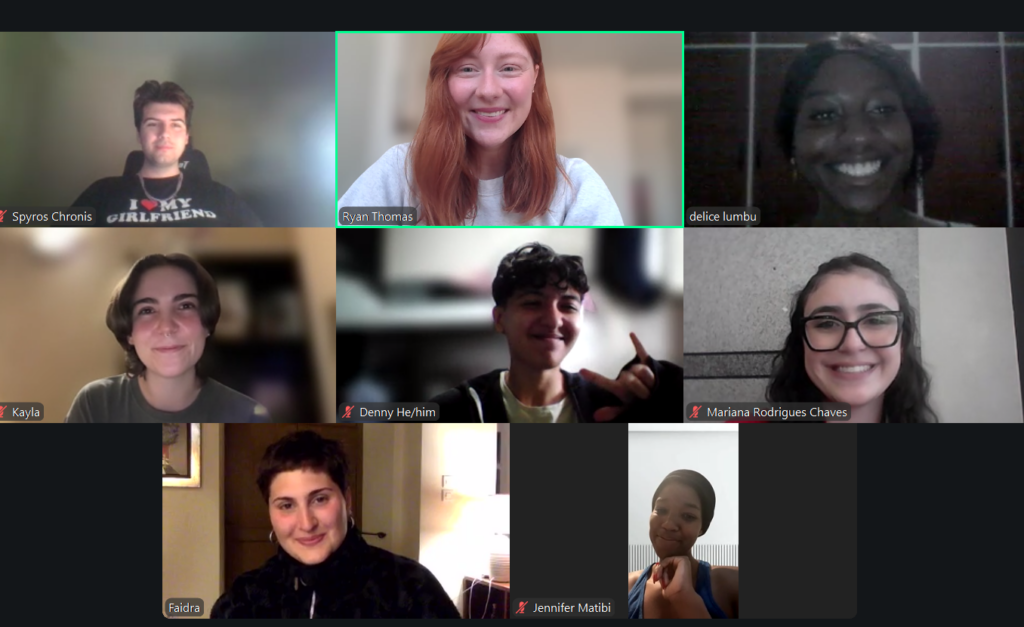
Building on the momentum of the SNF Global Center’s inaugural Global Summit on Youth Mental Health in 2025 and the ongoing work of the GYAC, SNF Nostos 2026 will also spotlight the critical role young people play in shaping the future of mental health. Across the week, youth leaders will share perspectives on how lived experience, community engagement, and innovation can help create more responsive and effective systems of support.
Additionally, a landmark Evidence-to-Policy Review examining what it means to navigate adolescence in an increasingly digital world will be presented. Commissioned by the Prime Minister of Greece and developed through the Child and Adolescent Mental Health Initiative (CAMHI) in Greece, the youth-led report brings together the latest evidence, youth perspectives, and a roadmap for how governments, institutions, and communities can better support young people in Greece and beyond. Having started in Greece, CAMHI has since expanded into additional core hubs in South Africa and Brazil, as well as partnerships across multiple low- and middle-income countries. We look forward to seeing the positive impacts this expansion will make on youth mental health globally.
Finally, as a special part of the celebration, the Child Mind Institute is proud to share a video reflecting on our transformative partnership with SNF, and the exceptional changes made possible through the SNF Global Center for Child and Adolescent Mental Health. Over the past six years, we have worked together to expand access to care, strengthen mental health systems, support local leaders, and elevate youth voices across communities around the world.
“What we share with the Stavros Niarchos Foundation, is that we both believe that every child, everywhere, deserves mental health.”
Dr. Harold S. Koplewicz
SNF Nostos 2026 is a celebration of what becomes possible when people unite around a shared purpose. With humanity at the core, SNF Nostos 2026 will serve as a reminder that sustained progress begins with people — especially youth, families, communities, and the leaders committed to supporting them. Together, we can build a world where every child counts.
The post A Shared Vision for Children and Young People: Advancing Partnership and Impact at SNF Nostos 2026 appeared first on Child Mind Institute.
The Download: a reality check for geoengineering and the science of interoception
This is today’s edition of The Download, our weekday newsletter that provides a daily dose of what’s going on in the world of technology.
Hacking the atmosphere: geoengineering gets a reality check
Solar geoengineering, the controversial idea that we could deliberately intervene in the climate system to counteract global warming, is moving beyond computer simulations and into the practical engineering challenges required to make it real.
Researchers are now working on aircraft, materials, and other systems for solar geoengineering. But as they delve into these details, they’re finding that even early deployment would require significant new infrastructure, time, and investment.
—James Temple
MIT Technology Review Narrated: inside interoception, the hidden sense of how you feel inside
Scientists have a word for how we sense ourselves from the inside: interoception. Today, thanks to a 2021 Nobel Prize and new tools that can map internal signaling across the body, research into interoception is taking off.
As researchers decode how signals move between body and brain, a clearer picture is starting to take shape—with implications for how we treat conditions from obesity to anxiety.
—Katherine W. Isaacs
This is our latest story to be turned into an MIT Technology Review Narrated podcast, which we publish each week on Spotify and Apple Podcasts. Just navigate to MIT Technology Review Narrated on either platform, and follow us to get all our new content as it’s released.
The must-reads
I’ve combed the internet to find you today’s most fun/important/scary/fascinating stories about technology.
1 SpaceX is now valued higher than Amazon
Its market value hit $2.659 trillion yesterday. (Axios)
+ A post-IPO stock surge also briefly pushed it above Microsoft’s. (Quartz)
+ It’s now the world’s fifth most valuable company. (Guardian)
+ SpaceX is acquiring AI coding startup Cursor for $60 billion. (CNBC)
2 G7 leaders want access to top US AI models
They’re pushing to escape restrictions on the likes of Fable 5. (Reuters $)
+ The Mythos shutdown has sparked a global scramble for sovereign AI. (Fortune)
+ The world is looking to ditch US AI models. (MIT Technology Review)
3 Trump’s AI export strategy has run into Trump’s export controls
His administration risks undermining its own AI plans. (Axios)
+ It now effectively has a licensing regime for frontier AI. (Fortune)
+ Here’s how a top Chinese AI model overcame US sanctions. (MIT Technology Review)
4 Huawei’s big comeback has exposed the limits of US chip controls
It’s overcome restrictions on advanced chipmaking gear. (Financial Times $)
+ The AI boom has ignited Asia’s chip companies. (NYT $)
5 AI fears are pushing Silicon Valley toward gene-editing startups
They want smarter babies to counter superintelligent AI. (Mother Jones)
+ The pursuit of perfect babies is an ethical mess. (MIT Technology Review)
6 A brain implant has enabled a speechless ALS patient to work full-time
The system translates his brain activity into speech. (The Register)
+ He’s become the first “power user” of a BCI. (MIT Technology Review)
7 A leak has revealed details of Peter Thiel’s secret society
Its program ranges from cult-building to prepping for World War III. (Wired $)
8 ChatGPT’s market share has slipped below 50% for the first time
Thanks to the rise of Gemini and Claude. (TechCrunch)
9 A quantum state that lasts forever may finally be within our grasp
Experiments suggest that quantum “eternity” is possible. (New Scientist $)
10 Commodore has made a digital detox phone that isn’t dumb
The Callback combines gadget nostalgia with modern needs. (The Verge)
Quote of the day
“The Entity List is like whack-a-mole and you’ve got to keep whacking the moles.”
—Philip Luck, who studies global supply chains at the Center for Strategic and International Studies, tells Reuters that a lack of new blacklistings is likely leading American innovations to adversaries who could use them against the US.
One More Thing

COURTESY OF DEEPMIND
This is the reason Demis Hassabis started DeepMind
Watching DeepMind’s AI master the ancient board game Go, Demis Hassabis realized that his company was ready to take on one of the most important and complicated puzzles in biology: predicting the structure of proteins.
The result was AlphaFold2, an AI that could predict the shape of proteins down to the nearest atom. “It’s the most complex thing we’ve ever done,” Hassabis told MIT Technology Review.
Taking on scientific problems is the culmination of what Hassabis set out to achieve, and it’s what he wants to be known for. “This is the reason I started DeepMind,” he says. “In fact, it’s why I’ve worked my whole career in AI.”
Discover how he plans to transform science with AI.
—Will Douglas Heaven
We can still have nice things
A place for comfort, fun, and distraction to brighten up your day. (Got any ideas? Drop me a line.)
+ This mesmerising footage of wind rolling through grass looks like CGI.
+ The glorious early days of internet discovery have been revived by the return of StumbleUpon.
+ A German subway entrance has been delightfully designed as an old tram car crashing into the pavement.
+ The Last Museum lets you search across 5.8 million museum artworks spanning from 3000 BC to the present day.