

NIH-funded study lays foundation for antibody-based measles treatment.
Comparison of the Italian and U.S. Forensic Models for Dual-diagnosis Offenders: a 3-year Longitudinal Study
Conditions: SCHIZOPHRENIA 1 (Disorder); Substance Abuse
Sponsors: University of Bari
Not yet recruiting
Sponsors: University of Bari
Not yet recruiting
Family psychoeducation to support patients with psychotic illness: two-year outcomes from a pre–post longitudinal pilot study
BackgroundPsychoeducation for families of young adults with psychosis is an evidence-based intervention that alleviates carer burden. The implementation of programming is limited, leaving family carers shouldering a heavy burden without appropriate support.ObjectiveThis pre-post longitudinal pilot study evaluated the preliminary outcomes of a psychoeducational group intervention for family carers of young adults with psychosis, aimed at building skills and reducing carer burden to support recovery in their loved ones.MethodsThe intervention, co-developed and co-facilitated by healthcare professionals and individuals with family lived experience, was delivered in Edmonton, Canada. Participants (n= 13) completed the Family Burden Interview Schedule (FBIS) at pre-intervention, post-intervention, and at 6, 12, and 24-month follow-up. Linear mixed models assessed burden scores over time.ResultsThe overall model of total burden did not reach statistical significance. Exploratory post-hoc comparisons indicated a significant total burden reduction from pre-intervention to 6-months (p = 0.032), with no other significant changes. The overall family interaction burden subscale model showed no significant effect of time. Exploratory post-hoc analyses indicated a decrease in family interaction burden from pre- to post-intervention (p = 0.026) and to 6- months (p = 0.032), with no other significant changes.ConclusionThis pilot study provides preliminary and hypothesis-generating findings suggesting a co-produced, skills- and knowledge-based psychoeducational intervention may be associated with reductions in carer burden, particularly in the domain of family relations. Given the small sample size, further research with sufficient statistical power is warranted to evaluate the long-term impact and accessibility of the intervention and inform its integration into early psychosis care.
PSA screening for prostate cancer reduces disease-specific deaths, new review shows
Prostate-specific antigen (PSA) blood testing is likely to reduce the risk of death from prostate cancer, found a new review published on Thursday by an influential international science research organization — a shift in medical evidence that could encourage wider use.
The Cochrane review’s first author, Juan Franco from Heinrich Heine University Düsseldorf in Germany, said at a press conference that they have “moderate certainty” that the screening test, which identifies high levels of PSA as a potential marker of prostate cancer, leads to a reduction in disease-specific deaths. The benefits are marginal: the review analyzed results from six trials involving 800,000 participants conducted in Europe and North America, and found about two fewer prostate cancer deaths for every 1,000 men screened.
[Comment] From policy to practice: implementing China’s measures to strengthen student mental health
In October 2025, China’s Ministry of Education issued ten national measures to strengthen mental health work in primary and secondary schools.1 These measures target major school-linked stressors such as academic pressure, physical activity, sleep, and internet use, and they call for whole-staff responsibility and cross-department collaboration. The policy signals a shift from episodic crisis response towards a public mental health agenda spanning prevention, early identification, supportive school environments, and referral pathways.
Role of Technology Acceptance in the Telerehabilitation of Patients With Metabolic Syndrome: Longitudinal Study
<strong>Background:</strong> The advent of telerehabilitation has created new opportunities for the care of patients with metabolic syndrome. In distant rehabilitation, technology acceptance is particularly important because home-based projects are based on digital devices, and many patients are less familiar with their use. <strong>Objective:</strong> Our aim was to explore technology acceptance among patients undergoing a 3-month complex, telemedicine-supported metabolic rehabilitation. We were curious to see how different factors influence the intention to use rehabilitation technologies and how this changes through the telerehabilitation process. <strong>Methods:</strong> Participants were selected from patients in the metabolic telerehabilitation program at the university. Our model was based on the unified theory of acceptance and use of technology 2, which we supplemented with various other constructs. A paper-pencil questionnaire survey was administered on the last day of the preparatory week of the rehabilitation program (T1, n=145) and at the follow-up visit after the closing (T2, n=139). We used structural equation modeling with the least squares method to explore the relationships between model variables. Respondent segments were also identified by performing a hierarchical cluster analysis using Ward’s method. <strong>Results:</strong> Facilitating conditions (FC) have the greatest impact (0.366) on the behavioral intention (BI) to use technology. Effort expectancy has no direct effect on BI; it operates only through performance expectancy (PE), which may be because, in telerehabilitation settings, patients are more goal-driven than experience-driven. The analyses of the T2 data show that the direct impact of social influence on BI has disappeared by the end of the rehabilitation process. This can be explained by the fact that during device use, it becomes clear that the devices are secure and the data are safe, making this factor implicit in the patient’s behavior. Only 2 constructs appeared in both the T1 and T2 models: PE and FC. By comparing the 2 datasets, we have provided empirical support for an old hypothesis: the experience of using the tool for a time has led to a significant reduction in the impact of FC and a corresponding increase in the dominance of PE, which has “absorbed” the impact of some other constructs. Based on respondents’ attitudes, we found 3 clusters. The telerehabilitation program itself has a significant impact on patients’ BI, as the relative share of “enthusiastic users” (73/145, 50.3%) increased by about 20%, while the share of “distrustful reluctants” (25/145, 17.2%) decreased to a quarter by the end of the program. <strong>Conclusions:</strong> This behavior-based functional approach enables treatments to be tailored to actual technology-use demands rather than to presumptive societal features. This means that before beginning rehabilitation, attempts should be undertaken to identify patients’ clusters in clinical practice, and rehabilitation should be planned according to the individual’s attitude toward technology.
An Augmented Reality Audio-Motor Training Game for Improving Speech-in-Noise Perception: Single-Arm Pilot Feasibility Study
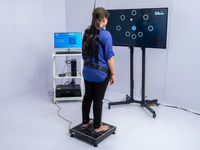
Background: Difficulty understanding speech in noisy environments is a primary challenge of hearing impairment, inadequately addressed by hearing aids alone. While auditory training can enhance selective attention and speech perception, current digital programs face poor user adherence and lack realistic 3D spatial audio. Objective: This pilot study evaluated the feasibility, usability, and preliminary efficacy of ARIA (Augmented Reality Immersive Auditory training), a handheld mobile intervention that provides gamified at-home auditory training to middle-aged adults via earbud-delivered spatial audio. Methods: In this single-arm, pre-post–follow-up pilot study, 11 adults (mean age 53.0, SD 3.0 y) with functional hearing not requiring amplification completed a 4-week at-home training program using ARIA on provided devices (iPhone 14 Pro, AirPods Pro 2). Speech-in-noise perception was assessed via the Korean Matrix Sentence Test at baseline, 4 weeks, and 8 weeks at 3 signal-to-noise ratios (SNRs; 0 dB, −6 dB, and −9 dB, respectively). Feasibility, usability (System Usability Scale), user experience (Player Experience of Need Satisfaction), in-game performance, and qualitative feedback were collected. Results: Protocol completion was 100% (11/11), demonstrating technical feasibility. Exploratory efficacy analyses revealed statistically significant speech-in-noise improvements posttraining across all conditions (0 dB: =3.43, =.02; −6 dB: =5.34, <.001; −9 dB: =4.34=.004). Gains were maintained at the 8-week follow-up. In-game localization improvements correlated significantly with speech perception gains at −6 dB SNR (ρ=0.639; =.03) and −9 dB SNR (ρ=0.612; =.045). User experience showed mixed results: the mean System Usability Scale score was 70.2 (SD 19.6; range 47.5‐92.5), reflecting substantial individual differences in usability perception. While 72% (n=8) reported difficulties with the augmented reality (AR) environmental setup, 63% reported genuine mastery-driven engagement with core gameplay. Thematic analysis revealed a dissociation between peripheral usability challenges (setup friction, “homework” characterization due to protocol structure) and successful engagement with the training paradigm itself. Conclusions: This pilot demonstrated the feasibility of AR-based audio-motor training for at-home delivery and revealed encouraging preliminary efficacy signals, warranting progression to controlled efficacy trials. Formative findings identified specific usability refinements needed for broader implementation, particularly streamlining AR setup while preserving the core gameplay elements that successfully fostered competence and engagement. These insights provide clear guidance for platform optimization and randomized controlled trial design.
HIV and Substance Use Reduction for Youth Experiencing Homelessness: Development and Usability Study
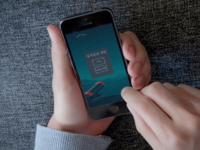
Background: Youth experiencing homelessness face heightened vulnerability to HIV infection and substance use due to complex structural, psychosocial, and behavioral factors. Despite increased mobile phone access among youth experiencing homelessness, few mobile health interventions have been tailored to their unique needs, and even fewer have applied behavioral theory to inform message development. Objective: This study aimed to develop and refine theory-driven, tailored HIV prevention and substance use reduction messages for use in a just-in-time adaptive intervention app, MY-RIDE (Motivating Youth to Reduce Infections, Disconnections, and Emotional dysregulation), designed for youth experiencing homelessness aged 18 to 25 years. Methods: This study was conducted in 4 phases: prevention messages were developed and pilot-tested in 2018 (phase 1), revised and expanded using the experience and expertise of content experts and the study team (phase 2), reviewed for relevance and acceptability by youth experiencing homelessness in 2024 (phase 3), and supplemented with messages generated using an artificial intelligence (AI) tool (phase 4). Results: Phase 1 resulted in the development of 386 intervention messages across 7 content categories: sex urge, drug and alcohol urge, stress, drug use, recent sexual activity, recent sexual assault, and general motivational messages. During phase 2, the study team expanded the message library to 888 messages across 10 categories. During phase 3, the youth working group liked 93% (803/864) of messages reviewed, which were categorized as acceptable for the intervention. Disliked messages were discarded and replaced with messages generated by an AI tool in phase 4. Conclusions: The finalized set of intervention messages was integrated into the MY-RIDE app to support personalized, real-time intervention delivery. Codeveloping messages with youth experiencing homelessness and leveraging AI tools proved feasible and effective for tailoring HIV prevention and substance use content. This approach supports scalable mobile health interventions for marginalized populations and informs future efforts to design engaging, theory-based digital health strategies. A randomized controlled trial of the MY-RIDE intervention is underway. Trial Registration: ClinicalTrials.gov NCT06074354; https://clinicaltrials.gov/study/NCT06074354
<img src="https://jmir-production.s3.us-east-2.amazonaws.com/thumbs/208f95311fd98302ac027b16dfaa743a" />
Methodological Framework for the Design and Implementation of a US Latine-Hispanic Digital Brain Health Program: User-Centered Design Approach
Background: US Latine and Hispanic communities face a 1.5 times greater risk of developing Alzheimer disease and related dementia (ADRD) with limited access to culturally and linguistically congruent primary prevention education. The COVID-19 pandemic exacerbated the digital divide, highlighting a need to focus on alternative digital methods for delivering brain health and ADRD primary prevention education. Social media emerged as a promising tool. Objective: The objective of this paper is two-fold. We first describe the development and pilot study of our social media–based Latine-Hispanic Digital Brain Health Program guided by evidence-based frameworks in ADRD. We then present the quantitative and qualitative results from the first 14 months of the program (October 2023-December 2024). Methods: We used human-centered design to develop the Digital Alzheimer Health Education Model, which was implemented via 3 social media platforms—Facebook, Instagram, and X (formerly known as Twitter). Our bilingual and bicultural team implemented the model by creating and disseminating tailored educational content in English and Spanish for the resulting Latine-Hispanic Digital Brain Health Program, emphasizing consistency and rapport, storytelling, cultural relevance, linguistic inclusivity, and visual representation. A mixed methods analysis (descriptive statistics and sentiment analysis) was conducted using social media data analytics and users’ comments to guide program evaluation and refinement. Results: From October 2023 to December 2024, we retained 857 followers across our social media platforms (Instagram: n=534; Facebook: n=124; and X: n=199). Growth in follows, consistent reach and engagement, and positive sentiment were observed on Facebook and Instagram. X was not included in the analysis due to data access limitations. Conclusions: The development and pilot study of the Latine-Hispanic Digital Brain Health Program have demonstrated potential in leveraging social media to disseminate brain health and ADRD prevention education to the US Latine and Hispanic communities in English and Spanish. Our preliminary findings demonstrate that culturally and linguistically congruent social media–based approaches hold potential to improve engagement with brain health and ADRD primary prevention education among US Latine and Hispanic populations.
<img src="https://jmir-production.s3.us-east-2.amazonaws.com/thumbs/4b3faccaa5e51c513af4d239916044cb" />
AI in Healthcare: Symposium Insights
For years, artificial intelligence (AI) has been growing behind the scenes of our lives. Starting off as modifications of not‑so‑simple algorithms, early large language models could barely string a few words together, much like early vision systems that struggled to distinguish a lamppost from a cat in digital images. More recently AI has not just grown but proliferated—like Darwin’s finches in the Galapagos—into nearly every niche available in the digital world.
AI has infiltrated into daily life personally and professionally for many, and while modern healthcare has historically been hesitant to adapt to new technologies, Raghav Mani, director of Digital Health at Nvidia, pointed out that healthcare is adopting AI at three times the rate of other industries. Clearly, there is a lot to discuss, which is why The New York Academy of Sciences and the Windreich Department of Artificial Intelligence and Human Health at the Icahn School of Medicine at Mount Sinai co-hosted the 3rd annual “New Wave of AI in Healthcare,” a two-day symposium on May 12 and 13 with the goal of opening discourse between researchers, clinicians, industry leaders and other interested parties on all topics related to AI and healthcare.
Day one
The first day opened with a lightning round of welcome remarks from organizers expressing their personal experience with AI in healthcare research and practice. While some, like Nicholas Dirks, PhD, president and CEO of The New York Academy of Sciences shared concerns about how to maintain human involvement in AI use, he also expressed awe stating that “The pace of progress is breathtaking.”
Others were more practical in their assessments. Lisa Stump, chief digital information officer at Mount Sinai Health System asserted, “The future is not something we enter, it’s something we create.” Similarly, Brendan G. Carr, MD, CEO, Mount Sinai Health System, described AI as a “new partner” to aid clinicians in synthesizing the vast and growing clinical data. Girish N. Nadkarni, MD, a nephrologist and practicing clinician at Icahn School of Medicine at Mount Sinai summarized the whole event before the first talk even began: “The real question is not IF AI will transform healthcare, but HOW.”
The keynote presentation leading day one’s discussions endeavored to answer that very question. With his talk entitled, “Harnessing the power of Platform Thinking to Transform Healthcare,” John Halamka, MD, president of the Mayo Clinic Platform, spent 30 minutes exploring the power of data while questioning how AI is and should be used to analyze the varied data currently available, but cautioned that this is no simple task when considering the sources of data and potential restrictions on data use. He spoke about practical applications of AI data analysis that have and can be done, including in drug discovery. He also pointed out that AI can fill gaps in the healthcare workforce.
The day continued with four talks exploring different aspects of AI model use in healthcare. Marina Sirota, PhD, professor at the University of California, San Francisco spoke about how clinical data can be used for predictive medicine. Others, including Mani and Jonathan Carlson, PhD, vice president and managing director of Microsoft Heath Futures, discussed how AI agents and models can be used as part of hospital and clinician toolkits at multiple levels—not just as data analysis engines, but also to aid in synthesizing patient data and diagnostic support. Rounding out the discussion, Azra Bihorac, MD, senior associate dean for research at the University of Florida described how AI models need to be validated just like any other tool. She also pointed out that while AI is continuously improving in its ability to assess problems and suggest the next best course of action, human input is vital for collaborative success.
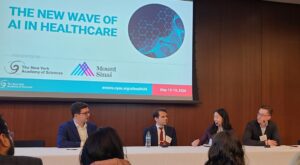
The final talks for day one focused on how AI can be used directly with patient care situations. Following their individual talks on how AI can be integrated into electronic health records (EHR), combining models to develop new insights, or reimagining diagnosis ability to improve diagnostic equity, the final three speakers engaged in a dynamic, and sometimes heated panel discussion. Karen Wong, MD, a physician at Epic, Alexander Fedotov, PhD, director of AI digital precision health at AstraZeneca and Pierre Elias, MD, assistant professor at Columbia University Irving Medical Center each shared their thoughts on how AI will be used in the near future. While they were all in agreement that AI cannot replace clinicians, they also recognized that AI will be a disruptive force, but it’s up to clinicians to take responsibility to use the technology as appropriate but to rely on their intuition and judgement as trained professionals. When opining on the future of AI use in healthcare five years from now, Fedotov stated, “I would still want to see humans at the helm of all the decision maker processes.”
Day two
While the first day laid the foundations for AI use in healthcare spanning bench to bedside, the second day of the symposium included more discussion and criticism of AI on the logistic level.
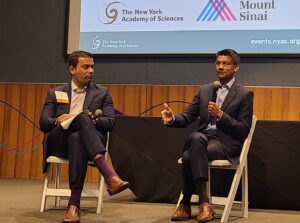
The day began with a keynote fireside chat between Nadkarni and Dave A. Chokshi, MD, a physician and professor at City University of New York, and former NYC health commissioner. He spoke about his leadership experiences, sharing many anecdotes of his time as a public health advocate and communicator during the COVID-19 pandemic. When questioned on the importance of communication considering the state of healthcare and declining trust of the public—especially with the increased use of AI, which has the potential of adding layers of feelings of abandonment, surveillance, and impersonalization—Chokshi pointed out that “It makes relationships even more important that we know then are.” He stressed that a his job, as a clinician, is to build trust with patients, and make sure that they return for care. While he envisions AI being transformative to healthcare in the next few years, he cautioned that listening and integrating feedback from front line users, clinical staff and patients, will be vital.
The morning continued with talks exploring AI’s use in research and learning in healthcare. Joshua C. Denny, MD, CEO of NIH All of Us Research, delivered a detailed summary of the progress and of the All of Us project. Despite recent funding concerns and cuts, the project scope remains on track, and researchers world-wide are utilizing the data derived from this project and how the project leads are working to establish parameters and modules for researchers to more easily implement AI in their data analysis. Andrew Gruen, PhD, standards lead at MLCommons, then spoke animatedly about the importance of establishing standards and benchmarks for AI use in researcher and healthcare settings. He spoke candidly on the need to not just train AI but to have external evaluation and validation of AI models.
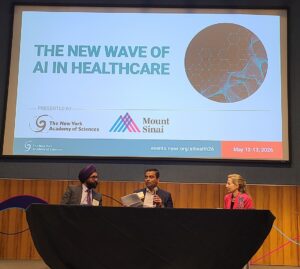
The symposium concluded with multiple discussions on the interactions between AI and humans—not just as a tool, but by viewing the use of AI in the broader scale. Karandeep Singh, MD, executive director for health innovation at the University of California, San Diego explored various opinions of clincians and patients on the use of AI, while pointing out that the use of AI in healthcare settings should be thoughtfully considered before implantation. Meanwhile, Vardit Ravitsky, PhD, president and CEO of The Hastings Center for Bioethics, discussed the ethics behind AI use as a direct to patient setting, specifically as a patient-used chatbot. In a debate following their respective talks, the two delved deeply into the risks associated with AI use, both on the patient side with chatbots and with scribe technologies used by clinicians and patients. They often agreed on the need for transparency in AI usage, but specific AI applications, like uses of AI robots in the home to combat loneliness in the elderly resulted in disagreements.
The final talk presented by Tanzeem Choudhury, PhD, chief of health innovation at Cornell Tech, brought many previously discussed topics together. Her research explores how AI can be used in treatment of mental health, describing how AI can be used in multiple aspects of mental health therapy from recording physiological symptoms with wearables to using chatbots for various functions. She cautioned that while these tools may eventually be transformative, the current state of AI use in mental health is still growing.
The closing remarks by Alexander Charney, MD, PhD, professor at Icahn School of Medicine at Mount Sinai summarized the event well. He shared that throughout the symposium he imagined what clinicians and researchers from 100 years ago and from 100 years in the future would think about the current state of healthcare and about the challenges being faced now with how to incorporate AI. He said, “We aren’t the first group of human beings to deal with powerful technology and figuring out how we’re going to use it to change society.” He hopes that the people from the past would see that we understand and respect the past and learn from it being rigorous in our research and testing, while the people from the future will look on us with pride at our fearless and tenacity in the face of new technology. He hopes that both groups would see that we “tried to do the right thing.” He ended saying that he does see all of that here along with passion and coming together of everyone at the meeting.
The post AI in Healthcare: Symposium Insights appeared first on Inside Precision Medicine.